1. What Does Explosion Protection Mean?
Explosion-protected equipment is designed and certified for use under specified hazardous conditions. The required protection depends on the potential presence of flammable gases, vapors, or combustible substances.
Common applications include:
Oil and gas processing facilities
Petrochemical plants
Chemical production lines
Refineries and gas compression stations
Other classified hazardous areas
Before selecting a transmitter, identify the hazardous-area classification and applicable certification requirements for the installation.
2. What Do IIB and IIC Mean?
Under the IECEx and ATEX equipment classification frameworks, gas groups help distinguish hazardous gases according to their ignition characteristics.
IIB: Gas Group IIB
IIB equipment is suitable for the gas group specified by its certification. Typical examples associated with IIB include ethylene.
IIC: Gas Group IIC
IIC covers more demanding gas-group requirements and includes gases such as hydrogen and acetylene.
Equipment certified for IIC gas applications generally satisfies the corresponding gas-group requirements for IIB and IIA, provided the certification and protection concept are applicable.
Key takeaway: When selecting a transmitter for an area containing hydrogen, check whether its certification explicitly covers IIC requirements. Do not assume that an IIB marking is sufficient.
3. What Does T6 Mean?
T6 is a temperature class used to identify the maximum permitted external surface temperature of equipment under the specified certification conditions.
For T6, the maximum surface temperature is 85°C.
The common temperature classes are:
| Temperature Class | Maximum Surface Temperature |
|---|---|
| T1 | 450°C |
| T2 | 300°C |
| T3 | 200°C |
| T4 | 135°C |
| T5 | 100°C |
| T6 | 85°C |
A lower maximum surface temperature can be important when flammable gases may ignite at relatively low temperatures.
However, the appropriate temperature class depends on the substances present and the hazardous-area assessment. Process temperature and ambient temperature limitations must also be checked separately.
4. IIC, IIB, and T6: What Is the Difference?
These markings describe different characteristics.
| Marking | What It Indicates | What to Check |
|---|---|---|
| IIB | Gas group suitability | Confirm the hazardous gas classification |
| IIC | More demanding gas group suitability | Check certification for gases such as hydrogen |
| T6 | Maximum permitted surface temperature of 85°C | Confirm the required temperature class |
IIC and IIB concern gas-group classification, while T6 concerns surface temperature.
A transmitter marked IIC T6 therefore provides two different pieces of information. Neither marking alone establishes that the instrument is suitable for every hazardous location.
5. How to Choose the Right Explosion-Protected Pressure Transmitter
Before purchasing a pressure transmitter, check these five factors.
1. Hazardous-Area Classification
Confirm whether the installation is classified by zones under IEC-based systems or by divisions under another applicable system.
2. Gas Group
Identify the hazardous substances that may be present and select equipment with the appropriate gas-group certification.
3. Temperature Class
Check the ignition characteristics of the hazardous substance and verify the required temperature class.
4. Protection Concept and Certification
Review the complete marking, including the protection method, equipment protection level where applicable, certificate, and any special conditions of use.
5. Installation and Environmental Requirements
Confirm the operating pressure, process temperature, ambient temperature, enclosure protection, electrical connections, and installation requirements.
The transmitter must be suitable for the complete installation, not just one individual marking.
6. Common Mistakes to Avoid
Choosing IIB equipment for an IIC application without verifying certification.
Assuming T6 indicates the transmitter’s maximum process temperature.
Treating ATEX and IECEx markings as automatically interchangeable in every jurisdiction.
Ignoring special conditions listed in the certificate.
Selecting equipment based only on the product description instead of its complete certification marking.
Always verify the certificate and manufacturer’s documentation before installation.
Conclusion
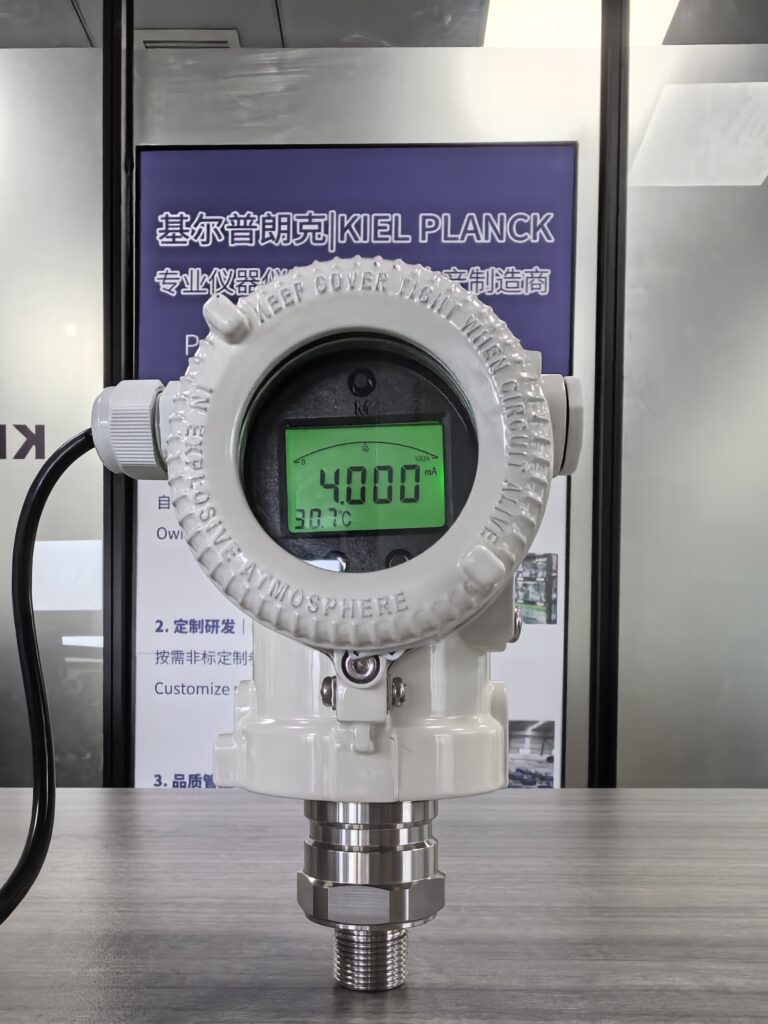
Selecting an explosion-protected pressure transmitter requires understanding the hazardous-area classification, gas group, temperature class, and applicable certification.
IIB and IIC identify gas-group suitability, while T6 specifies a maximum equipment surface temperature of 85°C under the relevant certification conditions.
Looking for a pressure transmitter for a hazardous area? Confirm the gas group, required temperature class, hazardous-area classification, and applicable certification before selecting a model. Proper selection helps ensure that the instrument meets the safety requirements of your application.
Scan the QR code to receive more detailed information.