To solve this problem, manufacturers have introduced the three-electrode configuration, in which a dedicated detection electrode is added to sense the presence or absence of liquid inside the measuring tube. This paper explains the working principle of electromagnetic flow meters, analyzes the empty pipe detection mechanism of the three-electrode structure, compares it with other detection methods, and provides practical guidance on configuration and field application to ensure accurate flow measurement and reliable empty pipe alarm.
Keywords: electromagnetic flow meter; three-electrode; empty pipe detection; empty tube alarm; Faraday law; conductive liquid; process control
Working Principle of the Electromagnetic Flow Meter
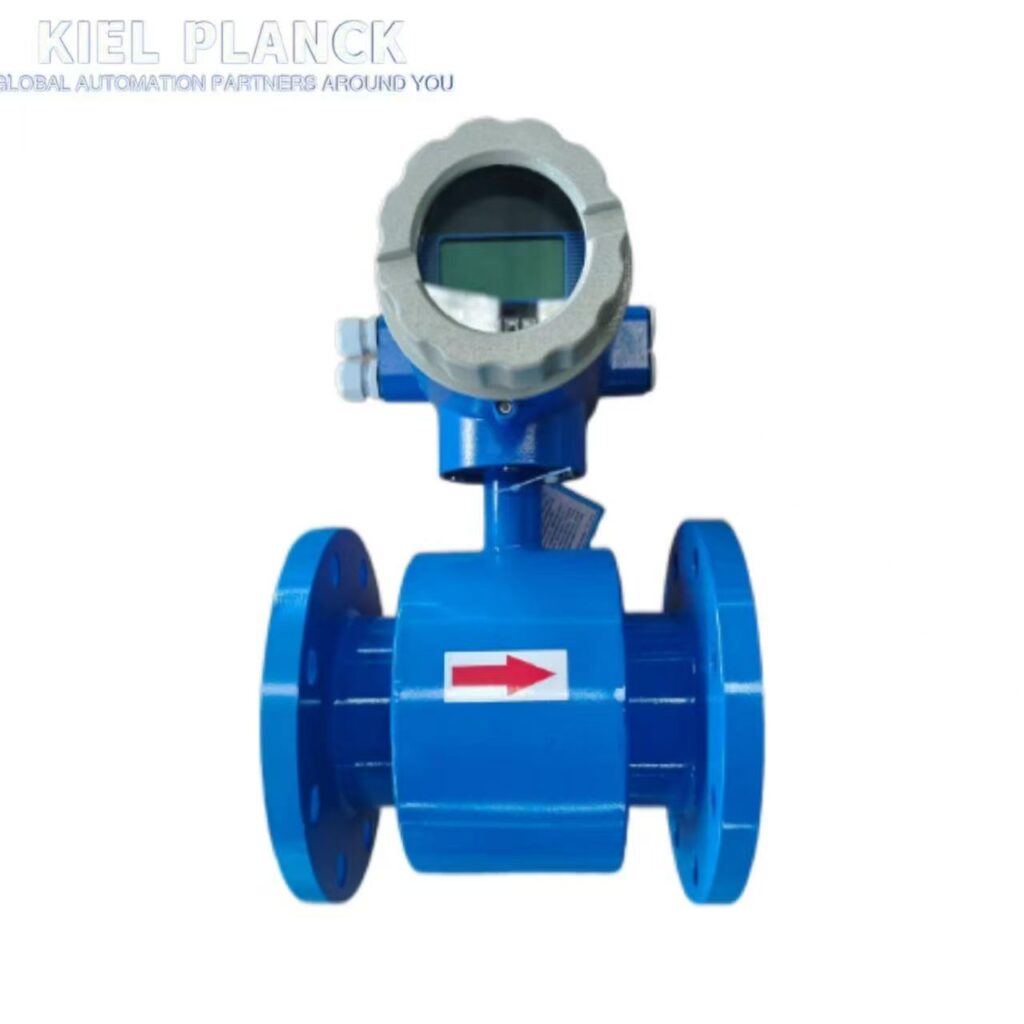
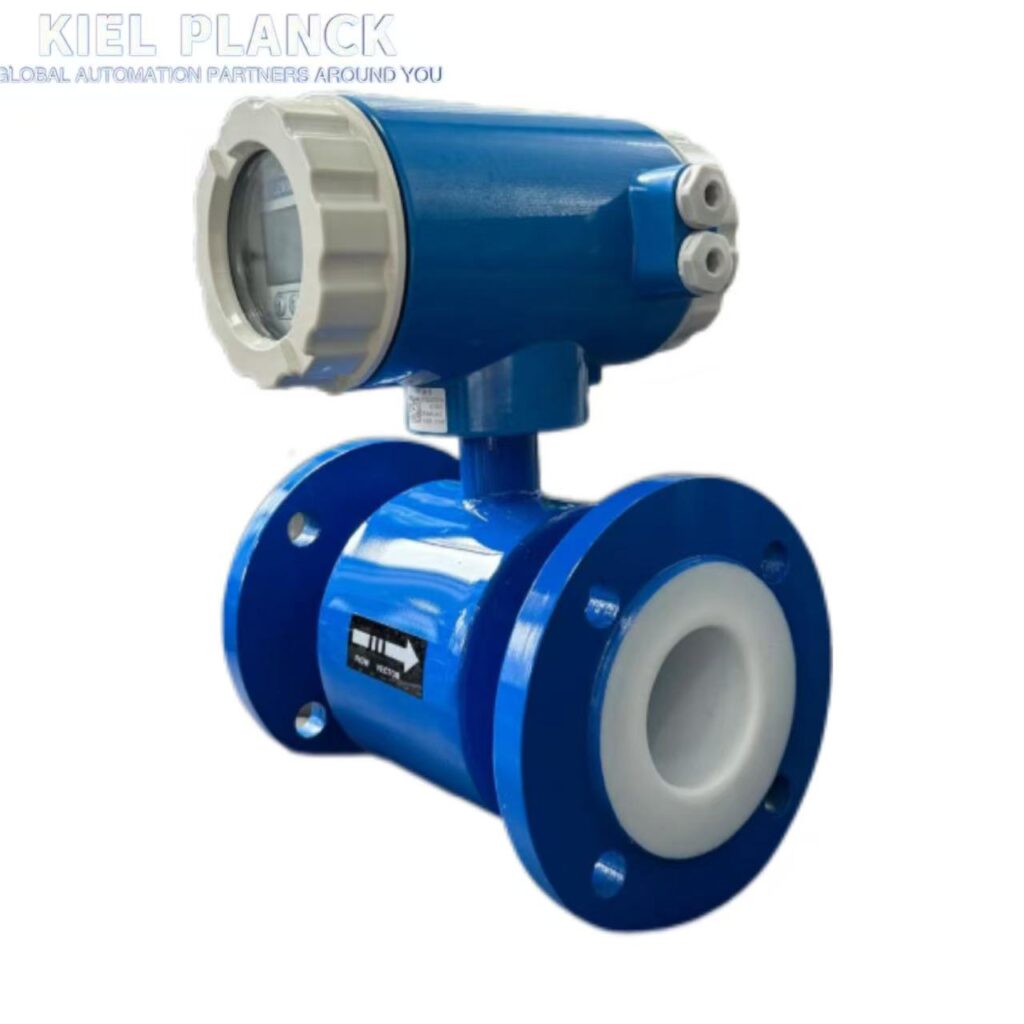
An electromagnetic flow meter works according to Faraday law of electromagnetic induction. When a conductive liquid flows through a measuring tube placed inside a magnetic field, an induced electromotive force is generated perpendicular to both the flow direction and the magnetic field. This induced voltage is proportional to the average flow velocity and is picked up by two measuring electrodes mounted on the inner wall of the tube. The converter amplifies the small signal and converts it into a standard flow output. Because the induced voltage depends on the volume of liquid cutting the magnetic lines, the meter is accurate only when the measuring tube is completely full of the conductive liquid. Partial filling breaks the closed conductive loop and makes the reading unreliable.
The Empty Pipe Problem in Field Application
In real plants, pipelines are frequently drained for cleaning, maintenance, batch changeover or emergency shutdown. During such periods, the measuring tube may be empty or only partially filled. With a conventional two-electrode meter, the electrodes lose contact with the liquid, the induced signal disappears or fluctuates, and the converter can no longer determine the true flow. Depending on the converter logic, the meter may freeze the last reading, drift to zero, or output an arbitrary value. A false flow reading can cause incorrect totalization, improper pump control, erroneous chemical dosing or wrong billing of transferred fluids. For automated plants, an undetected empty pipe condition is a safety and quality risk that must be addressed by the instrument itself.
Three-Electrode Configuration and Its Detection Principle
The three-electrode design adds a third electrode in addition to the two measuring electrodes. This extra electrode is positioned so that it can determine whether conductive liquid is present in the measuring tube. When the tube is full, the liquid establishes a conductive path that can be sensed by the detection circuit; when the tube is empty, the path is broken. The converter continuously monitors this detection signal and reports an empty pipe status.
The detection relies on the electrical conductivity of the liquid. As long as the medium is conductive enough for normal measurement, the third electrode can reliably distinguish full from empty condition. Once an empty pipe is detected, the converter can take configured actions: it can hold the last valid value, force the output to zero, generate a digital alarm, or switch a relay contact to protect downstream equipment. This gives operators an immediate and reliable indication instead of silently receiving corrupted data.
Detection method | Principle | Advantage and limitation |
|---|---|---|
Conventional two-electrode | Only measures induced voltage from full pipe | Simple but cannot reliably indicate empty pipe |
Conductivity-based detection | Measures liquid conductivity between electrodes | Detects empty state but affected by low-conductivity media |
Three-electrode detection | Dedicated electrode senses presence of conductive liquid | Fast, reliable empty pipe alarm with configurable output |
Compared with relying only on signal level, the three-electrode empty pipe detection gives an explicit and early status, so the process can be protected immediately when the pipe is drained.
Configuration and Field Application
For reliable empty pipe detection, the meter must be installed on a horizontal or slightly inclined pipe with the tube fully filled during normal operation. The electrode material must be compatible with the medium and resistant to scaling. The detection threshold and response time should be configured according to the medium conductivity and the dynamics of the process. In plants that frequently drain pipelines, the empty pipe alarm should be connected to the control system so that pumps, dosing systems and totalizers are automatically protected. During commissioning, the empty pipe function should be verified by intentionally draining the pipe and confirming that the alarm triggers correctly and that the output behaves as configured.
It should also be noted that empty pipe detection is not a substitute for correct installation. Upstream valves, air pockets and improper pipe slope can create partial filling that the detection may interpret differently, so good piping practice remains essential. When the medium has very low conductivity or contains significant air bubbles, the detection reliability may decrease, and the specific limit of the meter should be checked against the actual medium.
Conclusion
The three-electrode electromagnetic flow meter addresses a common and costly field problem by providing reliable empty pipe detection. By adding a dedicated detection electrode, the meter can sense whether conductive liquid fills the measuring tube and give an explicit empty pipe alarm, preventing false readings, protecting pumps and dosing systems, and supporting safe automated operation. The three-electrode configuration is simple, fast and compatible with most conductive liquid applications, and it is best deployed with correct installation, proper electrode material selection and verified commissioning. For plants that handle batch processes, frequent drainage or variable supply lines, the three-electrode electromagnetic flow meter with empty pipe detection is a dependable solution that improves both measurement accuracy and process reliability.
Scan the QR code to receive more detailed information.