Transmitter accuracy, stability, and dynamic performance therefore dominate the overall precision of DP flow measurement. This 2026 selection guide systematically compares four mainstream transmitter accuracy classes (0.1%, 0.075%, 0.05%, and 0.04% FS) and clarifies the highest-accuracy matching solution for DP flow meters. Combined with field verification and industrial error mechanisms, this article explains why 0.04% FS monocrystalline silicon transmitters deliver superior low-flow performance and long-term stability. It also summarizes practical scenario-based matching rules and common engineering pitfalls, providing standardized reference for refined flow control and custody transfer applications.
1. Introduction
DP flow meters remain irreplaceable in industrial process control due to their simple structure, low maintenance, and strong medium adaptability. However, most field errors stem not from throttling components but from mismatched transmitters. The inherent square-root calculation principle of DP systems magnifies tiny pressure inaccuracies, causing obvious flow drift during low-load operation. With updated 2026 industrial standards for refined production and energy custody transfer, higher requirements are imposed on measurement repeatability, temperature adaptability, and long-term stability. Selecting a matched high-accuracy transmitter has become essential to eliminate system errors and ensure reliable flow data throughout long-term operation.
2. Error Amplification Mechanism of DP Flow Systems
The core challenge of DP flow measurement lies in its nonlinear mathematical relationship: flow rate is proportional to the square root of differential pressure. At 10% full-scale flow, the actual differential pressure drops to merely 1% of the full span, making transmitter errors extremely prominent. Ordinary transmitters with static accuracy defects, temperature drift, or mechanical hysteresis will generate obvious data jitter under fluctuating working conditions. Low-grade transmitters can maintain qualified data only within 30% to 100% full flow range, producing severe deviation in low-flow micro-monitoring scenarios. Therefore, only ultra-high-precision transmitters with excellent dynamic stability can suppress error amplification and restore true flow parameters.
3. Performance Comparison of Four Accuracy Grades
Four accuracy classes dominate industrial DP flow matching in 2026, with clear hierarchical performance differences. The 0.1% FS transmitters feature obvious hysteresis and long-term drift, suitable only for non-critical auxiliary monitoring with low precision requirements. The 0.075% FS transmitters offer balanced cost and stability, serving as the mainstream choice for general process monitoring and stable continuous production. The 0.05% FS high-precision transmitters optimize temperature compensation and dynamic response, meeting strict precision demands for fine chemical synthesis and conventional energy metering.
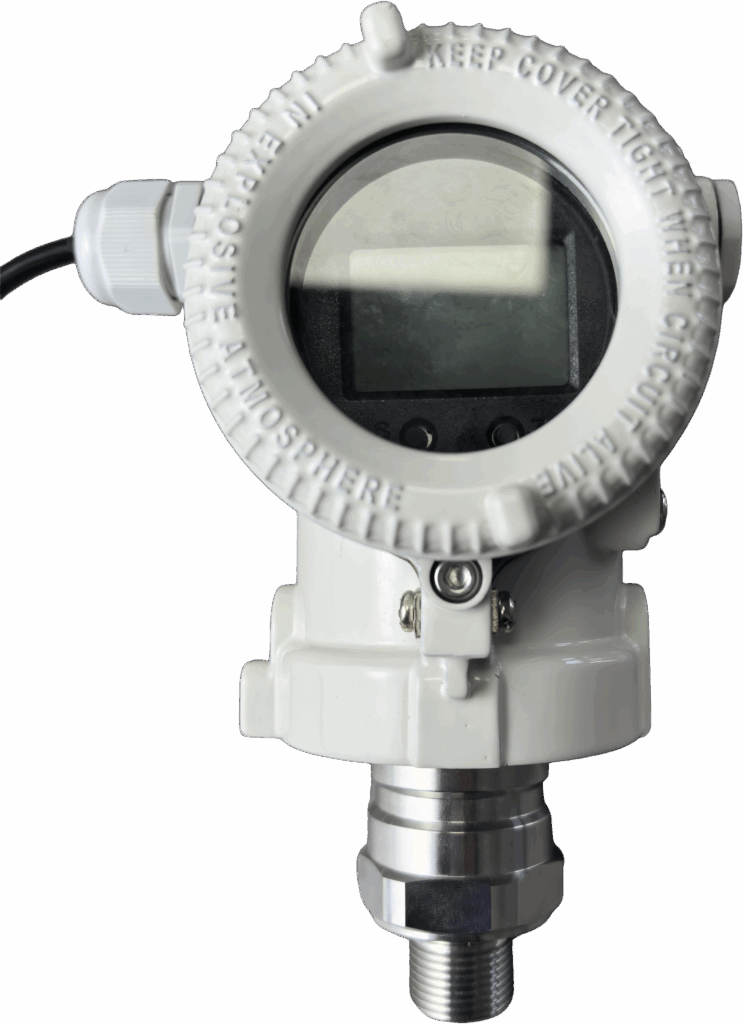
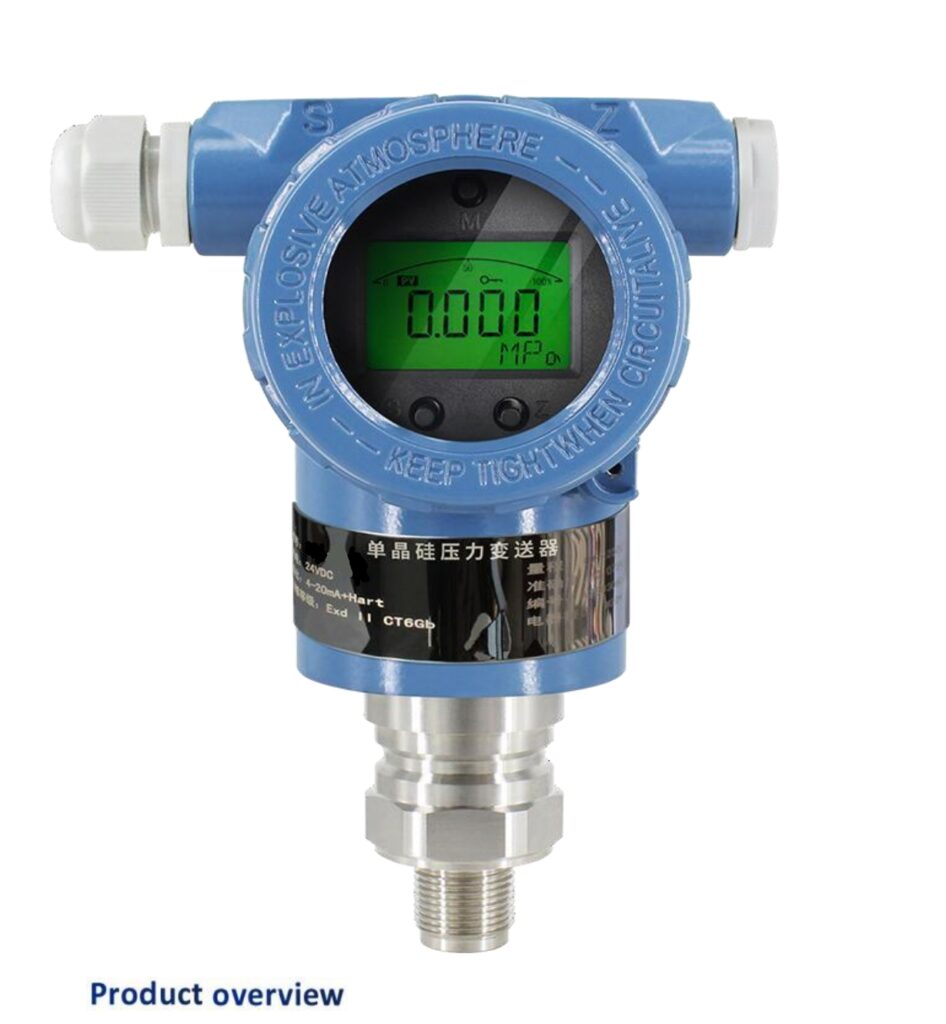
The 0.04% FS monocrystalline silicon transmitter delivers the highest comprehensive accuracy for DP flow system matching. Its defect-free crystal structure eliminates structural hysteresis, while full-range temperature compensation effectively resists field temperature fluctuation and vibration interference. Field tests prove that this configuration reduces overall DP flow system error below 0.4%, far outperforming traditional diffused silicon transmitters and perfectly solving low-flow accuracy attenuation problems.
4. 2026 Scenario-Based Matching Standards
Precision matching must follow scenario-oriented principles to balance accuracy and economy. For non-critical links such as factory water supply and waste gas discharge, 0.1% and 0.075% FS transmitters fully meet basic monitoring needs. For standard petrochemical processes, steam measurement, and routine energy statistics, 0.05% FS transmitters ensure stable process control. For high-standard scenarios including fluid custody transfer, precision batching, low-flow micro-detection, and high-purity medium monitoring, 0.04% FS monocrystalline silicon transmitters are the optimal configuration. Its decade-level long-term stability reduces calibration frequency and avoids accumulated errors in long-term unattended operation.
5. Common Matching Errors and Optimization Strategies
The most prevalent engineering mistake is grade mismatch, where high-precision DP throttling devices are paired with low-accuracy transmitters, wasting hardware performance. Many users overemphasize static laboratory accuracy while ignoring on-site dynamic stability, temperature drift, and anti-vibration capability. To optimize system accuracy, engineers should prioritize transmitters with ultra-low hysteresis and full-temperature compensation, reserve precision margins for harsh environments, and establish annual calibration cycles to sustain long-term measuring consistency.
6. Conclusion
In accordance with 2026 industrial instrument standards, the 0.04% FS monocrystalline silicon pressure transmitter provides the highest accuracy for DP flow meter matching, followed by 0.05%, 0.075%, and 0.1% FS grades. Its unique material advantages and intelligent compensation technology effectively restrain DP system error amplification, greatly improving low-flow measurement accuracy and long-term operational stability. Scientific scenario-based matching maximizes the value of DP flow meters, achieving optimal balance among precision, stability, and cost. This standardized selection method supports refined industrial production, accurate energy metering, and safe and efficient process operation.
Scan the QR code to receive more detailed information.