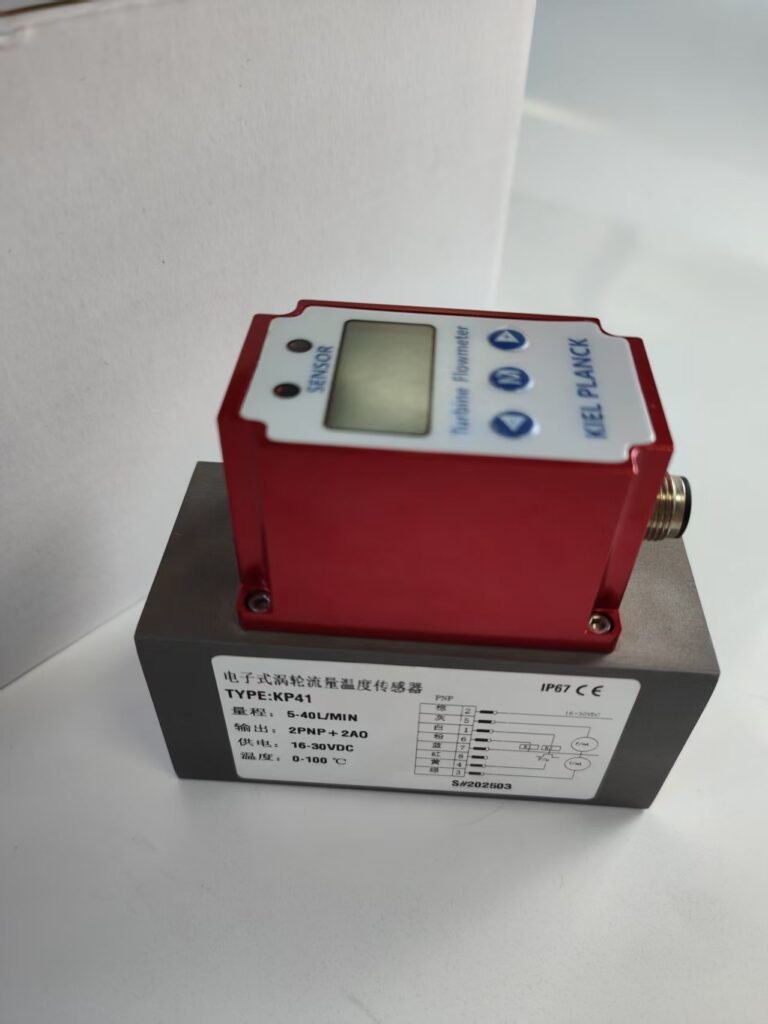
Turbine flow meters are widely favored in petroleum, chemical, natural gas and industrial fluid measurement fields for their high initial accuracy, fast dynamic response and excellent repeatability. However, industrial field data shows that over 80% of purchased turbine flow meters suffer from gradual accuracy degradation within one to three years of operation, severely affecting process batching precision, energy metering fairness and production safety. Most buyers attribute measurement deviation to product quality problems, while ignoring three hidden core culprits: improper installation and flow field disturbance, long-term mechanical wear and medium contamination, and blind parameter selection mismatched with working conditions. These common industry traps lead to frequent data drift, increased calibration costs and shortened service life. This article systematically analyzes the formation mechanism of the three major accuracy attenuation factors, reveals typical procurement and application misconceptions, and puts forward targeted avoidance and optimization strategies. It provides practical guidance for industrial users to select, install and maintain turbine flow meters scientifically.
1. Introduction
As classic velocity-type precision flow measuring instruments, turbine flow meters can achieve high measurement accuracy up to ±0.2%~±0.5% under laboratory standard conditions, making them the mainstream choice for medium and high-precision industrial flow monitoring. Nevertheless, long-term field application feedback indicates that most turbine meters fail to maintain nominal precision for a long time, and accuracy degradation has become a universal industry problem. Industry surveys show that more than 80% of buyers fall into inherent application traps during procurement and daily use, resulting in good-quality products failing to exert due performance. Different from sudden equipment faults, accuracy attenuation is a cumulative and progressive problem caused by superimposed multiple factors. Clarifying the three fundamental culprits and breaking common application misunderstandings is the key to realizing long-term stable operation of turbine flow meters.
2. Culprit 1: Non-standard Installation and Flow Field Disturbance (The Most Common Trap)
Non-standard installation and unregulated pipeline layout are the primary cause of accuracy degradation, and nearly 70% of field errors originate from this trap. Most buyers only focus on product accuracy parameters while ignoring the basic requirement of straight pipe sections for turbine meters. Turbine flow meters rely on stable laminar flow to ensure linear rotation of impellers, while on-site elbows, tees, valves and variable-diameter pipelines easily form turbulent flow and swirling flow. Insufficient front and rear straight pipe sections completely destroy the stable flow field, leading to eccentric rotation and periodic vibration of the turbine impeller.
Long-term operation under disturbed flow fields will not only cause real-time measurement deviation, but also induce irreversible structural fatigue of rotating components. Most buyers mistakenly believe that calibration can eliminate such errors, but flow field disturbance will continuously amplify deviation with the extension of service time, resulting in persistent accuracy decline that cannot be solved by simple parameter correction.
3. Culprit 2: Medium Contamination and Mechanical Wear (Cumulative Attenuation Trap)
Medium scaling, impurity deposition and mechanical wear are the core factors leading to permanent accuracy loss, which is easily ignored by most buyers during equipment selection. Industrial fluids such as crude oil, chemical solutions and circulating water contain tiny solid particles, colloids and viscous substances. Long-term fluid scouring causes impurities to adhere to turbine blades and bearing gaps, forming uneven scale layers. This changes the blade stress area and rotational resistance, breaking the linear correlation between impeller speed and actual flow rate.
Meanwhile, high-speed rotation of the turbine shaft and bearings causes cumulative friction loss. Micro wear increases rotational resistance, resulting in low indication under the same flow condition. Unlike temporary signal errors, mechanical wear and scaling contamination are progressive and irreversible. Most buyers only conduct regular calibration but lack regular disassembly cleaning and component inspection, eventually leading to complete failure of measurement precision.
4. Culprit 3: Blind Model Selection Mismatched with Working Conditions (Root Procurement Trap)
Blind pursuit of high accuracy and mismatched parameter selection is the fundamental procurement trap for over 80% of buyers. In actual procurement, most users only focus on the highest accuracy grade and ignore the matching degree between meter range, medium characteristics and field working conditions. Selecting a large-range turbine meter for long-term small-flow operation will keep the instrument working in the low-precision interval below 30% full scale, causing continuous data jitter and low repeatability.
In addition, many buyers select conventional ordinary turbine meters for high-temperature, high-pressure or corrosive working conditions. Unsuitable material and structural design will accelerate component aging and sensor drift. This unreasonable selection mode makes high-precision products lose their performance advantages in actual operation, resulting in inevitable accuracy degradation.
5. Optimization Strategies to Avoid Accuracy Degradation Traps
To solve the accuracy attenuation problem of turbine flow meters, users need to avoid the three core traps from procurement, installation and maintenance links. During selection, match the measuring range, material and structural type according to actual flow interval and medium characteristics, avoiding over-specification and mismatched configuration. During installation, reserve sufficient standard straight pipe sections and install flow stabilizers for complex pipeline environments to eliminate flow field disturbance. In daily maintenance, establish regular cleaning and component inspection mechanisms, remove scale and impurities in time, and replace worn bearings and blades regularly to eliminate cumulative errors.
6. Conclusion
The accuracy degradation of turbine flow meters is rarely caused by product quality defects, but mainly by three universal application traps that most buyers fall into: non-standard installation-induced flow field disturbance, medium contamination and mechanical cumulative wear, and working condition mismatched blind selection. These hidden problems lead to the gradual loss of instrument precision, increased operating costs and unstable industrial metering. Industrial users should abandon the single parameter-oriented procurement concept, standardize installation and maintenance processes, and implement full-cycle scientific management. By avoiding the three major culprits, turbine flow meters can maintain long-term high-precision operation, giving full play to their advantages in industrial flow measurement, energy metering and process control.
Scan the QR code to receive more detailed information.