This article conducts a comprehensive comparison of 12 core technical parameters, covering measurement principle, accuracy grade, repeatability, measuring range ratio, medium adaptability, temperature and pressure resistance, anti-interference capability, mechanical loss, service life, maintenance cost, response speed and price positioning. The comparison clearly differentiates the inherent advantages and limitations of the two meters. Turbine meters excel in high precision and low-flow measurement, while vortex meters feature superior stability and maintenance-free performance. This study helps engineering users scientifically select flow meters based on actual working conditions, avoid measurement deviation and wasted costs, and realize optimal matching of precision, stability and economy.
1. Introduction
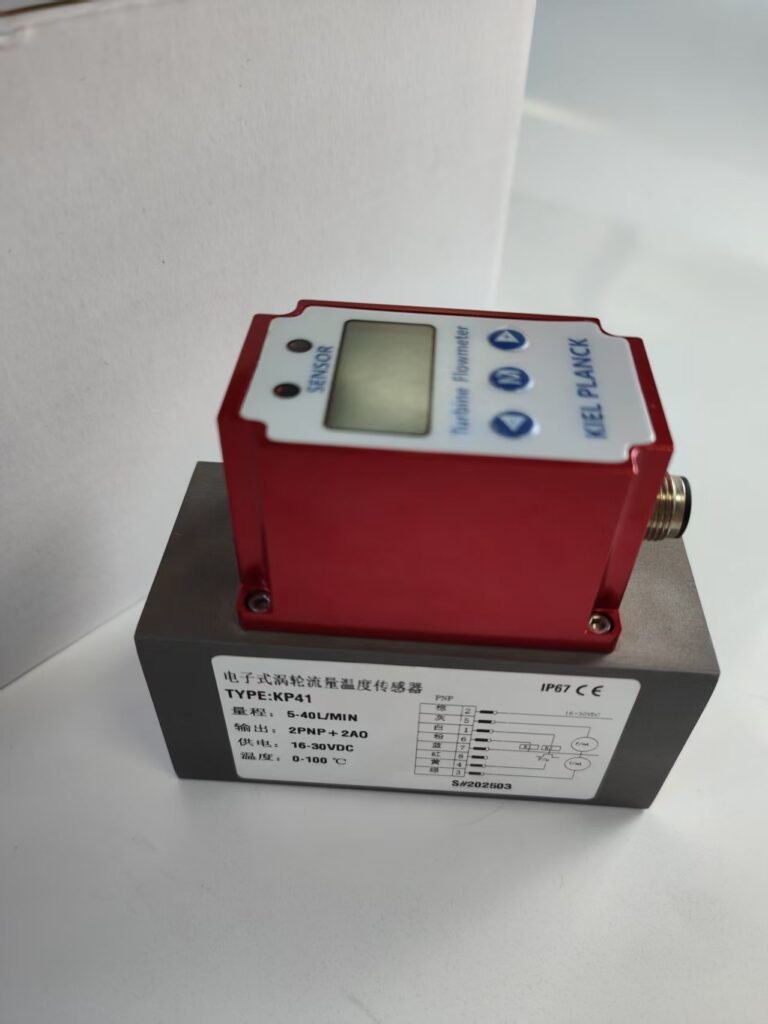
Velocity-type flow meters occupy more than 60% of industrial flow measurement markets. Turbine and vortex flow meters are the most representative products, both applicable to liquid, gas and steam monitoring. However, essential differences in sensing principles lead to huge gaps in field adaptability. Turbine meters rely on mechanical rotation for flow induction, while vortex meters adopt non-contact fluid oscillation detection. Most users only refer to nominal accuracy and ignore differentiated parameters such as wear resistance, range ratio and anti-vibration performance, resulting in frequent accuracy degradation and short service life. Comparing 12 core technical indicators can fully clarify their application boundaries and provide reliable selection basis for refined industrial measurement.
2. Detailed Comparison of 12 Core Technical Parameters
1. Measurement Principle: Turbine flow meters calculate flow rate through impeller rotation speed driven by fluid kinetic energy, belonging to mechanical velocity measurement. Vortex flow meters detect flow velocity by capturing Karman vortex frequency generated when fluid passes through a bluff body, adopting non-contact fluid dynamic induction without moving parts.
2. Measurement Accuracy: Turbine meters achieve high accuracy of ±0.2%~±0.5% FS, ranking top among industrial velocity-type meters. Vortex meters maintain standard accuracy of ±1.0%~±1.5% FS, sufficient for conventional monitoring but inferior in high-precision custody transfer scenarios.
3. Repeatability: Turbine meters deliver excellent repeatability within ±0.1%, ensuring consistent data for precise batching and metering. Vortex meters have acceptable repeatability of ±0.5%, which is stable for general process control but slightly fluctuates under low-flow conditions.
4. Turndown Ratio: Turbine meters feature a wide range ratio of 10:1, supporting accurate low-flow detection. Vortex meters have a narrower effective range of 5:1, with obvious accuracy attenuation when flow rate drops below 20% full scale.
5. Medium Adaptability: Turbine meters are suitable for clean liquid and gas media but vulnerable to solid impurities and viscous fluids. Vortex meters adapt to clean gas, liquid and saturated steam, with stronger tolerance to slight medium impurity and high-temperature steam media.
6. Temperature Resistance: Turbine meters generally work within -40℃ to 120℃, limited by bearing and seal materials. Vortex meters support a wider temperature range up to -40℃ to 350℃, ideal for high-temperature steam and heat medium monitoring.
7. Pressure Resistance: Both meters adapt to conventional industrial pressure levels, but turbine meters face accelerated wear under long-term ultra-high pressure impact. Vortex meters with no moving parts maintain stable performance under high-pressure cyclic impact.
8. Anti-Interference Capability: Turbine meters are sensitive to pipeline vibration and flow field disturbance, requiring strict straight pipe sections. Vortex meters have strong anti-vibration and anti-turbulence performance, allowing adaptive operation in complex pipeline environments.
9. Mechanical Loss: Turbine meters have inevitable bearing and impeller friction loss, leading to cumulative accuracy degradation. Vortex meters adopt fully static detection with zero mechanical wear and no permanent performance attenuation.
10. Service Life: The service life of turbine meters is 3 to 5 years due to wearing parts. Vortex meters achieve a long service life of 8 to 10 years with maintenance-free structural design.
11. Maintenance Cost: Turbine meters require regular cleaning, bearing replacement and calibration, with high annual maintenance costs. Vortex meters need almost no daily maintenance, only regular routine inspection, reducing long-term operating expenses.
12. Market Price Positioning: High-precision turbine meters have relatively higher procurement costs. Conventional vortex meters feature cost-effective pricing and higher cost performance for general industrial scenarios.
3. Applicable Scenario Differentiation
Based on the 12-parameter comparison, turbine flow meters are more suitable for high-precision, low-flow and clean medium scenarios, including energy custody transfer, fine chemical batching and high-accuracy liquid metering. Vortex flow meters are tailored for high-temperature steam, vibrating field environments and long-term unattended monitoring, widely used in power plant steam pipelines, industrial heat supply and conventional process flow detection.
4. Conclusion
The 12 core technical parameters fully reveal the essential differences between turbine and vortex flow meters. Turbine meters take the lead in accuracy, repeatability and low-flow performance but suffer from mechanical wear, short service life and high maintenance costs. Vortex meters excel in environmental adaptability, stability and long-term economy while having limitations in measurement precision and range ratio. There is no absolute superior product, only scenario-matched equipment. Industrial users should select flow meters according to actual medium characteristics, precision requirements, temperature and vibration conditions. Scientific parameter-based selection can effectively avoid measurement errors and reduce lifecycle costs, ensuring stable and efficient operation of industrial flow measurement systems.
Scan the QR code to receive more detailed information.