Conventional level sensors including floating ball switches, capacitive sensors and radar level meters are prone to probe adhesion, signal drift, false triggering and detection failure in long-term operation, resulting in inaccurate level judgment and unstable production operation. As a high-reliability fixed-point detection device, tuning fork level switches adopt piezoelectric mechanical resonance sensing principle, which is immune to medium adhesion, viscosity change and fluid fluctuation. This paper analyzes the detection difficulties of high-viscosity glue and pulp working conditions, summarizes the inherent defects of traditional measuring instruments, and elaborates on the working mechanism, core advantages and on-site application strategies of tuning fork level switches. The study provides a stable and reliable fixed-point level monitoring solution for viscous medium production and processing systems.
Keywords: tuning fork level switch; fixed-point level detection; high-viscosity medium; glue; paper pulp; industrial level monitoring
1. Introduction
In industrial production processes such as glue blending, adhesive storage and paper pulp beating, high-viscosity media present complex physical properties including poor fluidity, easy solidification and strong surface adhesion. Stable and accurate fixed-point level monitoring is essential for automatic feeding, overflow prevention and process parameter stabilization of storage tanks and reaction kettles. However, most traditional level detection technologies are designed for conventional low-viscosity clean media. When facing glue and pulp with high viscosity and solid particle content, sensors are easily covered by medium residues, leading to continuous signal disorder and monitoring failure. Different from traditional detection methods, tuning fork level switches realize fixed-point threshold judgment based on medium density damping difference, which can adapt to long-term monitoring of harsh viscous working conditions and solve the industry pain point of inaccurate level detection caused by medium adhesion.
2. Detection Challenges of High-Viscosity Glue and Pulp Working Conditions
High-viscosity glue and paper pulp bring two core challenges to industrial level detection. First, the strong adhesion property makes the medium easily adhere to the probe, tank wall and equipment surface to form thick residual layers. Traditional sensors cannot distinguish residual adhesion from real liquid level, resulting in persistent false level signals. Second, pulp media contain a large number of suspended fibers and solid particles, with uneven medium density and frequent liquid level fluctuation during stirring and conveying, which further interferes with signal stability. In addition, viscous media are prone to local solidification and stratification, causing detection dead zones and delayed alarm response. These problems easily lead to production faults such as material overflow, insufficient feeding and pipeline blockage, affecting continuous and stable industrial production.
3. Defects of Traditional Level Detection Equipment
Various traditional level sensors are difficult to adapt to high-viscosity glue and pulp scenarios. Floating ball level switches are easily wrapped and stuck by viscous media and fiber impurities, resulting in inflexible floating and complete failure of level judgment. Capacitive level switches are highly sensitive to medium adhesion; long-term residue coverage will change dielectric parameters and cause permanent false alarms. Radar level meters suffer from signal scattering and attenuation due to uneven pulp media and surface adhesion, leading to severe data jitter and unstable threshold detection. All these devices rely on continuous signal sensing or mechanical movement, which cannot eliminate the interference of viscous medium adhesion, making them unsuitable for long-term fixed-point level monitoring of glue and pulp tanks.
4. Working Principle and Core Advantages of Tuning Fork Level Switches
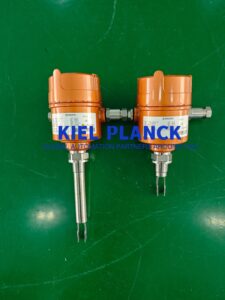
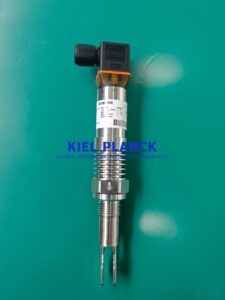
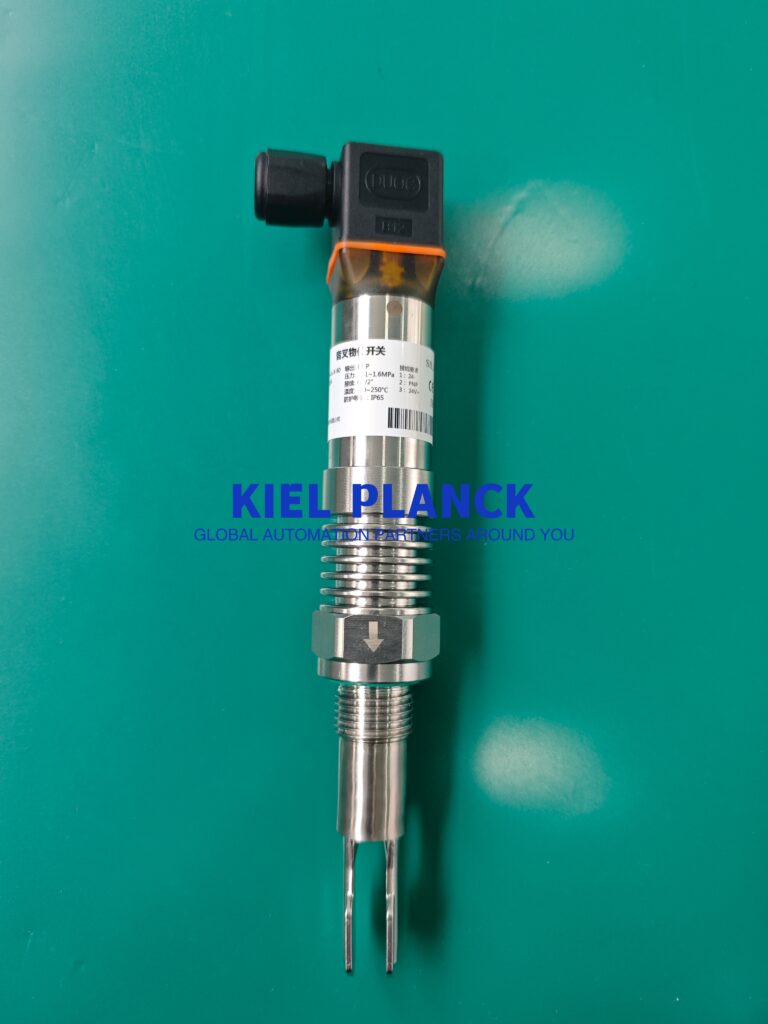
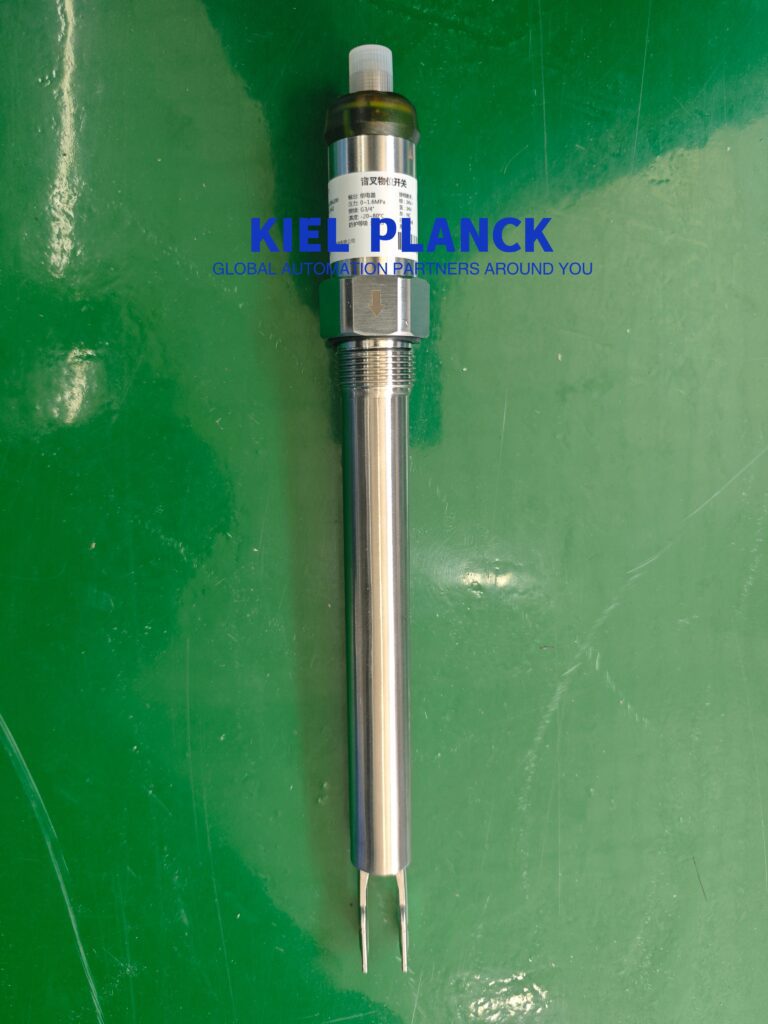
Tuning fork level switches adopt mature piezoelectric resonance detection technology, achieving accurate fixed-point level detection for viscous media. The fork probe maintains a stable natural vibration frequency in the air state. Only when fully immersed in high-density glue or pulp medium will obvious vibration damping occur to change frequency and amplitude and output effective level signals. A small amount of surface adhesion and thin residual layers cannot affect the overall vibration state, fundamentally avoiding false triggering caused by medium hanging.
In terms of structural performance, the integrated streamlined probe has no dead corners or movable parts, effectively reducing medium adhesion and blocking risks. The equipment has no mechanical wear, strong anti-fluctuation and anti-interference capabilities, and is not affected by medium viscosity, particle content and liquid level turbulence. It can stably realize high and low fixed-point level alarm, accurately identify liquid-gas boundary, and maintain long-term detection accuracy in high-viscosity working conditions.
5. On-Site Application and Configuration Scheme
For high-viscosity glue and pulp storage tanks, tuning fork level switches are installed at preset fixed high and low level positions to build a targeted monitoring system. The high-level switch is used for overflow protection to prevent viscous medium overflow and equipment pollution. The low-level switch monitors the minimum safe liquid level to avoid equipment idling and pipeline blockage caused by material shortage. During installation, the probe is kept away from stirring vortex and direct fluid impact areas to ensure stable vibration. Matched with standard switch signal output, the instrument can be seamlessly connected with PLC and DCS systems to realize automatic feeding control, real-time alarm and safety interlock, supporting unattended stable operation of production lines.
6. Conclusion
Strong adhesion and high viscosity are the key factors leading to the widespread failure of traditional level detection equipment in glue and pulp production scenarios. Restricted by working principles and structural defects, conventional sensors cannot eliminate medium adhesion interference, resulting in unstable monitoring data. Tuning fork level switches perfectly adapt to high-viscosity working conditions by virtue of density-based resonance detection and anti-adhesion structural design. The fixed-point accurate detection capability effectively solves false alarm and detection failure problems, ensuring stable and reliable level monitoring of viscous medium tanks. Popularizing the application of tuning fork level switches can reduce production faults and maintenance costs, and provide solid technical support for standardized and efficient operation of papermaking and adhesive production industries.
Scan the QR code to receive more detailed information.