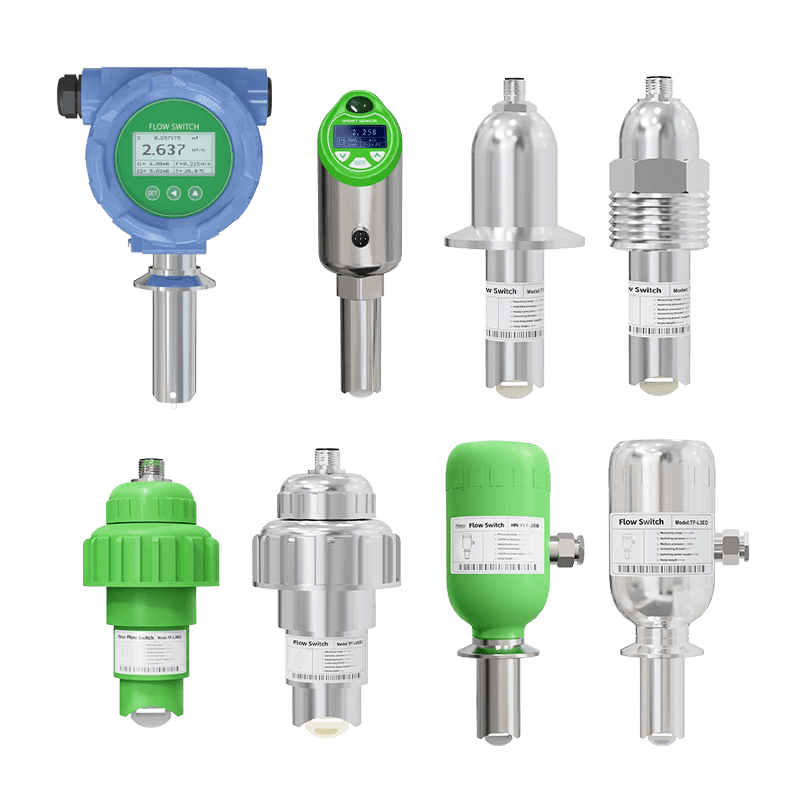
Traditional level detection instruments often suffer from signal drift, residue contamination and structural damage during repeated CIP cycles, resulting in inaccurate level monitoring and failure to meet GMP sanitary standards. As a high-reliability sanitary measuring device, tuning fork level switches adopt seamless integrated structure and high-purity sanitary materials, which can withstand long-term high-temperature CIP flushing and chemical cleaning. This article analyzes the sanitary monitoring difficulties under food and pharmaceutical CIP working conditions, summarizes the limitations of traditional level sensors, and expounds the structural advantages, adaptive performance and standardized application schemes of sanitary tuning fork level switches. The research provides reliable level monitoring solutions for sterile production and standardized CIP cleaning in food and pharmaceutical industries.
Keywords: tuning fork level switch; sanitary working condition; CIP cleaning; food and pharmaceutical industry; sterile production; GMP compliance
1. Introduction
Sterile processing and full-process sanitary management are the core requirements of food and pharmaceutical manufacturing. CIP automatic cleaning technology is widely used in fermentation tanks, batching tanks and storage tanks to eliminate residual materials, bacteria and organic pollutants without
The CIP cleaning process has three typical harsh characteristics: alternating acid-base chemical corrosion, cyclic high-temperature impact, and high-speed fluid scouring. These working conditions bring fatal problems to conventional level sensors. Capacitive level switches with non-sanitary structures are easy to accumulate residual materials in gaps, forming bacterial breeding points and failing GMP audits. Floating ball level switches have movable mechanical structures that are prone to dead-angle residue and stuck failure during repeated flushing. Radar level meters are susceptible to steam and foam generated during high-temperature cleaning, resulting in signal jitter and misjudgment. In addition, ordinary sensors cannot withstand long-term alternating chemical erosion, leading to aging shell damage and measurement drift, which cannot meet the long-term stable operation requirements of sanitary production lines.
3. Sanitary Adaptation Mechanism of Tuning Fork Level Switches for CIP Scenarios
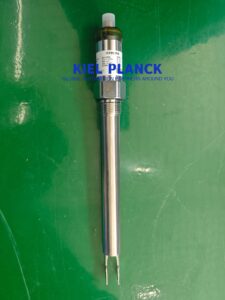
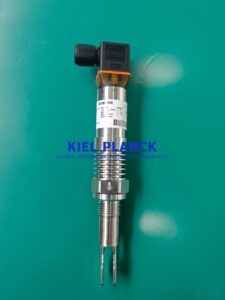
Sanitary tuning fork level switches are professionally optimized for food and pharmaceutical CIP cleaning working conditions, with inherent structural and performance advantages. Different from traditional sensors, the whole machine adopts integrated seamless welding design without gaps, grooves and sanitary dead corners, which allows CIP cleaning fluid to flow smoothly without residual material accumulation. The wetted parts are made of food-grade 316L stainless steel with ultra-low surface roughness, which effectively resists adhesion of viscous materials and biological residues. Meanwhile, the instrument adopts high-temperature and chemical-resistant internal components, which can stably withstand repeated cycles of acid-base cleaning and high-temperature sterilization, without zero drift and performance attenuation. Relying on mechanical resonance principle, the sensing function will not be affected by cleaning fluid fluctuation, steam interference and medium switching, ensuring accurate and stable level judgment before and after CIP cleaning.
4. Core Application Advantages in Sanitary Working Conditions
Tuning fork level switches have multiple core advantages adapting to food and pharmaceutical sanitary production and CIP cleaning. First, the fully sanitary structure completely avoids residual pollution and bacterial growth, fully complying with GMP and food safety certification standards. Second, the excellent chemical resistance adapts to various CIP cleaning media including lye, acid liquid and high-temperature purified water, realizing long-cycle stable operation. Third, the instrument has no movable parts, eliminating mechanical wear and stuck faults caused by high-frequency flushing. Fourth, it maintains consistent detection accuracy in complex switching scenarios of material liquid, cleaning fluid and steam, effectively avoiding false level signals and ensuring continuous and reliable process monitoring.
For food and pharmaceutical sanitary production lines, tuning fork level switches adopt quick-install sanitary clamp connection to meet disassembly-free CIP cleaning requirements, facilitating equipment verification and daily maintenance. The sensors are installed at high-level overflow protection and low-level safety monitoring positions of sanitary tanks, avoiding fluid impact areas to ensure stable resonance vibration. During production and cleaning switching, the instrument can automatically identify material liquid and cleaning fluid, providing accurate switch signals for system automatic control. Regular CIP cyclic cleaning can keep the probe surface clean without manual wiping, realizing unattended intelligent monitoring of sanitary production equipment.
5. Standard Field Application and Configuration Scheme
6. Conclusion
Frequent CIP cyclic cleaning and strict sanitary standards are the main challenges for level monitoring in food and pharmaceutical industries. Traditional level sensors are limited by structural defects and poor environmental adaptability, which cannot meet the long-term stable operation and sterile production requirements. Sanitary tuning fork level switches perfectly adapt to CIP cleaning scenarios by virtue of dead-corner-free sanitary structure, excellent chemical and high-temperature resistance, and stable resonance sensing performance. Their standardized application can effectively ensure the sanitation and safety of production equipment, maintain long-term accurate level monitoring, and provide solid technical support for standardized, intelligent and sterile production of food and pharmaceutical products.
Scan the QR code to receive more detailed information.