Traditional level sensors are prone to blockage, adhesion and false triggering when applied in impurity-rich slurry environments, failing to accurately identify low liquid level conditions. This defect often causes unsolved pump dry-run faults, resulting in impeller abrasion, motor burnout, frequent equipment shutdown and increased maintenance costs. As a high-reliability point-type measuring instrument, the tuning fork level switch adopts mechanical resonance sensing principle, which is immune to solid impurities, sediment adhesion and medium turbidity. This article analyzes the practical pain points of pump dry-run interlock in sewage and slurry working conditions, discusses the inherent defects of traditional monitoring equipment, and elaborates on the working mechanism, application advantages and field deployment schemes of tuning fork level switches. The study provides an effective technical solution for eliminating pump dry-run risks and improving the long-term stable operation of slurry conveying systems.
Keywords: tuning fork level switch; sewage slurry; impurity medium; pump dry-run protection; safety interlock; industrial fluid transportation
1. Introduction
In municipal sewage treatment, industrial wastewater discharge and mine slurry transportation, conveying pumps operate continuously under harsh medium conditions with complex impurities and unstable liquid levels. Pump dry-run is one of the most common and harmful operational faults in fluid conveying systems. When the tank liquid level is too low, air enters the pump body, causing dry friction of the impeller, sharp temperature rise and mechanical damage, which seriously shortens the service life of pumping equipment. Reliable low-level monitoring and dry-run interlock protection are essential to ensure pump operational safety. However, traditional floating ball switches, capacitive sensors and pressure transmitters cannot adapt to high-impurity slurry environments, often leading to interlock failure and false alarms. Tuning fork level switches, with excellent anti-blocking and anti-interference performance, have become the optimal device for solving dry-run interlock problems in sewage and slurry working conditions.
2. Working Condition Pain Points and Traditional Equipment Defects
Sewage and slurry media contain a variety of solid particles, sludge sediments and floating impurities, which bring fatal interference to traditional level monitoring devices. Floating ball level switches are easily stuck and wrapped by sludge and fiber impurities, resulting in inflexible floating and failed low-level signal feedback. Capacitive level sensors are highly sensitive to medium adhesion, and long-term sludge coverage on the probe will change dielectric parameters, causing persistent false triggering and inability to identify real low liquid levels. Pressure transmitters are affected by sediment deposition and water flow fluctuation, with unstable pressure signal output and poor low-level detection accuracy. All these defects lead to untimely or failed dry-run interlock, making pumping equipment face long-term hidden damage and causing frequent system downtime in industrial operation.
3. Anti-impurity Working Mechanism of Tuning Fork Level Switches
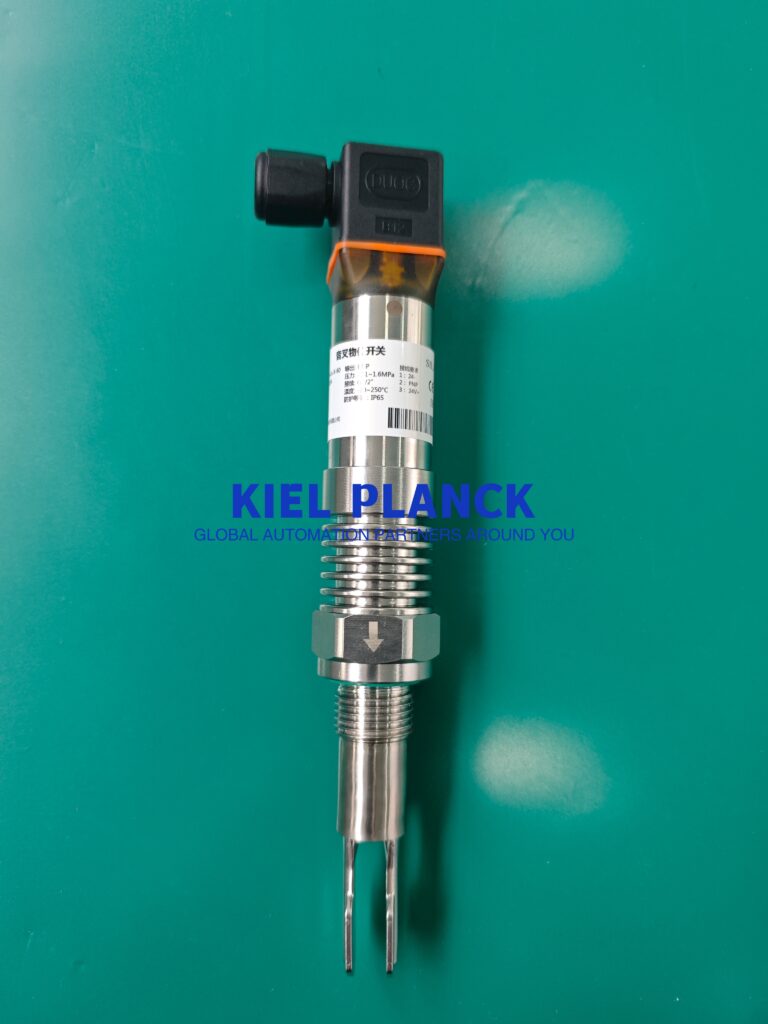
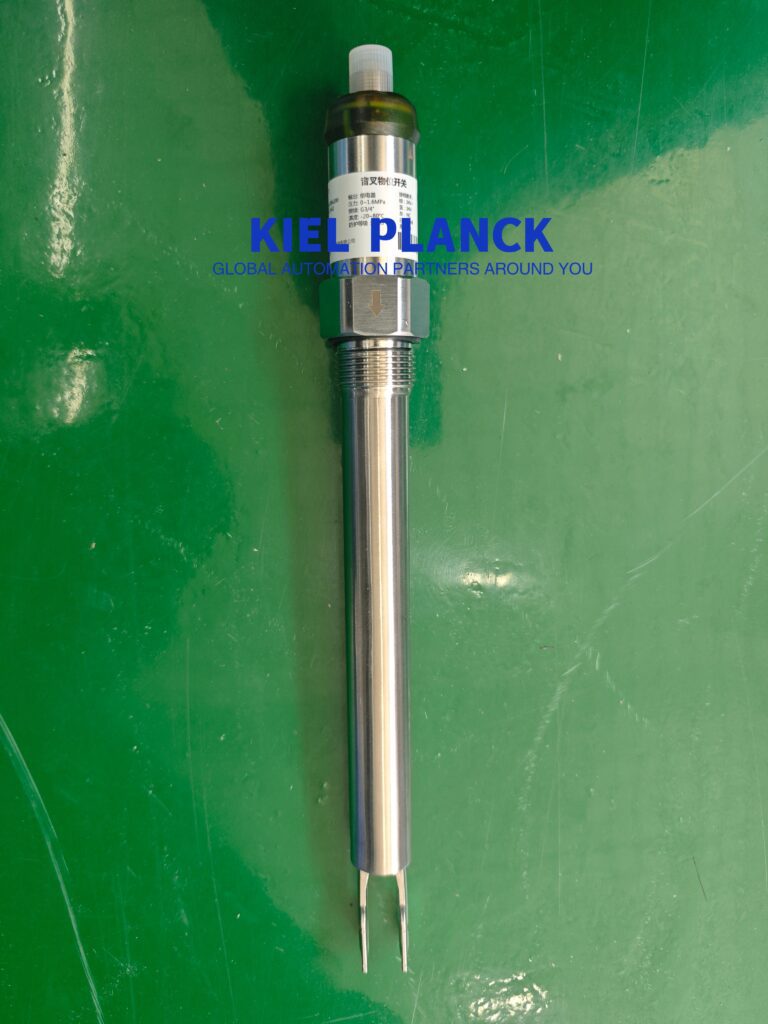
Tuning fork level switches rely on piezoelectric mechanical resonance to realize medium identification, with a working principle fundamentally adapted to impurity-containing slurry. The probe maintains a fixed vibration frequency in the air. When immersed in liquid slurry, the medium produces obvious damping on the fork body, changing the vibration state and outputting a liquid level signal. When the liquid level drops and the probe is exposed to air, the vibration recovers and triggers a low-level dry-run protection signal. Different from traditional sensors, a small amount of sludge adhesion and particle coverage will not affect the overall vibration state of the fork body. The instrument can effectively filter interference caused by impurities and accurately distinguish liquid-gas states, realizing reliable low-level monitoring in turbid and impurity-rich media.
4. Core Application Advantages for Slurry Pump Protection
Tuning fork level switches have unique advantages in solving pump dry-run problems in sewage and slurry conditions. Firstly, the integrated streamlined fork structure has no grooves or movable parts, effectively avoiding blockage and winding by fiber impurities and sludge. Secondly, the instrument is not affected by medium turbidity, particle content and sediment adhesion, maintaining stable measurement accuracy for a long time. Thirdly, it features fast response speed and sensitive threshold judgment, which can instantly trigger interlock stop and alarm when the liquid level is insufficient, thoroughly avoiding pump dry-run damage. In addition, the equipment has strong mechanical strength and corrosion resistance, adapting to long-term scouring and impact of slurry media, with low failure rate and minimal maintenance workload.
5. Field Application and Interlock Deployment Scheme
For sewage and slurry tank pump protection systems, tuning fork level switches are installed at the lowest safe liquid level of the tank, forming a dedicated dry-run monitoring point. The instrument is linked with the pump control system to realize automatic interlock logic: when the liquid level is higher than the safe threshold, the pump operates normally; when the liquid level drops to the limit position, the switch immediately outputs a signal to cut off the pump power and trigger an audible and visual alarm. During installation, the probe is kept away from water flow impact and sediment deposition areas to ensure stable vibration. Regular simple flushing can keep the probe clean, realizing long-term unattended safe monitoring.
6. Conclusion
Complex impurities and sludge deposition are the main causes of traditional sensor failure and pump dry-run accidents in sewage and slurry conveying systems. Restricted by structural and principle defects, conventional monitoring equipment cannot achieve stable low-level detection in harsh slurry conditions. Tuning fork level switches perfectly solve the industry pain point of dry-run interlock failure by virtue of anti-blocking, anti-adhesion and high-sensitivity resonance detection performance. Scientific deployment of tuning fork switches can effectively avoid pump dry-run damage, reduce equipment maintenance costs and downtime losses, and ensure the safe, stable and continuous operation of sewage and slurry conveying systems in environmental protection and industrial production.
Scan the QR code to receive more detailed information.