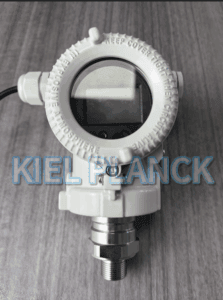
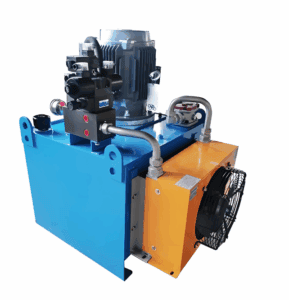
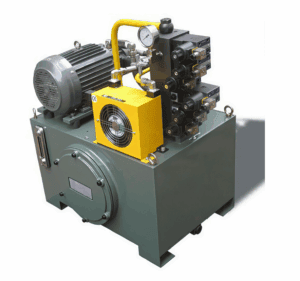
This article introduces the five strengths of single-crystal silicon sensors deployed in hydraulic power units: ultra-low hysteresis and creep, excellent temperature stability, strong resistance to cyclic pressure fatigue, high overload capacity for pressure hammering, and robust anti-vibration performance. It explains how each advantage addresses typical pain points in hydraulic measurement, and compares their practical performance with ordinary diffused silicon transmitters. Selecting single-crystal silicon transmitters improves the stability of closed-loop hydraulic control, extends service life and cuts routine calibration and maintenance workload.
Introduction
Pressure transmitters are the core feedback component for hydraulic station closed-loop regulation, safety interlock and load monitoring. Traditional diffused silicon sensors are widely used in low-to-medium demand hydraulic equipment. However, under long-term cyclic pressure and pump vibration, these sensors gradually generate zero drift, signal fluctuation and irreversible sensing element deformation. Many system integrators have switched to single-crystal silicon transmitters for precision hydraulic machines, injection molding machines and servo hydraulic systems. The benefits are not limited to higher static accuracy. Its unique single-crystal lattice structure brings five inherent advantages perfectly matching the dynamic characteristics of hydraulic circuits.
The first advantage is negligible hysteresis and creep. Single-crystal silicon has a complete and uniform crystal structure. Unlike diffused silicon chips that suffer slight residual deformation after repeated pressure cycles, single-crystal silicon returns to its original state after pressure release, with nearly no hysteresis or creep. In hydraulic systems with frequent load changes, this feature ensures consistent readings during pressure rise and drop. The control PLC can obtain true pressure feedback, avoiding hunting or unstable actuation of hydraulic cylinders caused by measurement lag.
Second, outstanding temperature stability. Hydraulic oil temperature varies greatly from cold startup to continuous operation, often ranging from 20°C to 90°C. Temperature change is a major source of reading drift for ordinary transmitters. Single-crystal silicon material features a low temperature coefficient. Combined with built-in digital temperature compensation, it suppresses thermal drift effectively. Even when mounted near pump outlets with high oil temperature, the measurement offset remains minimal, without frequent zero trimming on site.
Third, strong fatigue resistance under cyclic pressure. Hydraulic pumps generate continuous pressure pulsation, applying millions of cyclic loads on the sensing diaphragm over months. Conventional sensing chips accumulate fatigue damage gradually, leading to permanent zero shift. Single-crystal silicon’s superior elastic properties allow it to withstand repeated cyclic pressure loading without permanent deformation. This is especially valuable for transmitters installed near pump outlets, where pressure pulsation is the most severe.
Fourth, high overload and pressure spike tolerance. Valve switching and sudden load impact create millisecond-scale pressure hammer spikes, sometimes reaching 1.5 to 2 times normal working pressure. Single-crystal silicon sensing elements are designed with a wide linear elastic range and high proof pressure rating. Short transient spikes will not deform the chip permanently. While ordinary sensors may suffer irreversible damage from occasional overpressure, single-crystal silicon transmitters can survive repeated pressure surges common in hydraulic loops.
Fifth, reliable anti-vibration performance. Pump motors and hydraulic manifolds produce persistent mechanical vibration. Vibration loosens internal components and distorts sensor signals. The suspended twin-beam structure of many single-crystal silicon chips isolates the sensitive element from base stress. Together with fully potted electronic circuits, these transmitters resist vibration interference. Even mounted directly on valve blocks, they maintain stable output without intermittent signal jumping.
Naturally, single-crystal silicon transmitters come with higher upfront cost. For simple hydraulic systems with stable pressure and low uptime requirements, standard sensors may be sufficient. But for precision servo hydraulics, safety-critical hydraulic stations and equipment running nonstop, the long-term value is obvious: fewer calibrations, less unplanned downtime and longer service life. Many users underestimate the cost of repeated sensor replacement and production interruption.
Conclusion
Single-crystal silicon pressure transmitters deliver five major benefits for hydraulic station applications: minimal hysteresis and creep, excellent temperature stability, strong cyclic fatigue resistance, high overload tolerance against pressure spikes, and built-in anti-vibration structure. These strengths directly solve common hydraulic measurement problems including load-related hysteresis, thermal drift, pulsation-induced fatigue damage, pressure hammer impact and pump vibration interference. It is not merely about higher static accuracy; the core value lies in stable readings under dynamic hydraulic working conditions. When selecting instruments for high-performance hydraulic power units, engineers should prioritize these five material and structural advantages rather than only comparing accuracy figures. Single-crystal silicon transmitters reduce field troubleshooting frequency, improve the precision of hydraulic closed-loop control and lower the total lifecycle cost of hydraulic monitoring systems.
Scan the QR code to receive more detailed information.