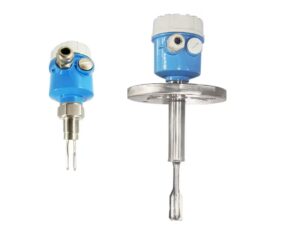
What Is a Tuning Fork Level Switch?
A tuning fork level switch is an industrial point-level detection device used to detect the presence or absence of liquids in tanks, vessels, and pipelines. It is widely used in water treatment, chemical processing, food production, and other industrial applications.
Unlike continuous level measurement instruments, a tuning fork level switch detects whether the liquid has reached a specific point. It can be used for high-level alarms, low-level alarms, and pump protection.
Its compact design and straightforward operation make it a practical solution for many industrial level detection tasks.
How Does a Tuning Fork Level Switch Work?
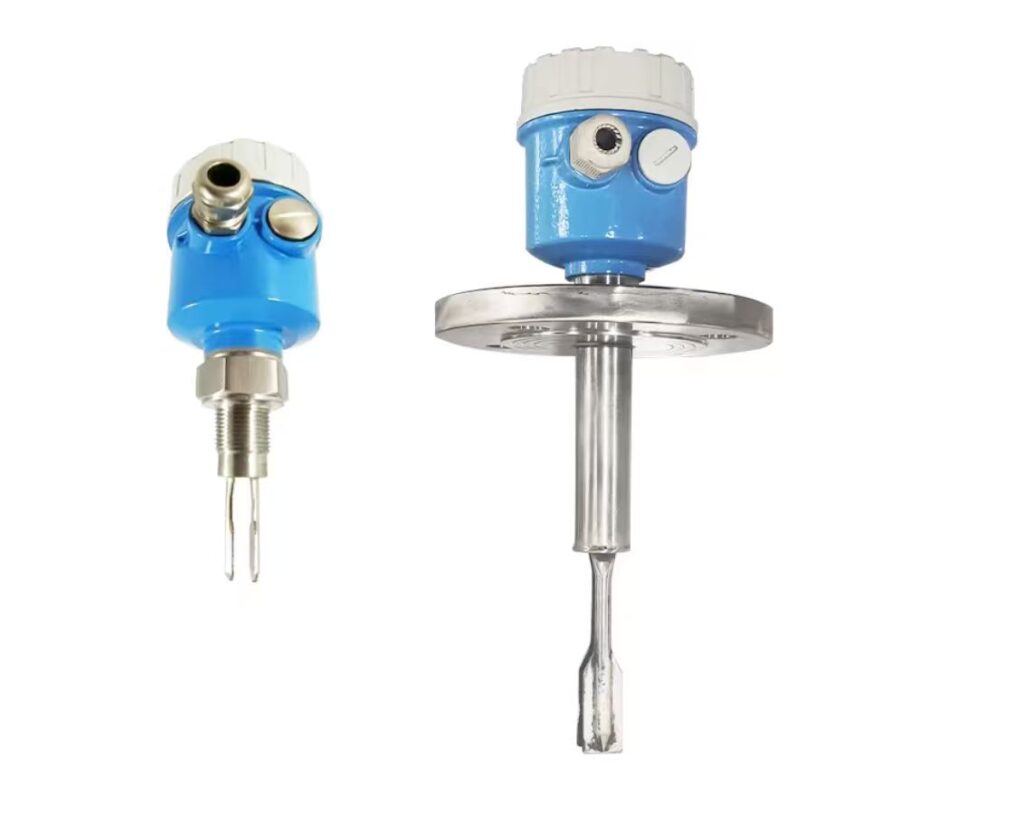
A tuning fork level switch operates by using the vibration characteristics of its sensing element.
The working process generally includes three steps.
1. Mechanical Vibration
An electronic circuit excites the fork-shaped sensing element, causing it to vibrate at a specific frequency.
2. Liquid Contact
When the liquid reaches the fork, the surrounding medium changes the vibration characteristics of the sensing element. The liquid typically reduces its vibration amplitude or changes its resonant behavior.
3. Output Signal
The internal electronics detect this change and switch the output signal. Depending on the model and configuration, the output can be used to activate an alarm, stop a pump, or control a filling process.
When the liquid level moves away from the sensing element, the switch returns to its normal state according to its configured switching logic.
Main Advantages of Tuning Fork Level Switches
Tuning fork level switches offer several benefits for industrial applications.
Point-level detection: Suitable for high-level and low-level alarms.
Compact structure: Easy to integrate into many tanks and vessels.
Automatic operation: Provides a switching signal without continuous operator monitoring.
Versatile applications: Available for different liquids and installation conditions.
Simple control integration: Can connect to compatible PLCs, relays, and industrial control systems.
Actual performance depends on the selected model, process conditions, and installation requirements.
Typical Applications
Tuning fork level switches are commonly used in:
Water storage tanks
Chemical storage vessels
Industrial liquid processing systems
Wastewater treatment equipment
Food and beverage production systems
Lubricating oil and other compatible liquid tanks
The correct model should be selected according to the liquid properties, process temperature, pressure, and required wetted materials.
How to Select the Right Model
Before purchasing a tuning fork level switch, consider the following factors:
Medium: Identify the liquid and its properties.
Process temperature: Confirm the operating temperature range.
Process pressure: Check the maximum working pressure.
Connection type: Select a suitable threaded or flanged connection.
Output signal: Confirm compatibility with the control system.
Material compatibility: Ensure the wetted parts are suitable for the process medium.
These details help reduce installation problems and improve measurement reliability.
Frequently Asked Questions
Q1: Does a tuning fork level switch measure continuous liquid level?
No. It normally detects liquid presence at a fixed point rather than measuring the actual liquid height continuously.
Q2: Can it be used for pump protection?
Yes. When properly configured, it can provide a high-level or low-level switching signal for pump control and protection.
Q3: Is it suitable for every liquid?
No. Compatibility depends on the liquid’s properties and the instrument’s design. Confirm the manufacturer’s specifications before selection.
Conclusion
A tuning fork level switch provides a practical solution for point-level detection in many industrial processes. Understanding its working principle, application requirements, and technical specifications helps engineers select the right instrument for reliable operation.

Scan the QR code to receive more detailed information.