Selecting the right tuning fork level switch is essential for reliable liquid level detection. Although many models look similar, differences in process conditions, materials, connections, and electrical outputs can affect their suitability for a particular application.
This guide explains six important factors to consider before placing an order.
1. Identify the Process Medium
Start by identifying the liquid that the switch will detect.
Different liquids may have different densities, viscosities, corrosiveness, and operating temperatures. These properties can influence instrument performance and material selection.
For example, a switch used in a clean water tank may require different wetted materials from one installed in a chemical storage vessel.
Always provide the manufacturer with the medium name and relevant chemical properties.
2. Check Operating Temperature
The process temperature must remain within the instrument’s specified operating range.
High temperatures may affect the electronic components, seals, and wetted materials. If the application involves hot liquids, verify the allowable process temperature and whether a suitable thermal design is available.
Do not select a model based only on the ambient temperature.
3. Confirm Process Pressure
Process pressure is another important selection parameter.
Check the normal operating pressure and any expected pressure fluctuations. The selected instrument’s pressure rating must meet the actual process requirements.
For pressurized vessels and pipelines, also verify that the process connection and sealing arrangement are appropriate.
4. Choose the Correct Process Connection
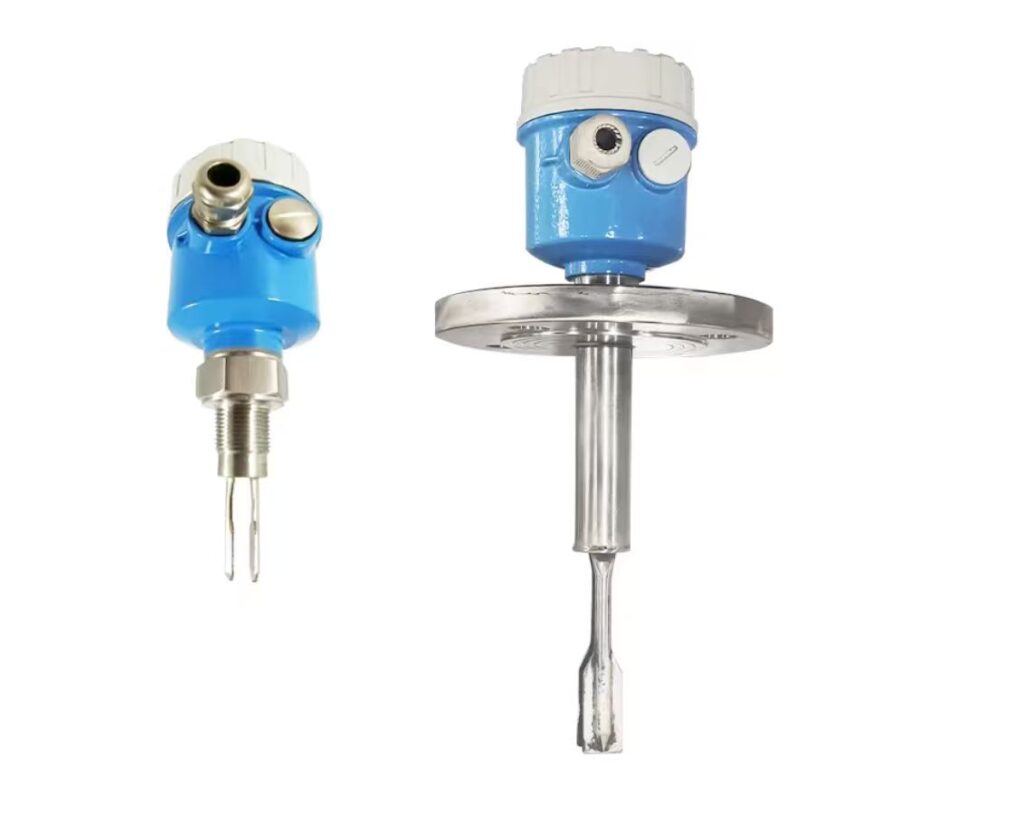
Tuning fork level switches may be available with different connection options, depending on the manufacturer and model.
Common considerations include:
Thread size and standard
Flange size and rating
Installation opening
Available insertion length
Required sealing method
Confirm the connection dimensions before installation, especially when replacing an existing instrument.
5. Select the Output Signal
The output must be compatible with the receiving control system.
Depending on the product design, possible options may include relay switching or electronic switching outputs. Some models provide different output configurations.
Before ordering, confirm:
Supply voltage
Output type
Electrical connection
PLC or relay compatibility
Required fail-safe behavior
Never assume that two instruments with similar appearances have identical electrical specifications.
6. Consider Installation Conditions
The installation location can affect the performance of a tuning fork level switch.
Consider whether the sensing element may encounter turbulence, buildup, foam, or mechanical interference.
Choose an appropriate installation position and follow the manufacturer’s mounting instructions. For difficult process conditions, discuss the application with the instrument supplier before finalizing the model.
Selection Checklist
Before requesting a quotation, prepare the following information:
| Parameter | Information to Confirm |
|---|---|
| Medium | Liquid name and properties |
| Temperature | Minimum and maximum process temperature |
| Pressure | Normal and maximum process pressure |
| Connection | Thread or flange specifications |
| Insertion length | Required installation dimensions |
| Power supply | Available voltage |
| Output | Required switching signal |
| Materials | Wetted-part compatibility |
| Application | High-level alarm, low-level alarm, or pump control |
Providing these details helps suppliers recommend a suitable model more efficiently.
Frequently Asked Questions
Q1: Can one model work with different liquids?
Some models can handle multiple compatible liquids, but suitability must be confirmed for each application.
Q2: Should I choose a threaded or flanged connection?
The choice depends on the vessel design, installation requirements, pressure rating, and applicable piping standards.
Q3: What information should I send when requesting a quotation?
At minimum, provide the medium, temperature, pressure, connection size, power supply, output requirements, and intended application.
Conclusion
Choosing a tuning fork level switch requires more than checking its price or appearance. By confirming the process medium, operating conditions, connection, output, and installation requirements, buyers can make a more informed purchasing decision.

Scan the QR code to receive more detailed information.