Introduction
Water tanks are widely used in factories, commercial buildings, water treatment plants, and industrial production facilities. Reliable level detection helps prevent overflow, supports pump control, and improves daily operating efficiency.
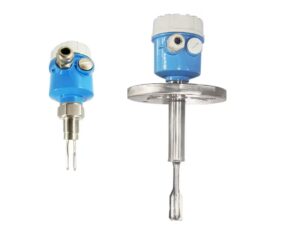
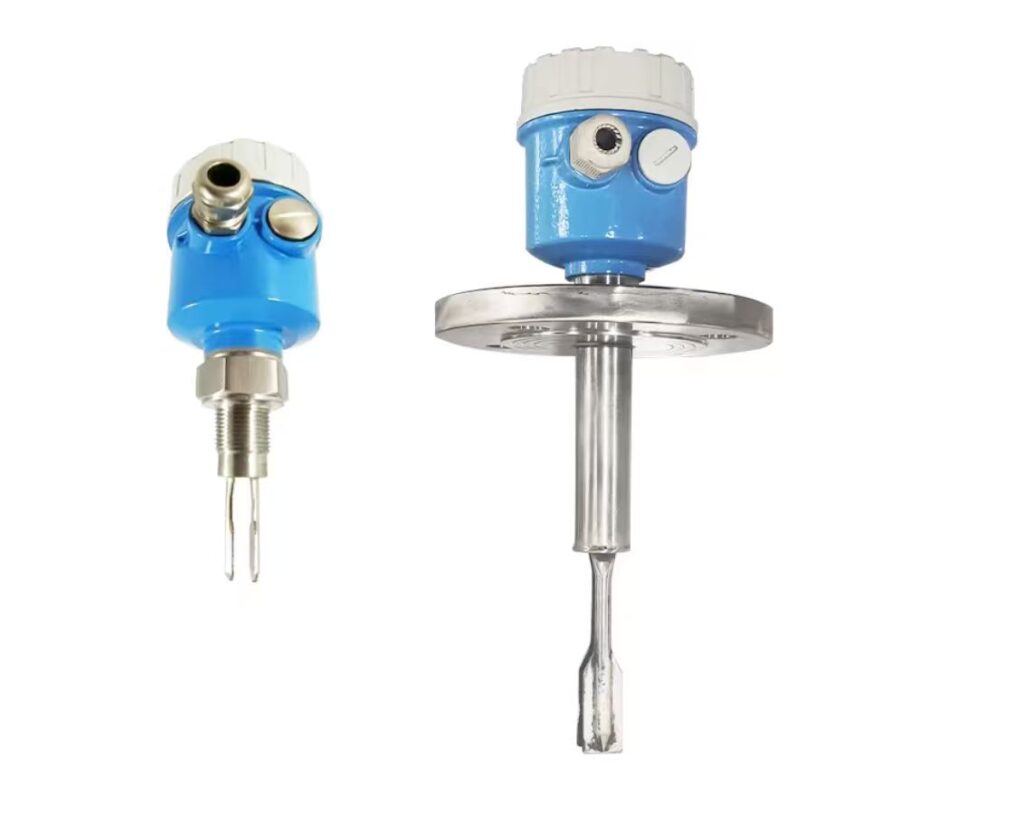
A tuning fork level switch is a practical option when a system needs to detect whether water has reached a specific level.
Why Use a Tuning Fork Level Switch?
A tuning fork level switch provides a switching signal when water reaches or leaves its sensing point.
Unlike a continuous level transmitter, it does not normally report the exact water height. Instead, it provides a clear point-level indication that can be used by a control system.
Typical benefits include:
Automatic high-level and low-level detection
Support for tank overflow prevention
Integration with compatible control panels
Compact installation in suitable tanks
Reduced dependence on manual level checks
The exact functions depend on the selected model and control arrangement.
Common Applications in Water Systems
1. Water Storage Tanks
A switch installed near the upper part of a tank can provide a high-level signal when water reaches the configured detection point.
The control system can use this signal to stop the filling pump or activate an alarm.
2. Pump Protection
Low-level detection can help prevent a pump from operating when the water level falls below a specified point.
The control system must be designed to respond correctly to the switch signal and stop the pump when required.
3. Water Treatment Equipment
Water treatment plants often use tanks for storage, filtration, and process management.
Tuning fork level switches can provide point-level signals for compatible tanks and process vessels.
4. Industrial Cooling Water Systems
Factories may use water tanks as part of their cooling systems.
Point-level detection can help operators identify low-water or high-water conditions and take appropriate action.
Installation Considerations
Correct installation is important for reliable operation.
First, choose a suitable mounting position that corresponds to the required detection point. Avoid locations where the sensing element may be affected by excessive turbulence, mechanical interference, or unsuitable mounting geometry.
Second, confirm that the wetted materials are compatible with the water quality and any treatment chemicals present.
Third, verify the supply voltage, output signal, and control logic before connecting the instrument to a pump or alarm system.
For outdoor tanks, check the required enclosure protection and environmental specifications.
Tuning Fork Switch vs. Continuous Level Measurement
A tuning fork level switch and a continuous level transmitter serve different purposes.
| Feature | Tuning Fork Level Switch | Continuous Level Transmitter |
|---|---|---|
| Main function | Point-level detection | Continuous level measurement |
| Output information | Switching state | Level value or corresponding signal |
| Typical use | High/low alarms | Monitoring changing water levels |
| Control purpose | On/off actions | Continuous monitoring and regulation |
Some installations use both instruments to provide complementary functions.
Frequently Asked Questions
Q1: Can a tuning fork level switch prevent water tank overflow?
It can provide a high-level signal for an appropriately designed overflow prevention system. Overall protection also depends on control logic, equipment reliability, and any required independent safety measures.
Q2: Is it suitable for drinking water tanks?
Potentially, but all wetted materials and applicable certifications must be suitable for the intended drinking-water application.
Q3: Can it control a water pump automatically?
Yes. When connected to a compatible control system and configured correctly, it can provide switching signals for pump control.
Conclusion
Tuning fork level switches can support reliable point-level detection in water tanks, cooling systems, and water treatment equipment. Selecting a suitable model and installing it correctly helps improve process control and reduce the risk of overflow or low-water operation.


Scan the QR code to receive more detailed information.