Pressure transmitters, as essential field monitoring devices, are mainly divided into explosion-proof (flameproof) and intrinsically safe types for hazardous area applications. Although both designs meet industrial safety certification requirements, they differ fundamentally in working principles, structural protection, installation limitations and applicable hazardous zones. Many chemical engineering users confuse the two protection grades, leading to improper selection that may cause hidden safety hazards or unnecessary cost waste. This article systematically compares the technical mechanisms, safety characteristics and field performance of explosion-proof and intrinsically safe pressure transmitters. It clarifies their applicable chemical working conditions, summarizes typical selection mistakes, and provides practical classification selection guidelines for chemical hazardous area deployment. The research aims to help enterprises achieve compliant, safe and cost-effective instrument configuration in explosive chemical environments.
1. Introduction
Chemical production sites are classified as hazardous locations due to widespread combustible media, high-temperature reactions and confined pipeline spaces. Even tiny electrical sparks or surface overheating can trigger severe explosion accidents. As core process monitoring equipment, pressure transmitters operate continuously in field hazardous zones, making explosion protection performance the primary selection indicator beyond accuracy and stability. Flameproof explosion-proof and intrinsically safe designs are the two mainstream explosion protection technologies for industrial transmitters. Explosion-proof products isolate internal ignition sources through robust sealed structures, while intrinsically safe models limit circuit energy to eliminate ignition capability fundamentally. In complex chemical zoning including Zone 0, Zone 1 and Zone 2, mismatched explosion grades will lead to unqualified safety acceptance and potential operational risks. Therefore, mastering differentiated selection logic is critical for chemical safety production management.
2. Working Principle and Core Safety Mechanism Differences
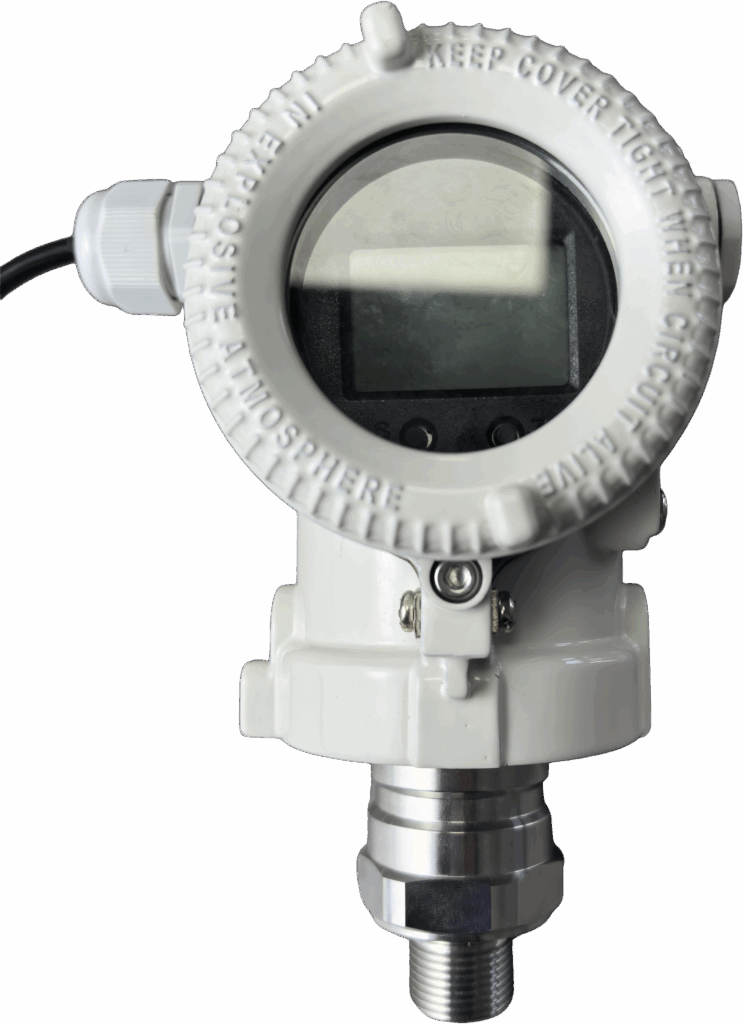
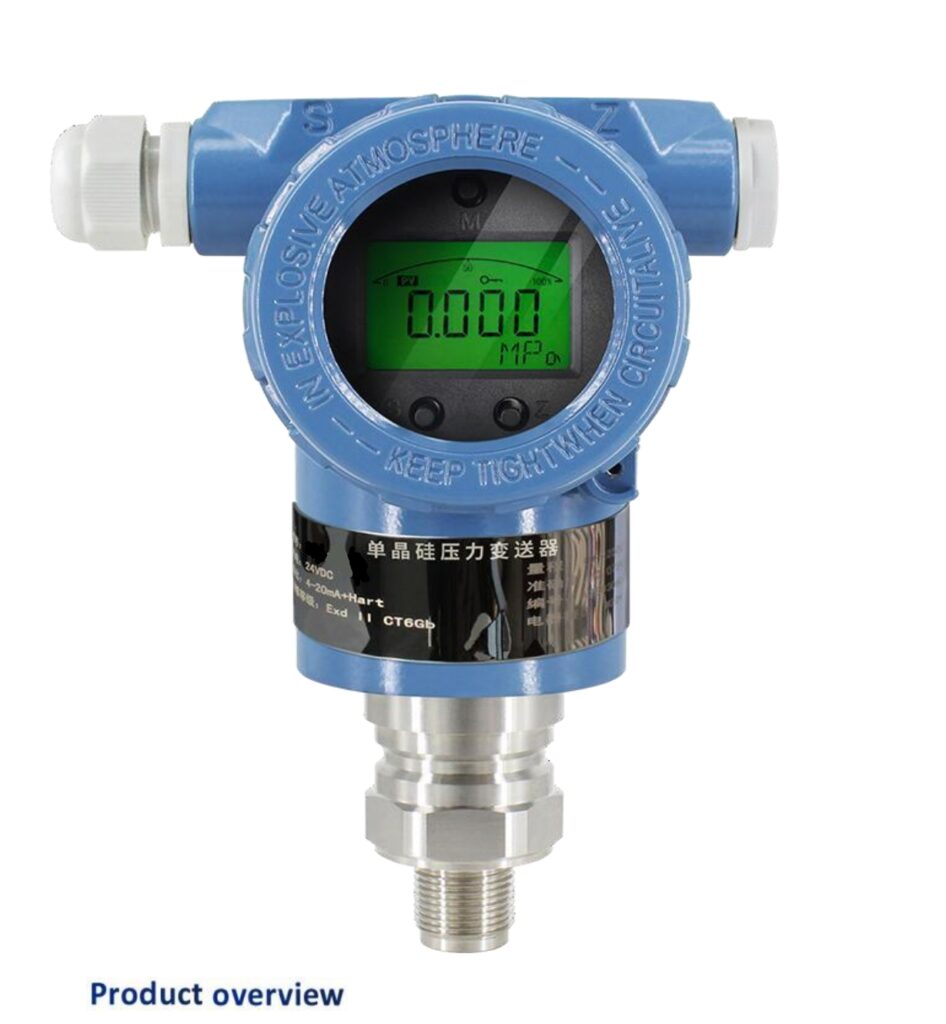
The essential distinction lies in their different safety design philosophies. Explosion-proof transmitters adopt a passive isolation protection strategy. Their thick metal enclosures can completely contain internal sparks or short-circuit explosions. Even if internal circuit failure generates ignition energy, the flame and high temperature cannot penetrate the sealed shell to ignite external explosive gas mixtures. This structural isolation design allows internal circuits to work with normal operating energy, ensuring stable measurement performance while meeting explosion-proof requirements.
In contrast, intrinsically safe transmitters adopt an active energy-limiting safety design. The internal circuit is strictly optimized with low-power components and precision current-limiting modules. Under both normal operation and fault conditions such as short circuit and overload, the system strictly controls circuit voltage, current and power below the minimum ignition energy of chemical explosive media. Without generating sparks or high-temperature hot surfaces, the equipment fundamentally eliminates explosion risks, requiring no heavy protective shell structure.
3. Performance and Field Adaptability Comparison
In terms of structural characteristics, explosion-proof transmitters feature high mechanical strength, pressure resistance and impact resistance. Their robust shells adapt to harsh chemical working conditions with vibration, impact and high-pressure flushing. However, the fully sealed structure leads to poor heat dissipation, making them prone to temperature accumulation in long-term high-load operation. Meanwhile, internal maintenance requires power cutoff, increasing operational complexity.
Intrinsically safe transmitters have lightweight structures, good heat dissipation and stable low-power operation. They support live-line debugging and online maintenance without power shutdown, improving field operation efficiency. Nevertheless, their strict energy-limiting design restricts circuit power, resulting in weaker signal driving capability and anti-interference performance compared with explosion-proof models. Additionally, intrinsically safe equipment must be matched with certified safety barriers, increasing supporting configuration requirements.
4. Chemical Hazard Zoning and Standard Selection Rules
Chemical hazardous area classification defines clear selection boundaries. Zone 0, where explosive gas mixtures exist continuously or for a long time, only allows intrinsically safe transmitters, as explosion-proof structures cannot achieve zero-risk protection in persistent explosive environments. Zone 1 with occasional explosive gas accumulation supports both intrinsically safe and high-grade explosion-proof transmitters. Zone 2 with rare and short-term explosive hazards is the most applicable scenario for conventional explosion-proof transmitters, which balances safety and economy effectively.
For outdoor chemical pipelines, storage tank areas and general workshop monitoring, explosion-proof transmitters are widely adopted due to strong environmental adaptability and simple installation. For closed reaction workshops, distillation units and confined hazardous spaces with high safety levels, intrinsically safe transmitters are mandatory to achieve fundamental explosion prevention.
5. Common Selection Mistakes and Optimization Strategies
The most frequent mistake is over-selection or under-selection of explosion grades. Many enterprises blindly choose high-cost intrinsically safe transmitters for ordinary Zone 2 environments, causing cost redundancy. Conversely, applying ordinary explosion-proof equipment in Zone 0 continuous hazardous areas leads to serious safety non-compliance. Another common error is ignoring supporting accessories: intrinsically safe systems without certified safety barriers will lose explosion-proof performance. Chemical enterprises should formulate classification selection schemes based on site hazard zoning, medium characteristics and maintenance demands, and prioritize intrinsically safe types for core hazardous zones and explosion-proof types for general monitoring scenarios.
6. Conclusion
Explosion-proof and intrinsically safe pressure transmitters serve different safety positioning and application scenarios in chemical industries. Explosion-proof transmitters rely on structural isolation, featuring high robustness and convenient deployment, suitable for Zone 2 and most conventional chemical hazardous areas. Intrinsically safe transmitters eliminate ignition sources through energy limitation, providing higher intrinsic safety for Zone 0 and Zone 1 high-risk environments. Scientific selection should combine site hazard classification, process safety level and comprehensive operation cost. Reasonable matching of explosion protection grades can effectively avoid safety risks and resource waste, providing solid guarantee for standardized, safe and efficient operation of chemical industrial measurement and control systems.
Scan the QR code to receive more detailed information.