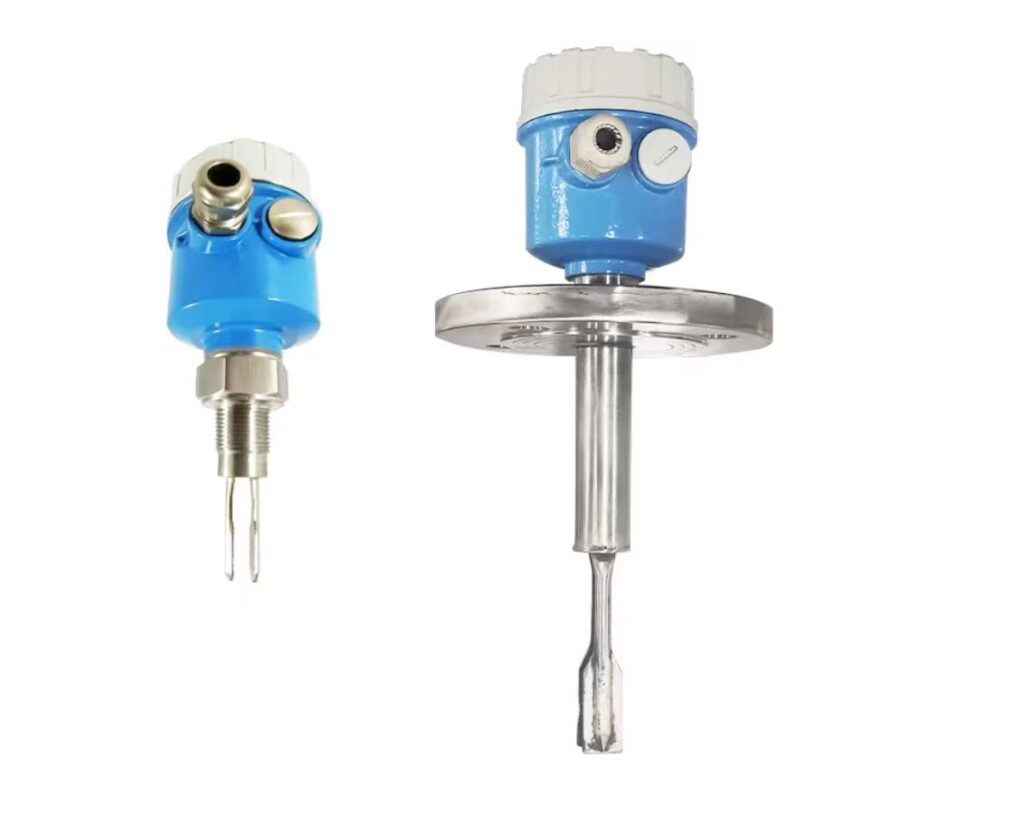
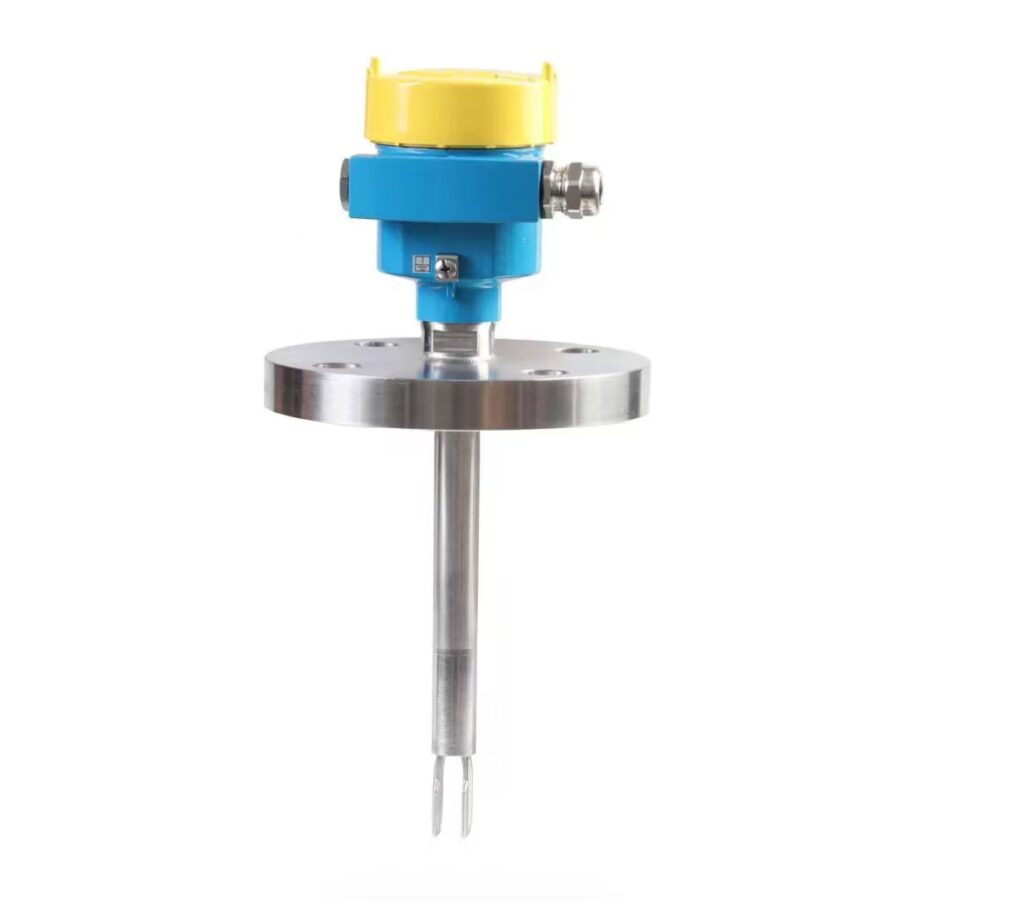
In practical engineering applications, blind use of tuning fork switches in special media often leads to false alarms, signal failure and reduced service life, causing hidden dangers to production stability. This article systematically summarizes several typical media that are not suitable for tuning fork level switches, analyzes the failure mechanisms behind each medium scenario, and puts forward reasonable application suggestions and alternative solutions, providing practical guidance for industrial level detection selection and avoiding on-site application pitfalls.
1. Introduction
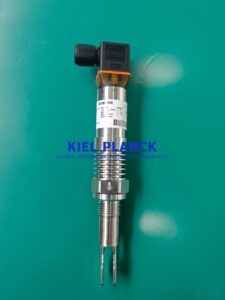
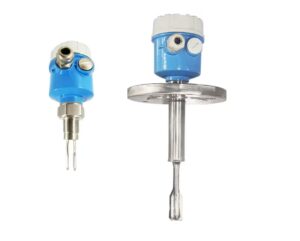
As a mature vibration-type level detection device, tuning fork level switches realize level judgment by detecting the vibration frequency change of the fork body when contacting materials. With no mechanical moving parts, they perform excellently in detecting clean liquids, fine powders and granular materials, and adapt to complex interference environments such as foam and liquid turbulence. Nevertheless, its core working principle of vibration damping determines that medium characteristics including viscosity, adhesion, particle size and crystallization performance will directly affect detection accuracy. Many industrial users over-rely on the universal performance of tuning fork switches and ignore medium adaptability, resulting in frequent equipment failure and increased maintenance costs. Therefore, clarifying the inapplicable media and corresponding pitfalls is essential for standardized and efficient industrial level detection.
2. Typical Unsuitable Media and Failure Analysis
The first category is high-viscosity and strongly adhesive media, including glue, syrup, heavy oil and high-viscosity chemical slurries. Such media will form a persistent adhesive coating on the surface of the tuning fork probe after contact. The thick adhesion layer continuously damps the fork vibration, causing the sensor to misjudge the empty tank state as a full tank state. Even after the liquid level drops, the residual adhesive layer still maintains vibration attenuation, resulting in unrecoverable false alarm signals and complete failure of level monitoring. Long-term adhesion will also corrode the probe structure and damage internal piezoelectric components.
The second category is easily crystallized and heavily scaling media, such as saturated salt solution, calcium carbonate slurry and other chemical solutions prone to temperature-induced crystallization. These media will precipitate solid crystals on the fork surface during temperature changes or static storage. Accumulated scales will fix the fork body and hinder normal vibration. Different from temporary adhesion, crystallization scaling is hard to remove and will permanently change the vibration characteristics of the probe, gradually reducing detection sensitivity until complete failure. Frequent manual cleaning is required to maintain operation, completely losing the maintenance-free advantage of tuning fork switches.
The third category is large-particle and lumpy solid materials. Tuning fork switches are only applicable to fine powders and small uniform particles. Large-particle materials and irregular lumps are easily stuck in the gap between the two fork bodies, causing forced vibration stagnation and false level signals. In addition, hard lumps will produce impact friction on the fork body during material feeding, leading to probe deformation and piezoelectric crystal damage, greatly shortening equipment service life.
The fourth category is ultra-low-density lightweight media such as hollow foam particles and ultra-light powder. Such materials have extremely low damping effect. When covering the fork body, they cannot produce obvious vibration frequency changes, making the sensor unable to effectively identify level changes. This leads to delayed response or missing alarms, failing to meet basic detection requirements.
3. Application Suggestions and Alternative Solutions
For the above unsuitable media, targeted alternative detection schemes should be adopted according to working conditions. High-viscosity and scaling media are suitable for rotary paddle level switches and capacitance level switches, which are not affected by medium adhesion and scaling. Large lump materials can be detected by heavy block level switches with strong impact resistance. Ultra-light low-density media can adopt special high-sensitivity vibration switches or radar level detectors. Meanwhile, in medium environments with slight adhesion and crystallization, users can choose improved tuning fork switches with self-cleaning and anti-scaling structures to reduce failure probability.
4. Conclusion
Although tuning fork level switches have prominent comprehensive advantages in industrial level detection, they are not universal detection equipment. High-viscosity adhesive media, easily crystallized scaling media, large lump solids and ultra-low-density lightweight media are typical inapplicable scenarios, which will cause false signals, probe damage and functional failure. In engineering selection, users should abandon blind application, fully combine medium characteristics and working condition parameters to select matched detection equipment. Reasonable type selection can effectively avoid application pitfalls, ensure long-term stable operation of level monitoring systems, and reduce unnecessary maintenance and replacement costs in industrial production.
Scan the QR code to receive more detailed information.