Point level detection is a fundamental link in industrial liquid and solid material monitoring, widely applied in tank storage, chemical processing, water treatment and manufacturing automation. Traditional float level switches have long been mainstream detection devices due to their simple structure and low initial cost. However, their mechanical working principle leads to inherent defects such as easy jamming, low detection accuracy and frequent maintenance requirements, which can hardly adapt to complex and harsh industrial working conditions. In recent years, tuning fork level switches have gradually replaced float switches and become the preferred equipment for point level detection. This article analyzes the working principles of the two switches, compares their performance differences in practical applications, and elaborates on the core advantages of tuning fork switches in stability, environmental adaptability, maintenance cost and service life, verifying its irreplaceable application value in modern industrial level detection.
1. Introduction
Reliable point level monitoring is critical to prevent tank overflow, pump dry running and material supply interruption in industrial production. Float level switches rely on mechanical buoyancy and magnetic induction to realize level signal output, featuring low purchase cost and easy installation, which makes them popular in simple and clean working scenarios for decades. Nevertheless, with the upgrading of industrial production conditions, more working environments involving viscous media, foam, turbulence, high temperature and high pressure have put forward higher requirements for level detection equipment. The mechanical defects of float switches are increasingly prominent, resulting in frequent detection failures and increased operational costs. As an electronic non-contact detection device, the tuning fork level switch adopts vibration frequency sensing technology, which overcomes the shortcomings of mechanical detection and achieves stable and efficient point level monitoring in complex working conditions.
2. Working Principle Difference
The float level switch operates through physical buoyancy change. Its internal floating ball rises and falls with the liquid level, and the built-in magnet triggers the reed switch to output switching signals when reaching the set height. The whole detection process depends entirely on mechanical movement, so the floating ball and connecting structure are prone to being stuck by impurities, sediment and viscous materials. In addition, foam and liquid turbulence will cause the float to shake abnormally, leading to false signals and detection errors.
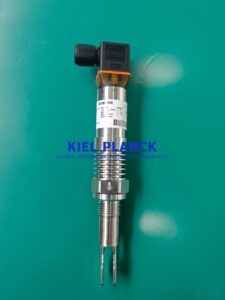
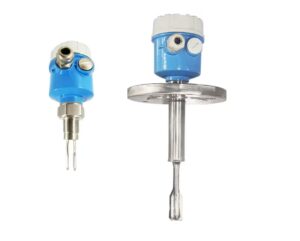
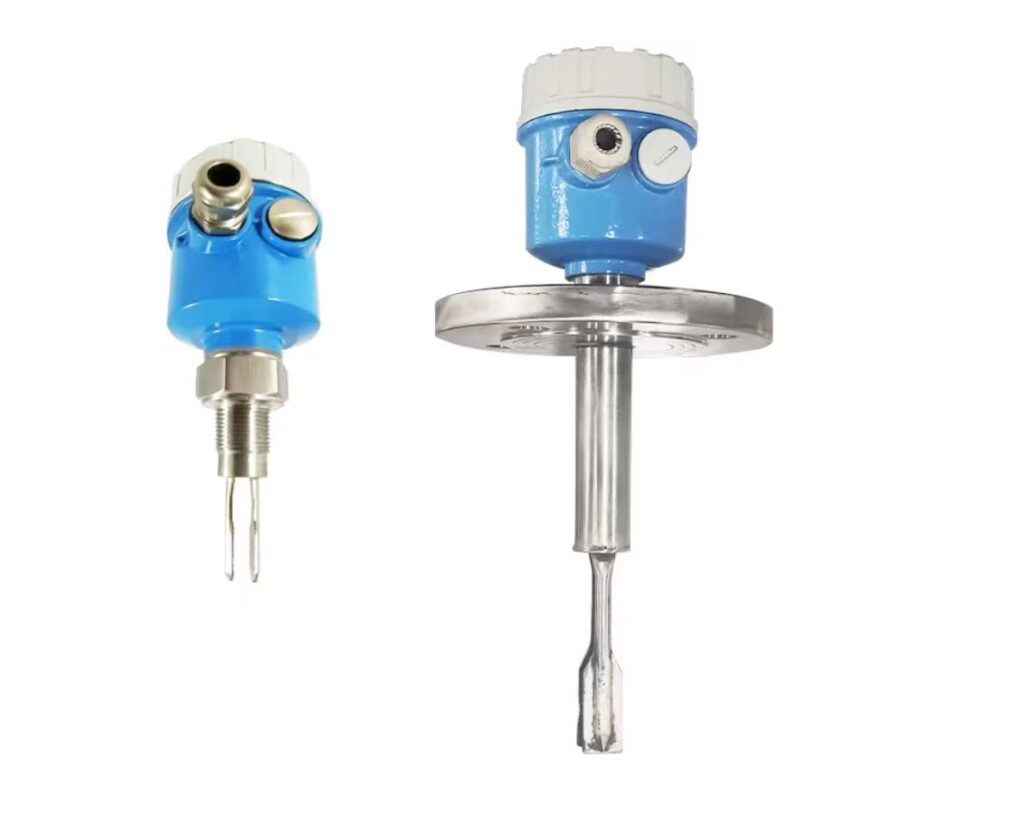
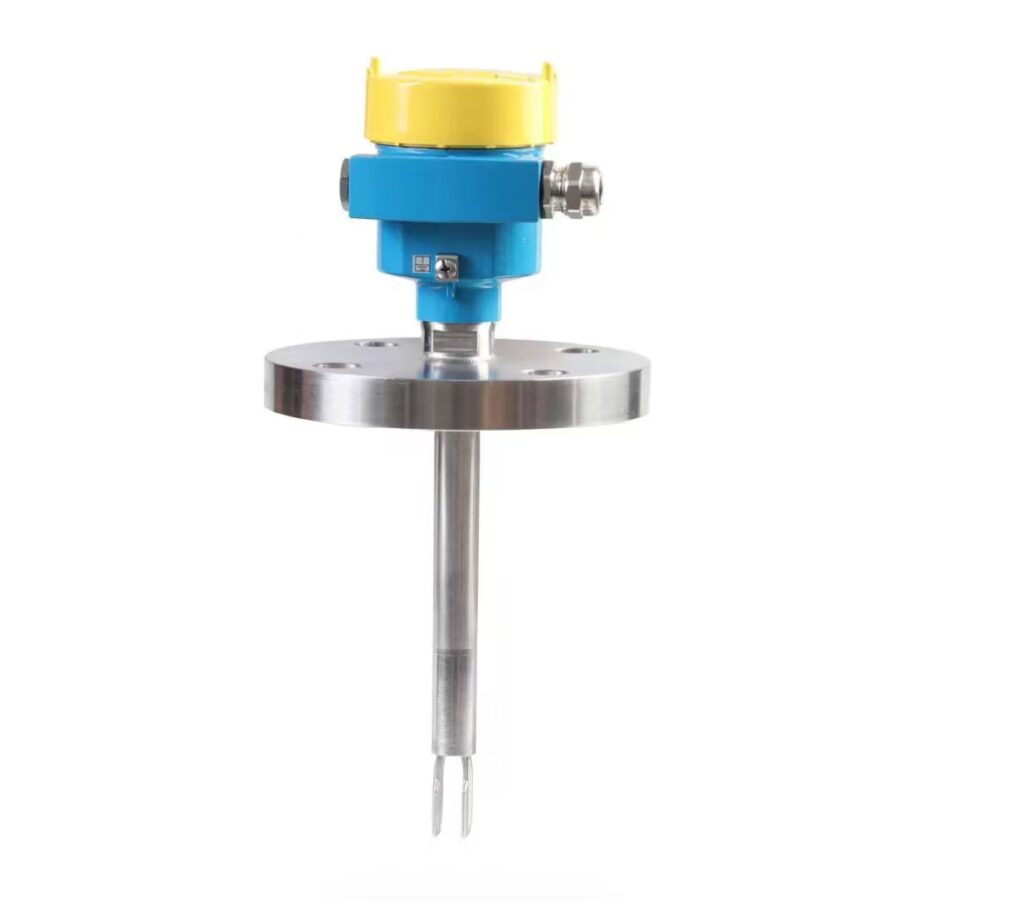
In contrast, the tuning fork level switch uses piezoelectric induction technology. The probe generates high-frequency fixed vibration through the internal piezoelectric crystal. When the material covers the fork body, the vibration frequency and amplitude change instantly, and the internal circuit captures the signal change and outputs an accurate switching instruction. The whole detection process has no mechanical moving parts, no friction and no floating structure, fundamentally avoiding detection errors caused by mechanical jitter and jamming.
3. Core Advantages of Tuning Fork Switches Over Float Switches
First, tuning fork switches have ultra-high environmental adaptability. They can work stably in harsh environments such as strong turbulence, a large number of bubbles, surface foam and medium scaling, and are not affected by medium viscosity, conductivity and density changes. They are suitable for various liquids, powders and granular materials. Float switches, by contrast, are only applicable to clean and low-viscosity liquids, and are extremely prone to failure in complex media.
Second, tuning fork switches realize maintenance-free operation. Without movable mechanical components, there is no wear, deformation or jamming failure during long-term operation. Once installed and calibrated, they can run continuously for more than five years without regular inspection and cleaning. Float switches require frequent manual maintenance to remove sediment and scale on the floating ball, and vulnerable parts need regular replacement, with an average service life of only 6 to 18 months, resulting in high long-term operation and maintenance costs.
Third, tuning fork switches have higher detection accuracy and stability. They respond instantly to level changes without delay or false triggering, effectively avoiding production risks such as equipment failure and material overflow caused by signal errors. Float switches are susceptible to external interference, with poor signal stability and low detection precision, which cannot meet the precision control requirements of modern automated production.
In terms of installation and applicability, tuning fork switches support multi-angle installation such as top installation and side installation, with no strict restrictions on tank structure. They require no professional debugging after installation and feature low power consumption and strong compatibility with control systems. Float switches have single installation mode and poor adaptability to special-shaped tanks and sealed containers.
4. Limitations and Application Scenario Selection
It is worth noting that tuning fork switches have slightly higher initial purchase costs than ordinary float switches. However, considering the zero maintenance cost, long service life and stable operation performance in the whole life cycle, their comprehensive economic benefit is far better than float switches. For simple, clean and low-budget civilian scenarios, float switches still have certain application value, but for industrial automated production, chemical industry, pharmaceutical, water treatment and other professional scenarios with high stability and precision requirements, tuning fork switches are undoubtedly the better choice.
5. Conclusion
The replacement of float switches by tuning fork level switches is an inevitable trend of industrial level detection technology upgrading. Abandoning the traditional mechanical detection mode, tuning fork switches solve the pain points of float switches such as easy jamming, poor anti-interference ability, low precision and high maintenance cost with electronic vibration sensing technology. Their strong environmental adaptability, stable detection performance and ultra-low maintenance cost make them widely applicable in various complex industrial working conditions. With the continuous improvement of industrial automation and intelligent production standards, tuning fork level switches will further replace traditional mechanical level detection equipment and become the mainstream solution for high-precision and high-reliability point level detection.
Scan the QR code to receive more detailed information.