Based on ten consecutive years of on-site monitoring data from a large petrochemical plant, this paper explores the actual service life, performance attenuation rules and stability changes of single-crystal silicon pressure transmitters under real industrial working conditions. The field data covers key indicators including zero drift, full-scale accuracy, temperature adaptability and structural stability. The results verify that qualified single-crystal silicon transmitters can maintain reliable measurement performance for 10 years in continuous petrochemical production environments. This study analyzes key failure factors affecting long-term service life, summarizes effective maintenance strategies, and provides practical evidence and reference standards for the service cycle evaluation, replacement cycle formulation and equipment management optimization of industrial pressure transmitters.
1. Introduction
Pressure transmitters are core basic measuring equipment for petrochemical process control, responsible for real-time pressure monitoring of reaction kettles, high-pressure pipelines, storage tanks and conveying systems. Equipment stability directly affects production safety, process accuracy and economic benefits. Compared with traditional diffused silicon transmitters, single-crystal silicon sensors feature more uniform crystal structure, lower mechanical hysteresis and superior long-term stability, becoming the mainstream choice for high-end petrochemical instrumentation. Most industry technical manuals mark a 10-year maintenance-free service life, but long-term field measured data is scarce. Petrochemical working conditions featuring continuous load operation, temperature fluctuation, slight corrosion and electromagnetic interference are far more complex than laboratory environments. Therefore, verifying the actual service life through decade-long field data is of great significance for guiding industrial equipment management.
2. Overview of Field Test Conditions
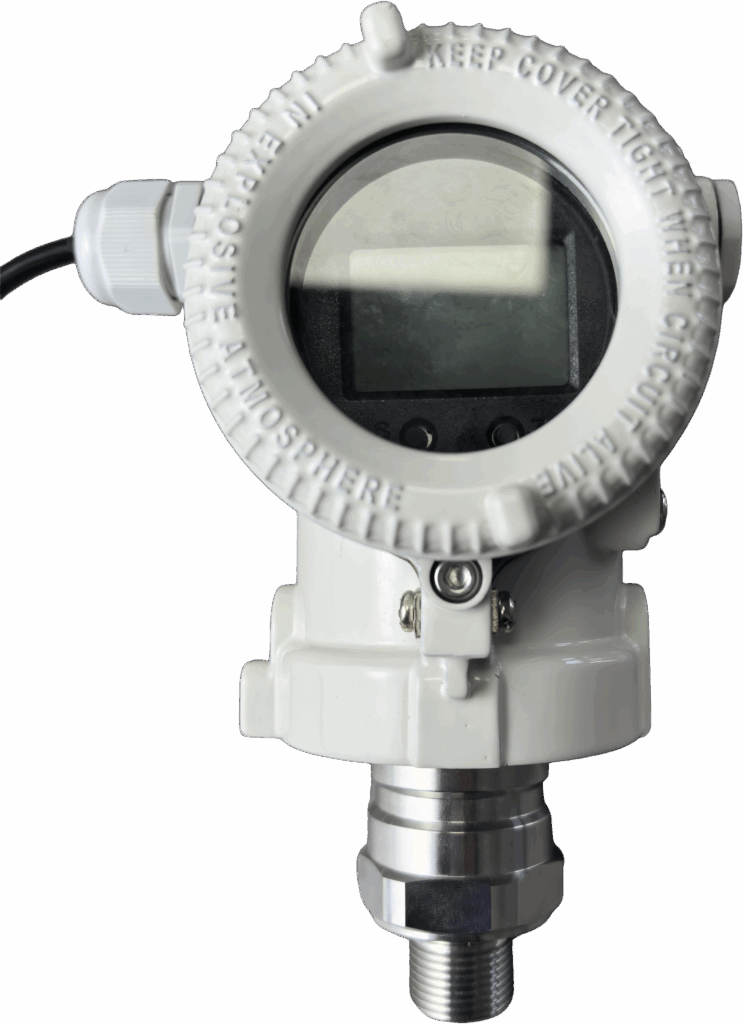
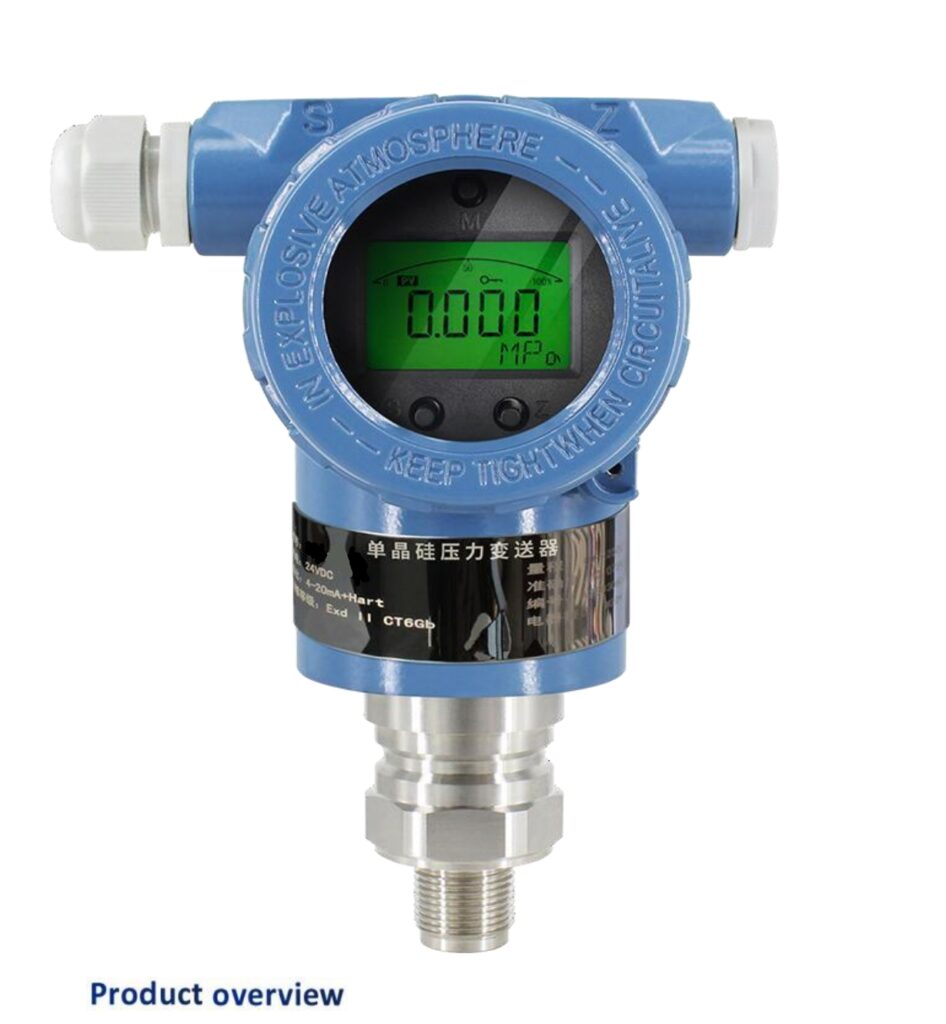
This field tracking test was carried out in a large-scale petrochemical refining plant, with 48 sets of industrial-grade single-crystal silicon pressure transmitters selected as test samples. These devices were officially put into operation in 2015, covering crude oil transportation pipelines, catalytic cracking units and finished product storage systems. The working environment involves long-term continuous operation, ambient temperature ranging from -20°C to 55°C, occasional humidity and weak chemical vapor corrosion, as well as periodic mechanical vibration interference. All transmitters adopted standard industrial protection and explosion-proof designs, with initial accuracy of ±0.075% FS and factory-calibrated zero and span parameters. The plant adhered to regular quarterly inspection and annual precision calibration without excessive maintenance or part replacement during the decade, ensuring authentic and effective field data.
3. Ten-Year Field Performance Data Analysis
According to the sorted 10-year operation data, the overall performance of single-crystal silicon pressure transmitters remained stable with low performance attenuation. In terms of zero drift, the average annual drift of all samples was less than ±0.03% FS, and the total drift within 10 years was controlled within ±0.1% FS, fully complying with industrial high-precision measurement standards. This result is consistent with the official 10-year stability specification of mainstream high-end single-crystal silicon transmitters.
In terms of measurement accuracy, more than 95% of the transmitters still maintained an accuracy error within ±0.1% FS after 10 years of operation, and only 3 samples showed slight accuracy decline caused by long-term vibration fatigue. In terms of structural and circuit stability, no severe faults such as shell damage, signal interruption or circuit failure occurred during the decade, with a field survival rate of 93.75%. Different from laboratory data, field results show that the main attenuation factor is long-term mechanical vibration rather than temperature drift, and regular calibration can effectively compensate minor parameter deviations.
4. Key Factors Affecting Service Life and Optimization Measures
Combined with field operation data, the service life of single-crystal silicon pressure transmitters in petrochemical sites is mainly affected by three factors: long-term mechanical vibration, environmental humidity and irregular calibration cycles. Long-term pipeline vibration will cause subtle fatigue of the silicon chip structure, leading to tiny zero drift. Humid and corrosive gas environments may slowly affect internal circuit stability. In contrast, temperature changes have limited impact due to the built-in automatic temperature compensation algorithm of single-crystal silicon sensors.
To further extend service life, the petrochemical plant optimized management strategies based on test data. Installing vibration-damping accessories for transmitters on high-vibration pipelines reduced chip fatigue drift. Regular dust cleaning and waterproof inspection avoided environmental interference. Adhering to annual professional calibration effectively corrected accumulated minor errors. These measures enable most transmitters to stably exceed the 10-year design service life.
5. Conclusion
Ten years of continuous field measurement data from the petrochemical plant fully proves that high-quality single-crystal silicon pressure transmitters have excellent long-term stability and environmental adaptability in industrial scenarios. Under standardized installation, routine inspection and annual calibration management, the transmitters can achieve a stable service life of 10 years, with measurement accuracy and structural performance meeting petrochemical production requirements. The actual field drift is consistent with laboratory test indicators, verifying the reliability of the 10-year maintenance-free design standard. This study confirms that single-crystal silicon pressure transmitters are suitable for long-term unattended operation in petrochemical industries. Reasonable daily maintenance and targeted anti-vibration optimization can further delay performance attenuation, providing reliable field data support for formulating scientific equipment replacement cycles and reducing enterprise instrument operation and maintenance costs.
Scan the QR code to receive more detailed information.