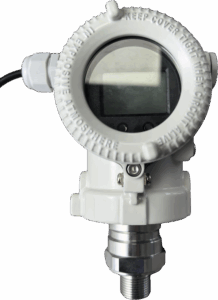
high-pressure pipeline transmission, phase conversion, and trace impurity corrosion, which puts forward extremely strict requirements for on-site pressure monitoring instruments. As a high-precision sensing device, monocrystalline silicon pressure transmitters are widely adopted in CCUS systems due to their superior stability and high resolution. However, unique operating characteristics of CO₂ projects, such as dry ice blockage, low-temperature drift, medium corrosion and frequent pressure pulsation, bring multiple application challenges to transmitters. This paper systematically analyzes the typical working conditions of CO₂ capture and transportation links, summarizes key technical challenges faced by monocrystalline silicon pressure transmitters in actual operation, and explores targeted adaptive optimization strategies. The study aims to provide reliable instrument selection and operation guidance for CCUS engineering projects, ensuring long-term accurate measurement and stable operation of pressure monitoring systems.
Keywords: monocrystalline silicon pressure transmitter; CO₂ capture and transportation; CCUS; working condition challenges; low-temperature pressure measurement; industrial monitoring
1. Introduction
With the vigorous advancement of global low-carbon strategies, CCUS technology has become an indispensable core support for the green transformation of thermal power, chemical and steel industries. The whole process of CO₂ absorption, desorption, liquefaction, pipeline transportation and storage requires real-time and high-precision pressure monitoring to ensure efficient capture rate and safe transportation. Monocrystalline silicon pressure transmitters rely on high measurement accuracy, low drift and strong anti-interference ability to replace traditional transmitters and become the mainstream monitoring equipment for CCUS projects. Nevertheless, different from conventional industrial environments, CO₂ capture and transportation scenarios feature alternating high and low temperatures, gas-liquid-solid three-phase conversion and special medium characteristics, which easily cause measurement deviation and equipment failure of transmitters. Therefore, analyzing and solving the working condition challenges is crucial to improve the operational reliability of monitoring instruments in CCUS systems.
2. Typical Working Condition Characteristics of CO₂ Capture and Transportation
The CO₂ capture process is mainly divided into chemical absorption and physical adsorption, accompanied by continuous pressure fluctuation during tower body absorption and desorption circulation. In the liquefaction and transportation stage, CO₂ is converted into liquid state under low temperature and high pressure, with the operating temperature dropping to -20℃ to -40℃ and the pressure maintaining at 2.0 MPa to 8.0 MPa. In addition, industrial flue gas contains trace water, sulfide and nitride impurities, which will form weak acidic corrosive substances after mixing with CO₂. During pipeline transportation, medium flow will generate continuous pressure pulsation, and local low temperature may cause dry ice crystallization and blockage. These complex and variable working conditions constitute the main application barriers for pressure transmitters.
3. Core Working Condition Challenges for Transmitters
The first prominent challenge is low-temperature measurement drift. Monocrystalline silicon chips have excellent stability at normal temperature, but long-term operation under ultra-low temperature liquefaction conditions will cause subtle changes in chip sensitivity, resulting in zero drift and reduced measurement linearity, which affects the accurate judgment of liquid CO₂ pressure state. Second, trace corrosive impurities in flue gas will slowly erode the transmitter diaphragm. Long-term erosion will cause diaphragm fatigue and micro deformation, reducing the service life and measurement accuracy of the instrument.
Third, phase change and dry ice blockage bring monitoring risks. Local temperature drop in pipelines will lead to CO₂ dry ice crystallization, which adheres to the transmitter pressure guiding port, causing pressure signal delay and data distortion. Fourth, long-term pressure pulsation in the transportation process will produce fatigue impact on the monocrystalline silicon sensing unit. Without effective damping optimization, the instrument is prone to signal jitter and frequent calibration failure, increasing operation and maintenance costs.
4. Adaptive Optimization and Application Strategies
To cope with the above challenges, targeted optimization measures must be adopted in instrument selection and deployment. First, low-temperature customized monocrystalline silicon transmitters with wide temperature compensation function should be selected to eliminate measurement drift under ultra-low temperature working conditions and ensure stable accuracy in the full temperature range. Second, high-grade anti-corrosion diaphragms and integrated sealed structures are recommended to resist weak acid corrosion caused by mixed impurities.
Third, install anti-blockage pressure guiding components and optimize on-site installation positions to avoid low-temperature dead zones and prevent dry ice crystallization blockage. Fourth, reasonably adjust the instrument damping parameters to filter pressure pulsation interference, stabilize output signals, and adapt to long-cycle stable operation of CO₂ transportation pipelines.
5. Conclusion
Monocrystalline silicon pressure transmitters have outstanding technical advantages in high-precision pressure monitoring for CCUS projects, but they face prominent challenges including low-temperature drift, impurity corrosion, dry ice blockage and pressure pulsation interference in CO₂ capture and transportation scenarios. These working condition risks are the main causes of instrument measurement errors and unstable operation in actual projects. Through targeted selection of temperature-compensated and anti-corrosion customized products, optimized on-site installation and parameter debugging, the adaptability and reliability of transmitters can be effectively improved. Solving these working condition challenges can ensure the safe, efficient and stable operation of the entire CO₂ capture and transportation system, and provide reliable technical support for the large-scale promotion and industrial application of CCUS low-carbon technology.
Scan the QR code to receive more detailed information.