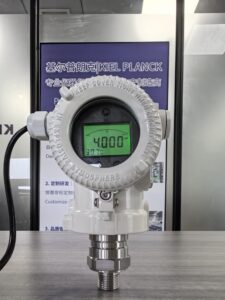
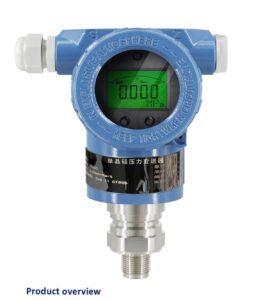
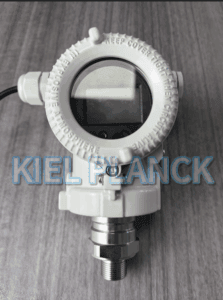
. Many technicians treat drifting sensors as defective and directly replace hardware, but the problem often reappears shortly after installation. This article identifies five leading causes of pressure sensor drift: cyclic pressure fatigue of the sensing diaphragm, thermal drift induced by wide temperature swings, chemical incompatibility with measured media, mechanical vibration and shock damage, and improper calibration or zero adjustment errors. It explains the underlying failure mechanism of each cause and offers practical troubleshooting guidance. Distinguishing these drift sources helps maintenance teams locate faults accurately, avoid unnecessary sensor replacement, restore measurement accuracy and ensure reliable pressure feedback for closed-loop control and safety monitoring.
Introduction
Pressure sensors serve as critical measuring components that convert fluid pressure into standard electrical signals for control systems. Ideal sensors maintain consistent readings under stable working conditions. In real industrial environments, however, zero drift or span drift may occur slowly over days, weeks or months. Operators often observe readings creeping upward or downward even when the actual system pressure stays unchanged.
Drift differs from temporary signal jumping. Signal jumping is sudden fluctuation caused by interference or pressure pulsation, while drift refers to a slow, continuous deviation. A common misconception is that drift always means the sensor chip has failed. In practice, many drift issues stem from system-level environmental factors rather than inherent manufacturing defects. Five root causes account for the vast majority of field drift incidents.
The first cause is cyclic pressure fatigue of the sensing diaphragm. This is especially prevalent in hydraulic stations. Repeated pressure loading and unloading stretches and relaxes the metal diaphragm millions of times. Over time, the material develops micro plastic deformation. The diaphragm no longer returns fully to its original shape after pressure release, creating permanent zero offset. Sensors installed near pump outlets are most vulnerable to this fatigue drift. Even high-precision sensors will drift if subjected to long-term cyclic pressure spikes without proper damping.
Second, thermal drift from temperature variation. All sensing materials have temperature coefficients. When medium or ambient temperature changes, the sensor chip’s electrical characteristics shift accordingly. If the built-in temperature compensation circuit has limited performance, the output reading will drift. Cold startup of hydraulic systems creates a large temperature difference between cold oil and operating temperature. Temperature-induced drift is usually reversible, but extreme or rapid temperature cycling can accelerate aging of internal electronics and seals, leading to irreversible long-term drift.
Third, wetted material and medium incompatibility. When the diaphragm or O-ring material does not match the process medium, chemical degradation takes place gradually. For example, unsuitable rubber seals swell or harden, and corrosive fluids erode the diaphragm surface. Hydraulic oil, water-glycol and emulsion impose different chemical requirements. Corrosion or seal deformation slowly changes the stress state on the sensing element. This type of drift develops slowly and often gets ignored until the measurement offset becomes large enough to affect control.
Fourth, persistent mechanical vibration and impact shock. Pumps, motors and valves produce continuous vibration that transmits to the mounted sensor. Vibration loosens internal solder joints, weakens bonding of the sensing chip and deforms internal supporting structures. Over time, mechanical stress accumulates and shifts the zero point. Shock events such as water hammer also deliver sudden impact force to the diaphragm. Unlike one-time overpressure damage, vibration-related drift progresses slowly and is hard to detect during routine visual inspection.
Fifth, improper calibration and incorrect zero adjustment. Field technicians may perform zero calibration under non-zero pressure conditions. If impulse lines contain trapped air or residual pressure during zero trimming, the baseline will be set incorrectly. Another common mistake is forgetting to re-zero after sensor installation, relocation or mechanical shock. Calibration drift can also happen if the sensor is calibrated at room temperature but operates under extreme temperatures. Poor calibration practices create an artificial measurement offset mistaken for hardware failure.
Troubleshooting drift should follow a logical sequence. Start by checking working temperature, vibration and medium compatibility, then verify calibration quality before concluding that the sensor is broken. Adding snubbers, improving mounting and selecting suitable wetted materials can prevent many drift issues from occurring in the first place.
Conclusion
Pressure sensor reading drift mostly originates from five factors: diaphragm fatigue under cyclic pressure, temperature-induced thermal drift, chemical incompatibility between wetted parts and process media, cumulative damage from continuous vibration or mechanical shock, and wrong zero/calibration operations. Some drift is reversible through recalibration, while fatigue and corrosion cause permanent damage requiring component replacement. Maintenance engineers should differentiate drift types and root causes instead of routinely replacing sensors blindly. Addressing these five key factors can effectively reduce drift failures, extend sensor service life, cut maintenance costs and maintain stable and accurate pressure measurement for industrial control systems.
Scan the QR code to receive more detailed information.