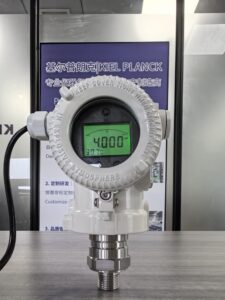
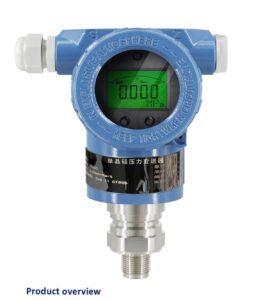
. Many buyers automatically select the higher 0.25-class version, assuming better precision always brings greater value. However, hydraulic systems are dominated by dynamic pressure pulsation, vibration and oil temperature fluctuation. Static accuracy on datasheets does not always translate to better real-world performance. This article clarifies the definition of 0.25 class and 0.5 class accuracy, compares their actual performance in hydraulic working conditions, analyzes application scenarios suitable for each grade, and explains cost and lifecycle trade-offs. It also points out that stability, anti-fatigue and vibration resistance often matter more than static precision in hydraulic measurement. Rational accuracy selection avoids over-specification and unnecessary procurement cost while meeting the requirement of closed-loop control and safety interlock for hydraulic power units.
Introduction
Accuracy grade is one of the most eye-catching parameters on a pressure transmitter datasheet. 0.25 class and 0.5 class are two mainstream options for industrial hydraulic applications. The accuracy class defines the maximum total measurement error under reference laboratory conditions, including linearity, hysteresis and repeatability. A 0.25-class transmitter has a narrower error band than a 0.5-class model in a stable, vibration-free, constant-temperature calibration environment.
A common misunderstanding is that higher accuracy means more reliable field readings. In hydraulic stations, pumps generate continuous pressure ripple, valve switching creates pressure hammer, and motor vibration impacts the sensor. These field disturbances are far larger than the intrinsic error difference between 0.25 and 0.5 class. Even a 0.25-class transmitter cannot eliminate signal fluctuation caused by pressure pulsation. If the system itself has large dynamic pressure variation, spending extra budget on ultra-high static accuracy delivers little practical benefit.
0.25-class transmitters are designed for high-precision closed-loop control scenarios. Typical applications include servo hydraulic presses, precision test benches and material fatigue testing machines. These systems require accurate capture of subtle pressure changes to fine-tune force output. For these equipment, small measurement deviations directly affect product quality or test result validity. In such cases, the premium paid for 0.25 accuracy is justified. Usually, these high-end transmitters also adopt single-crystal silicon sensing cores with low hysteresis and excellent temperature stability, which match the high precision requirement.
On the other hand, 0.5-class transmitters fit most general hydraulic stations. Conventional hydraulic power units for clamping, lifting and simple motion control only need stable pressure feedback rather than ultra-fine resolution. Their control targets usually allow wider pressure tolerance. A 0.5-class transmitter provides sufficient accuracy to trigger safety relief interlocks, monitor system working pressure and display real-time pressure values. For these standard applications, the intrinsic error of 0.5 class is negligible compared with pressure fluctuations from the hydraulic circuit. Using 0.5-class sensors reduces purchase cost without sacrificing system function.
Besides control requirements, engineers must consider other factors. Temperature drift, vibration-induced shift and cyclic pressure fatigue will add extra measurement offset on top of the rated accuracy. A cheap 0.25-class transmitter with poor temperature stability may have larger total field error than a well-built 0.5-class model with strong anti-vibration design. Accuracy grade only describes performance under ideal calibration conditions, not comprehensive performance on site.
Over-specification is a frequent waste. Many projects specify 0.25 class simply because the drawing template requires high accuracy, without evaluating actual control demand. This increases component cost and spare part expense. Conversely, selecting 0.5 class for precision servo hydraulics leads to insufficient measurement resolution and unstable closed-loop regulation.
Another practical point: calibration and maintenance. 0.25-class transmitters demand stricter periodic calibration standards and higher requirements for calibration equipment, raising long-term maintenance workload. 0.5-class sensors have looser calibration thresholds and are easier to maintain in ordinary factory workshops.
Conclusion
When choosing between 0.5 class and 0.25 class pressure transmitters for hydraulic stations, engineers should not blindly pursue higher accuracy. 0.25-class transmitters are suitable for precision servo hydraulic systems and hydraulic test benches where tiny pressure changes directly affect product quality or test accuracy. 0.5-class transmitters are adequate for most conventional hydraulic power units used for clamping, lifting and general actuation. It is critical to distinguish static datasheet accuracy from total field measurement error. Factors including pressure pulsation, vibration and thermal drift often outweigh the intrinsic accuracy difference between these two grades. The best practice is to match accuracy grade with actual control requirements. Proper selection prevents over-specification and excess investment, while ensuring stable pressure feedback and reliable safety interlock for hydraulic systems.
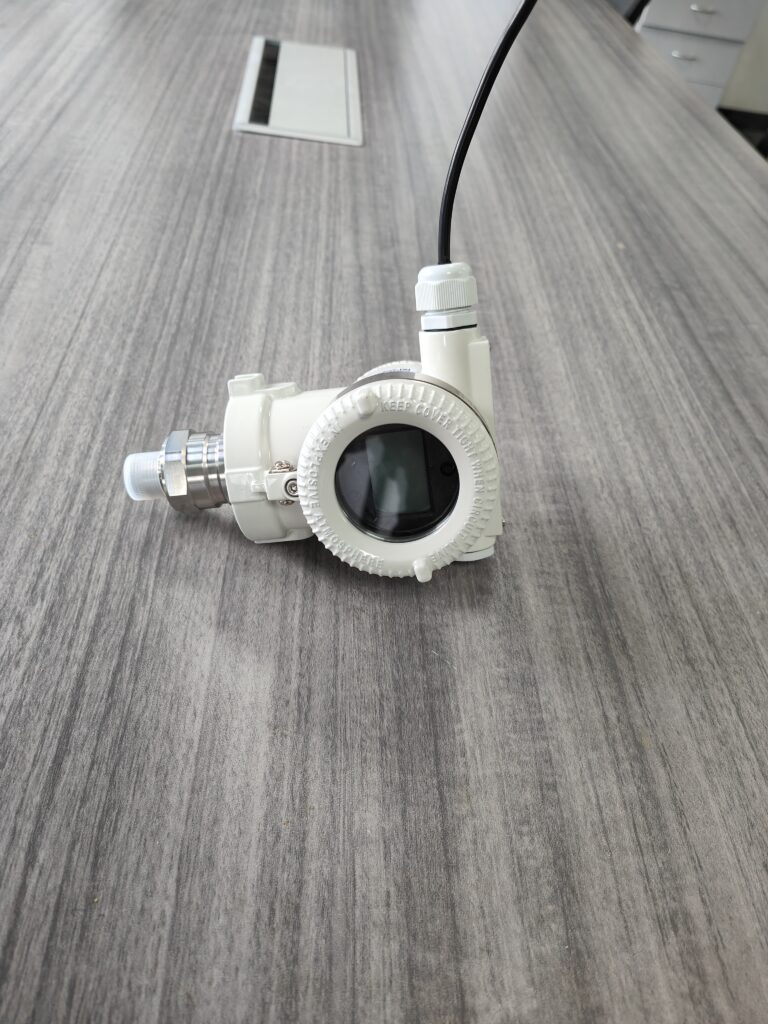
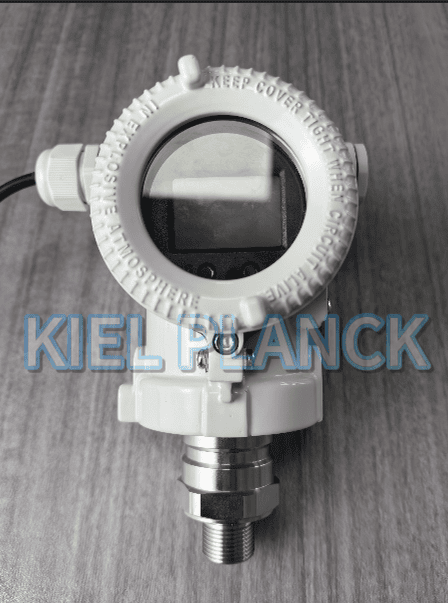
Scan the QR code to receive more detailed information.