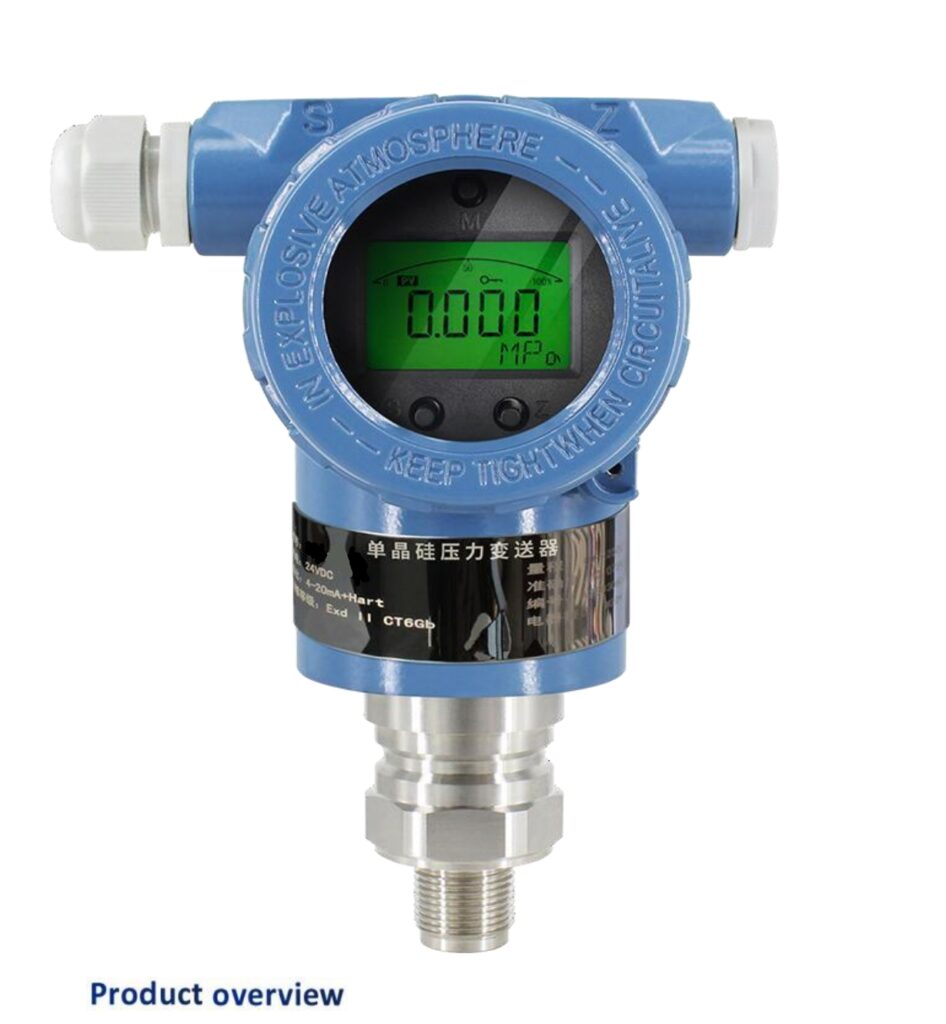
Hydrogen-specific pressure transmitters are professionally optimized for the unique physical and chemical properties of hydrogen, and are widely applied in hydrogen refueling stations, high-pressure hydrogen storage tanks and fuel cell systems. This article elaborates on the core design characteristics of hydrogen-specific pressure transmitters, analyzes their differentiated application requirements in three major hydrogen scenarios, and summarizes their technical advantages and application value. The research proves that specialized hydrogen pressure transmitters can effectively avoid hydrogen-induced equipment failure, improve the accuracy and stability of hydrogen pressure monitoring, and provide crucial safety support for the stable and efficient operation of the entire hydrogen energy industrial system.
1. Introduction
Hydrogen energy, as a zero-carbon clean energy, has become a key development direction of global new energy strategies. The complete hydrogen industrial chain covers hydrogen production, storage, transportation, refueling and fuel cell power generation, all of which require real-time and accurate pressure monitoring. Hydrogen has unique characteristics such as small molecular volume, strong permeability and hydrogen embrittlement effect. Under high-pressure working conditions of 350bar to 700bar, ordinary pressure transmitters suffer from serious problems including diaphragm penetration, material fatigue and zero-point drift, which cannot meet the long-term safe operation requirements of hydrogen equipment.
Hydrogen-specific pressure transmitters are customized for hydrogen working conditions, with optimized material selection, structural design and anti-hydrogen interference technology. They are mainly used in three core scenarios: hydrogen refueling stations with frequent pressure impact, high-pressure hydrogen storage tanks with long-term static high pressure, and fuel cell systems with low-pressure and dynamic fluctuating working conditions. This paper discusses the unique design points and scenario-based application advantages of hydrogen-specific pressure transmitters, providing a reference for the selection and standardized application of hydrogen pressure monitoring equipment.
2. Core Technical Characteristics of Hydrogen-Specific Pressure Transmitters
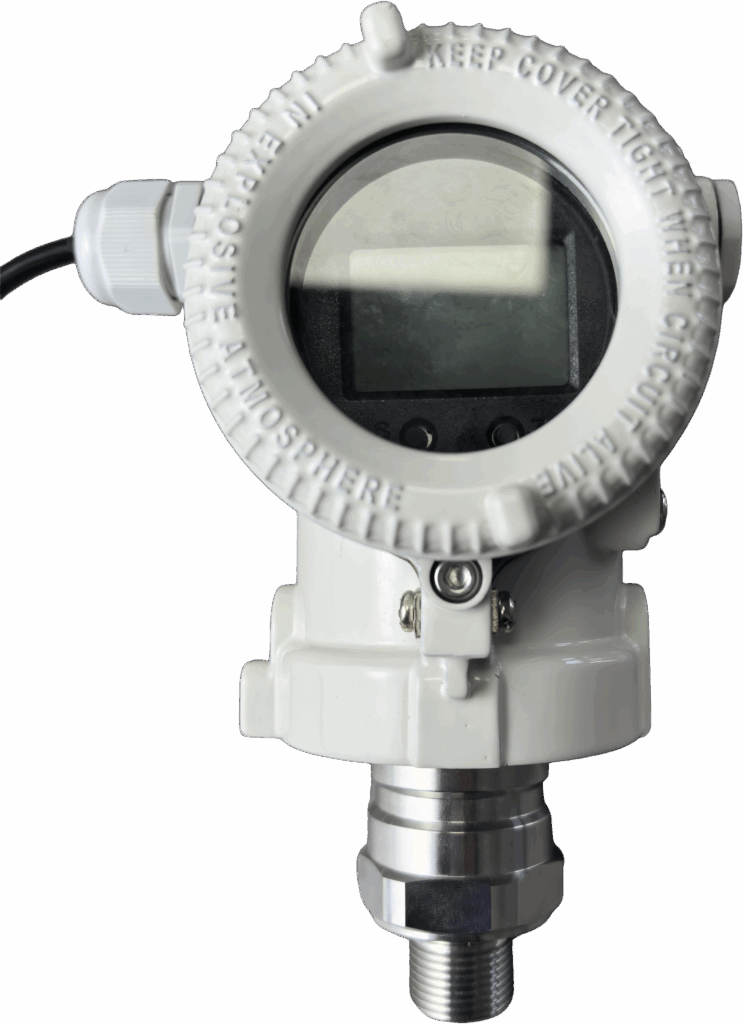
Different from conventional transmitters, hydrogen-specific models adopt targeted technical upgrades to adapt to hydrogen’s special properties. First, anti-hydrogen embrittlement material optimization. The sensor diaphragm and core components are made of high-purity 316L stainless steel, gold-plated alloy or special anti-permeation coatings, which can effectively block hydrogen molecular penetration and prevent structural deformation and performance degradation caused by hydrogen embrittlement. Second, high pressure resistance and impact resistance design. The internal mechanical structure is strengthened to cope with frequent pressure surges in hydrogen refueling and pipeline switching, avoiding measurement drift caused by mechanical stress.
Third, high-precision and low-drift calibration technology. Hydrogen-specific calibration algorithms are adopted to eliminate measurement errors caused by hydrogen’s low-density gas characteristics, ensuring stable measurement accuracy under dynamic pressure changes. Fourth, high safety and explosion-proof design. All components comply with hydrogen-class explosion-proof standards, with fully sealed structures to prevent hydrogen leakage risks, adapting to the flammable and explosive working environment of hydrogen systems.
3. Scenario-Based Application Analysis
In hydrogen refueling stations, pressure transmitters need to withstand frequent high-pressure impact and rapid pressure changes during vehicle refueling. Hydrogen-specific transmitters can stably monitor the real-time pressure of refueling pipelines and machines, accurately control the refueling pressure within the safe range of 350–700bar, and avoid overpressure or insufficient refueling pressure. Their anti-impact and anti-drift performance effectively solves the problem of frequent calibration of ordinary transmitters, improving the continuous operation efficiency of refueling stations.
For high-pressure hydrogen storage tanks, the working condition is long-term static high-pressure storage with slight daily pressure fluctuations. Hydrogen-specific transmitters focus on long-term stability and anti-fatigue performance. They can continuously monitor the tank storage pressure for a long time, timely detect pressure drop caused by micro-leakage, and prevent safety hazards such as hydrogen leakage and overpressure accumulation. The anti-hydrogen permeation design ensures that the sensor will not fail after long-term contact with high-pressure hydrogen, greatly reducing equipment maintenance frequency.
In fuel cell systems, the working pressure is low and fluctuates dynamically with power output. Hydrogen-specific transmitters feature high sensitivity and fast response speed, which can real-time feed back the hydrogen supply pressure of the fuel cell stack, precisely match the power demand, and avoid stack damage or power attenuation caused by unstable hydrogen supply pressure. Meanwhile, their miniaturized and low-power design is suitable for compact installation space of vehicle-mounted and stationary fuel cell systems.
4. Conclusion
Hydrogen-specific pressure transmitters are professional monitoring equipment tailored to the special working conditions of the hydrogen energy industry. Through anti-hydrogen embrittlement material optimization, impact-resistant structural design and high-precision calibration technology, they solve the pain points of poor stability and short service life of ordinary transmitters in hydrogen environments. In hydrogen refueling stations, hydrogen storage tanks and fuel cell systems, such transmitters show excellent scenario adaptability, ensuring accurate pressure monitoring, safe equipment operation and stable system operation. With the continuous expansion of the hydrogen energy industry, high-performance hydrogen-specific pressure transmitters will become indispensable basic equipment for the standardized and safe development of hydrogen energy systems, providing solid technical support for the large-scale popularization and application of hydrogen energy.
Scan the QR code to receive more detailed information.