The slurry bed hydrotreating unit operates under extreme working conditions of high temperature, high pressure, solid-liquid mixed phase and severe medium corrosion, making real-time and accurate pressure monitoring critical to unit safety and stable production. Traditional mechanical pressure transmitters are prone to measurement deviation, blockage failure and inability of remote data transmission in complex slurry working environments, which cannot meet the intelligent operation requirements of modern petrochemical units. Intelligent pressure transmitters with high precision, anti-interference performance and digital transmission functions are gradually widely used in slurry bed residue hydrotreating systems. This paper analyzes the harsh working characteristics of slurry bed hydrotreating units, discusses the technical advantages of intelligent pressure transmitters adapting to slurry environments, explores their key application scenarios and existing application problems, and puts forward optimized application strategies. The study aims to provide technical reference for improving the operational safety, measurement accuracy and intelligent management level of petrochemical residue hydrotreating units.
1. Introduction
With the increasing shortage of light crude oil resources and the continuous improvement of petrochemical heavy oil processing requirements, slurry bed residue hydrotreating technology has become a key technology for upgrading heavy oil resources. Different from fixed-bed and moving-bed hydrotreating processes, the slurry bed unit adopts a catalyst slurry mixing reaction system, and the internal medium contains a large number of solid catalyst particles, colloid and asphaltene components, accompanied by high temperature and high pressure reaction conditions throughout the process. Pressure is one of the most important process parameters in hydrotreating reactions. Slight pressure fluctuation will affect the reaction conversion rate, product quality and unit operation safety, and overpressure or pressure instability may even cause equipment blockage, leakage and other safety accidents.
Traditional pressure measurement equipment has obvious limitations in slurry bed working conditions. It is easy to be blocked by solid particles, resulting in inaccurate measurement and frequent equipment maintenance. In contrast, intelligent pressure transmitters integrate digital sensing technology, intelligent signal processing and remote transmission functions, which can adapt to the complex and harsh working environment of residue hydrotreating. Popularizing its standardized application is of great significance for realizing automatic monitoring, fault early warning and intelligent control of slurry bed hydrotreating units.
2. Harsh Working Conditions and Monitoring Difficulties of Slurry Bed Hydrotreating Units
The special process characteristics of slurry bed residue hydrotreating bring great challenges to pressure monitoring. Firstly, the working environment is complex. The reaction system is in a high-temperature and high-pressure state for a long time, with a working pressure up to 15MPa to 20MPa and a temperature exceeding 400℃. The mixed medium of solid catalyst and heavy residue has strong viscosity and adhesion, which is easy to adhere to the sensor probe and cause measurement failure. Secondly, the process fluctuation is frequent. The feeding flow, catalyst concentration and reaction state of the hydrotreating unit change dynamically, resulting in continuous pressure fluctuation in the pipeline and reactor, putting forward high requirements for the response speed and stability of measuring equipment.
Third, the traditional measurement system has defects. Mechanical transmitters have low measurement accuracy, slow response speed and no digital data transmission function, which cannot realize real-time data sharing and remote monitoring. Manual inspection and calibration are required frequently, which not only increases labor costs but also leads to delayed fault discovery, affecting the stable operation of the whole unit.
3. Technical Advantages and Core Application Scenarios of Intelligent Pressure Transmitters
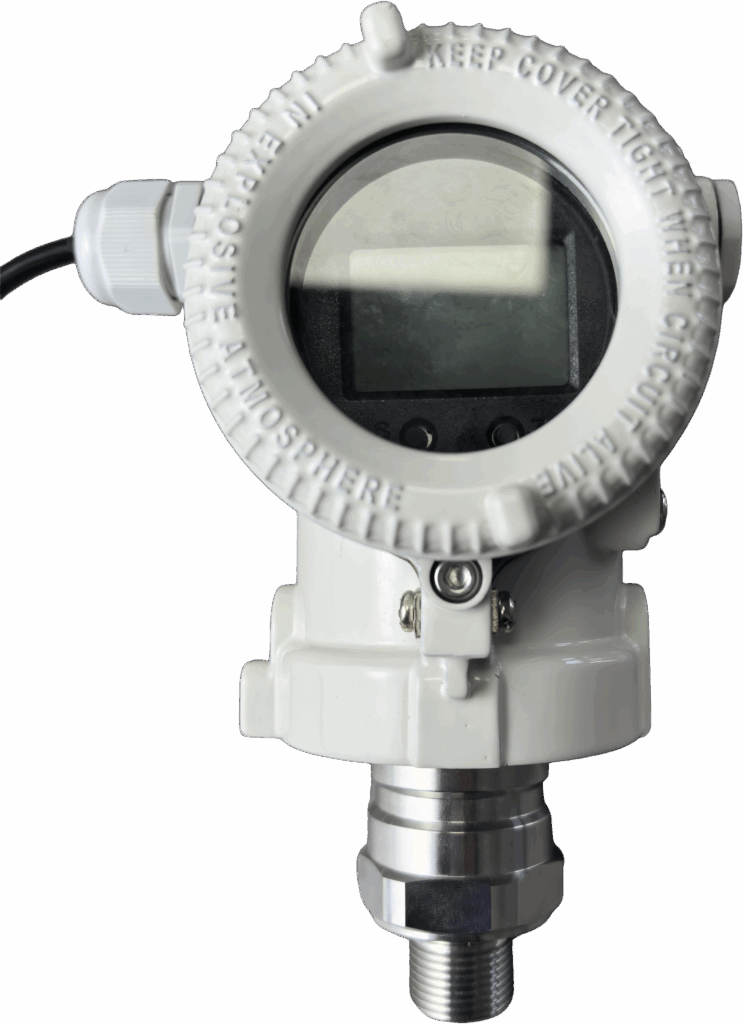
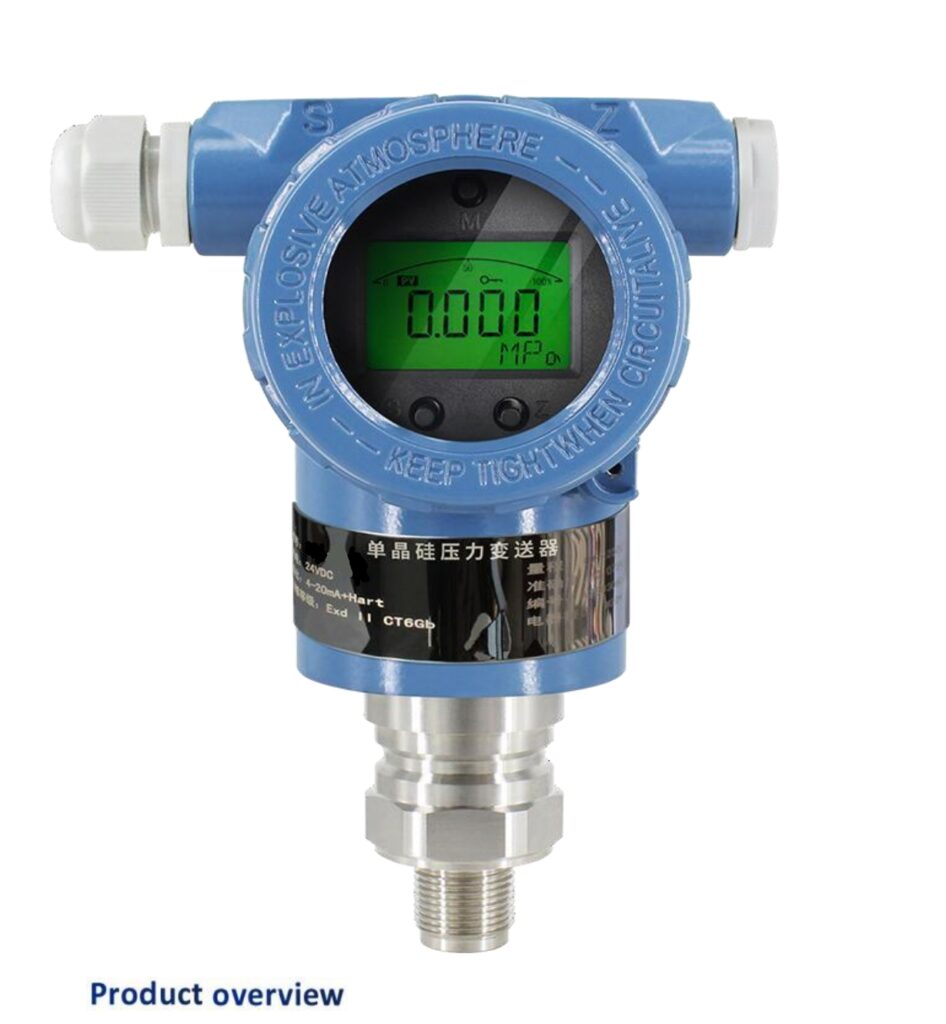
Intelligent pressure transmitters have obvious technical advantages adapting to slurry bed hydrotreating working conditions. In terms of structural performance, they adopt anti-blocking probe design and high-temperature and corrosion-resistant sensing materials, which can effectively avoid the adhesion and blockage of viscous slurry and solid particles, and maintain stable measurement performance under long-term high-temperature and high-pressure conditions. In terms of data processing, the built-in intelligent algorithm can automatically filter pressure fluctuation interference, eliminate abnormal data errors caused by medium turbulence, and improve measurement accuracy significantly. In terms of system linkage, the digital signal transmission mode can be seamlessly connected with the DCS distributed control system of petrochemical units, realizing real-time data upload, remote monitoring and automatic pressure adjustment.
In actual production, intelligent pressure transmitters are mainly applied in key links such as reactor pressure monitoring, feeding pipeline pressure detection, circulating pipeline pressure control and tail gas pressure monitoring of slurry bed hydrotreating units. They monitor the pressure changes of key process nodes in real time, provide accurate data support for process parameter adjustment, and realize early warning of abnormal conditions such as pipeline blockage, equipment pressure surge and system pressure drop, effectively avoiding production safety accidents caused by pressure abnormalities.
4. Problems and Optimization Measures in Practical Application
In the actual application process, intelligent pressure transmitters still have partial adaptability problems. Long-term scouring of high-viscosity slurry will cause slight wear on the sensor probe; high-temperature hydrogen environment will cause subtle interference to signal transmission; and improper installation position will affect the timeliness of pressure signal collection. To solve the above problems, targeted optimization measures can be adopted. First, select wear-resistant and hydrogen-resistant upgraded intelligent transmitters to improve environmental adaptability. Second, optimize the installation position to avoid direct scouring of high-speed slurry, and set up buffer protection devices. Third, establish a regular intelligent calibration and maintenance mechanism to eliminate measurement errors caused by long-term operation and ensure long-term stable operation of equipment.
5. Conclusion
Intelligent pressure transmitters, with their high precision, anti-blocking performance, strong anti-interference ability and intelligent data transmission function, perfectly adapt to the complex and harsh working conditions of petrochemical slurry bed residue hydrotreating units, effectively making up for the defects of traditional measuring equipment. Their application in key process links realizes real-time, accurate and intelligent monitoring of system pressure, improves the stability and safety of residue hydrotreating production, and reduces equipment maintenance costs and operational risks. With the continuous intelligent upgrading of the petrochemical industry, the popularization and optimized application of intelligent pressure transmitters will further improve the automation and intelligent management level of heavy oil deep processing units, and provide strong technical support for the efficient, safe and green operation of modern petrochemical production systems.
Scan the QR code to receive more detailed information.