Mechanical versions rely on springs, pistons and physical contact points, featuring low upfront cost and no auxiliary power requirement, yet they suffer fixed hysteresis, setpoint drift and limited cycle life. Electronic pressure controllers adopt solid-state sensing chips with programmable switching points, adjustable hysteresis, real-time pressure display and analog communication outputs. This article compares their working principles, strengths and weaknesses, and identifies clear scenarios that justify an upgrade. It also explains the total cost trade-off between initial investment and long-term maintenance. Upgrading at the right time improves control repeatability, reduces unplanned downtime and enables digital transformation of hydraulic equipment, while unnecessary replacement brings redundant capital expenditure.
Introduction
For traditional hydraulic power units, mechanical pressure switches are widely used for pump unloading, overpressure protection and low-pressure warning. They operate by using hydraulic pressure to push a piston or diaphragm against an internal spring. When pressure crosses the threshold, mechanical contacts open or close to trigger electrical signals. Their biggest advantage is simplicity: no 24V DC supply required, robust against heavy shock and vibration, and low purchase price for basic on-off control.
Despite these merits, mechanical designs have inherent limitations. The spring and contact assembly wears out after millions of switching cycles. Setpoints slowly drift, and hysteresis is fixed at the factory and cannot be modified on-site. For example, if a mechanical switch is set to trigger at 100 bar, the reset pressure may be locked at 85 bar, leaving no room for tuning. Moreover, mechanical switches cannot provide continuous pressure readings; they only send discrete on/off signals, making them unable to feed real-time pressure data to PLC for closed-loop regulation or equipment status monitoring.
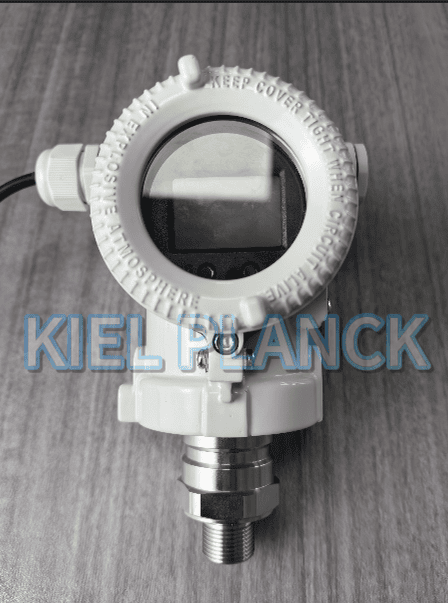
Electronic pressure controllers, by contrast, integrate pressure sensing chips, microprocessors and digital displays. They convert fluid pressure into digital signals, support two or more independent switch points, and allow flexible adjustment of hysteresis and delay time via local buttons or fieldbus communication. They can simultaneously output 4–20mA analog signals for continuous pressure monitoring. Since there are no moving contact parts, wear from frequent switching cycles is eliminated.
There are several clear signals indicating it is time to upgrade from mechanical to electronic controllers.
The first scenario is frequent switching cycles causing rapid mechanical failure. On servo hydraulic presses and cyclic test benches, pressure switches may activate thousands of times per hour. Mechanical contacts will pit, burn and drift quickly, requiring repeated recalibration and replacement. Electronic controllers have virtually unlimited switching life under normal operating conditions, cutting spare part and maintenance labour costs.
Second, when adjustable multi-point pressure control is needed. Many modern hydraulic machines require high-pressure cutoff and low-pressure standby settings at the same time. Mechanical switches need multiple separate units to realise dual setpoints, which increases manifold installation complexity. A single electronic controller can store two independent switch thresholds, with freely configurable hysteresis to avoid chattering caused by hydraulic pulsation.
Third, if the system needs real-time pressure visualisation and digital data upload. Mechanical switches cannot show live pressure values. Operators have to install separate pressure gauges. Electronic controllers feature local digital readout and analog or IO-Link output, transmitting pressure data to the control system for trend recording, fault diagnosis and predictive maintenance. This is critical for quality-critical processes where pressure curve recording is required.
Fourth, when pressure setpoints need regular modification for different production batches. Adjusting mechanical switches demands disassembly and screw tuning, which is time-consuming and prone to human error. Electronic models allow quick parameter modification on site or remote programming without removing the device from the manifold.
Nevertheless, upgrades are not always necessary. For simple hydraulic stations with stable pressure and rare switch actions, mechanical pressure switches remain a cost-effective option. They are still preferred for basic safety interlocks in simple equipment where no power supply or data acquisition is available.
Before upgrading, engineers also need to consider practical constraints. Electronic controllers require a stable 24V DC power supply. They still must withstand hydraulic oil media, pressure spikes and pump vibration, so wetted material and overload rating should match hydraulic working conditions. The higher initial purchase cost is balanced by fewer replacements and less downtime over the equipment lifecycle.
Conclusion
Mechanical pressure controllers suit basic, low-cycle hydraulic pressure interlock tasks with limited budget, while electronic pressure controllers become worthwhile when facing high switching frequency, multi-point programmable thresholds, requirement for real-time pressure display and digital data transmission. Upgrade decisions should not be based solely on new technology trends. Users need to evaluate cycle frequency, control flexibility requirements, data acquisition needs and total lifecycle cost. When hydraulic systems demand precise, repeatable pressure control and digital monitoring, replacing mechanical switches with electronic pressure controllers reduces wear-related faults and calibration workload, stabilises hydraulic closed-loop performance and supports intelligent equipment management.
Scan the QR code to receive more detailed information.