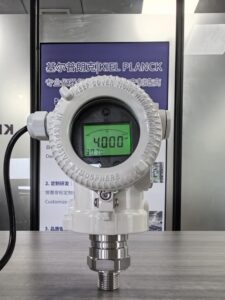
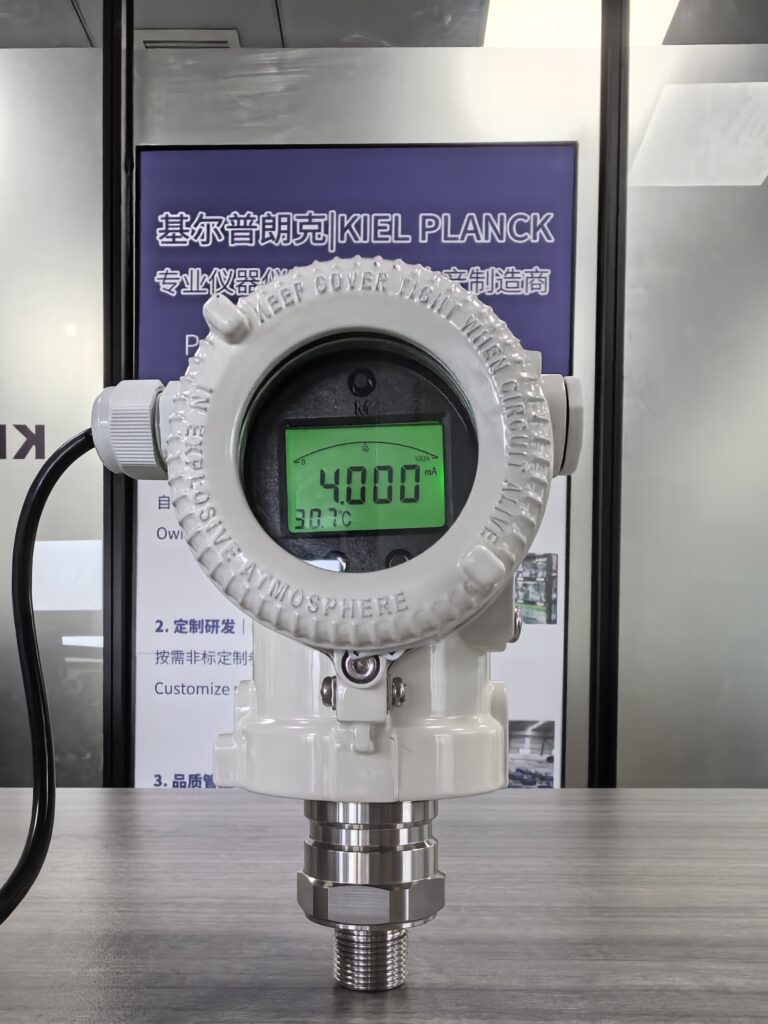
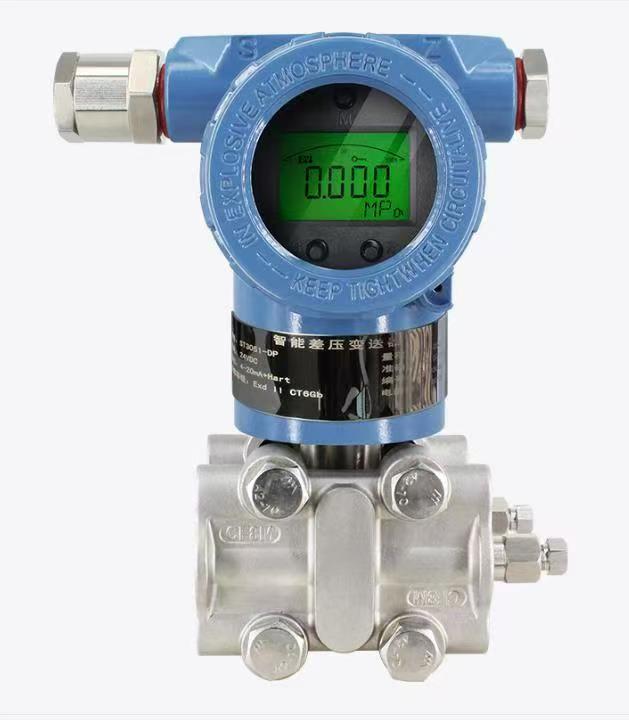
Continuous hydrogenation units require reliable pressure measurement for process monitoring, control, and equipment protection. Pressure transmitters may operate around reactors, compressors, pipelines, separators, and other process equipment.
When comparing monocrystalline silicon and diffused silicon pressure transmitters, buyers should look beyond the sensor technology name. Actual performance depends on the complete transmitter design, calibration, pressure range, temperature compensation, wetted materials, and installation conditions.
This article explains how to compare the two technologies and how to structure a practical field test.
1. Why Pressure Measurement Is Challenging in Continuous Hydrogenation
Hydrogenation processes can involve hydrogen, liquid feedstocks, catalysts, and other process media. The conditions vary by plant design and process stage.
Common measurement challenges include:
Pressure fluctuations: Compressors, valves, and process changes may cause pressure variation.
Temperature changes: Temperature can affect sensor output and measurement stability.
Corrosive or contaminated media: Wetted materials must match the actual process fluid.
Vibration: Nearby rotating equipment may influence installation performance.
Continuous operation: Long-term drift and maintenance access affect lifecycle cost.
Safety requirements: The selected instrument must meet the project’s pressure and applicable safety requirements.
These challenges cannot be solved by sensor technology alone. Installation, process connections, calibration, and instrument configuration also matter.
2. Monocrystalline Silicon vs. Diffused Silicon
The terms describe different sensing approaches, but product performance varies by manufacturer and model. There is no universal rule that one technology is always more accurate or more stable.
| Comparison item | Monocrystalline silicon transmitter | Diffused silicon transmitter |
|---|---|---|
| Sensor technology | Uses a monocrystalline silicon sensing element | Uses a diffused silicon sensing element |
| Accuracy | Must be verified from the exact datasheet | Must be verified from the exact datasheet |
| Temperature performance | Depends on sensor design and compensation | Depends on sensor design and compensation |
| Long-term stability | Requires model-specific data or testing | Requires model-specific data or testing |
| Process compatibility | Depends on diaphragm, wetted materials, seals, and design | Depends on diaphragm, wetted materials, seals, and design |
| Pressure range | Check the available range and allowable pressure | Check the available range and allowable pressure |
| Best choice | Determined by application requirements and verified performance | Determined by application requirements and verified performance |
A fair comparison should use products with comparable measuring ranges, output signals, installation conditions, and published specifications.
3. What Should Be Tested in the Field?
If a buyer wants to compare the two technologies in a continuous hydrogenation unit, a controlled test is more useful than relying on a technology label.
Test 1: Accuracy
Apply several known pressure points across the required operating range. Compare each transmitter’s output with a calibrated reference instrument.
Record the reference pressure, transmitter output, deviation, and test conditions. Confirm whether the manufacturer’s accuracy specification is expressed as a percentage of full scale, reading, or another defined basis.
Test 2: Repeatability
Increase and decrease pressure through the same test points more than once. Compare the readings to determine whether the transmitter returns consistent results under the same conditions.
Test 3: Temperature Influence
Where practical, evaluate the transmitters under the temperatures expected in the installation. Record ambient and process temperatures and compare the resulting measurement deviations.
Do not expose equipment to temperatures outside its specified limits.
Test 4: Response to Pressure Changes
Use a controlled pressure change to compare how quickly each transmitter responds. Record the test method, output sampling rate, configured damping, and response time.
Different damping settings can affect the comparison, so settings should be consistent or clearly documented.
Test 5: Long-Term Stability
Trend both instruments over a representative operating period. Compare drift, abnormal fluctuations, maintenance needs, and consistency with the reference measurement where available.
A short bench test cannot establish long-term stability on its own.
4. How to Choose for a Continuous Hydrogenation Unit
Use the actual measurement point to define the selection requirements.
For reactor pressure monitoring: Confirm the normal and maximum pressure, process temperature, medium compatibility, and the role of the measurement in the control system.
For compressor inlet and outlet: Evaluate pressure fluctuations, vibration, overpressure limits, and required response.
For separator pressure: Consider the process medium, possible condensation, installation orientation, and whether differential pressure is also required.
For critical monitoring or interlocks: Confirm the required instrument performance, diagnostics, redundancy, and safety-system requirements with the project’s engineering team. Do not assume that a standard transmitter alone provides a certified safety function.
5. A Practical Supplier Comparison Checklist
Ask each supplier to provide the following information for the exact model:
Accuracy specification and test conditions
Temperature effects and long-term stability data
Measuring range and maximum allowable pressure
Wetted materials and seal specifications
Output signal and response-time information
Applicable certifications and model coverage
Calibration documentation and warranty terms
Use the same checklist for both technologies. This reduces the risk of comparing a premium model with a lower-specification model and attributing the difference to sensor technology alone.
Frequently Asked Questions
Is monocrystalline silicon always better than diffused silicon?
No. Performance depends on the complete sensor and transmitter design, specifications, and operating conditions. Compare verified data for the exact models.
Can a product brochure prove real-world performance?
A datasheet helps establish published specifications, but field suitability may require calibrated testing and operating data from comparable conditions.
Can the comparison be called a field test?
Only if the tests were actually conducted under documented conditions. If no test data are available, describe the article as a technology comparison or selection guide rather than claiming measured results.
Conclusion
Reliable pressure measurement in continuous hydrogenation depends on selecting an instrument that matches the process conditions and required performance. Monocrystalline silicon and diffused silicon transmitters should be compared using consistent test methods, verified specifications, and application-specific material and pressure requirements. The best choice is the model that demonstrates suitability for the actual operating conditions—not simply the one with the more attractive technology label.
Scan the QR code to receive more detailed information.