A pressure sensor can look suitable on paper but still fail to meet the needs of a particular industrial application. Three important performance areas deserve careful review: overload resistance, temperature drift, and long-term stability.
These parameters are related but not interchangeable. Buyers should check the datasheet definitions and request test evidence before approving a model.
1. Overload Resistance
Overload resistance describes how a sensor or transmitter responds when pressure exceeds its normal measuring range. The allowable overload depends on the sensor structure, pressure connection, diaphragm, and overall instrument design.
What to check
Normal operating pressure
Maximum expected pressure and transient peaks
Rated overpressure limit
Whether the specification applies to one-sided or both-sided pressure
Whether zero shift or accuracy change is specified after overload
Whether repeated pressure cycles are covered by test data
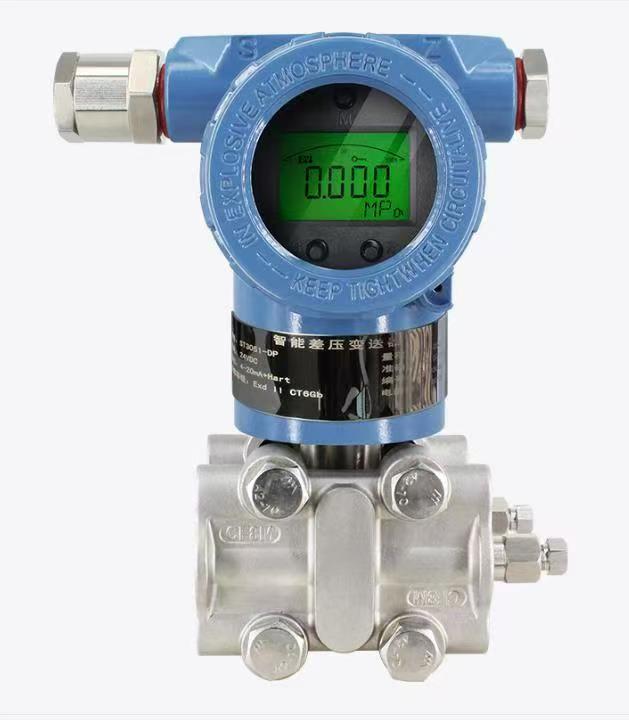
For differential pressure transmitters, one-sided overpressure and static line pressure can be especially important. Do not assume that a differential-pressure range alone defines the instrument’s safe pressure limits.
How to verify it
Request the manufacturer’s test procedure and rated limits. If an acceptance test is required, agree on the pressure level, duration, number of cycles, and post-test acceptance criteria in advance.
Do not deliberately exceed the approved limits on a production instrument. Destructive testing should be conducted only under a controlled, authorized procedure.
2. Temperature Drift
Temperature drift describes changes in measurement output associated with temperature variation. It can affect zero, span, or both.
A transmitter may specify an operating temperature range and a smaller compensated temperature range. These are not necessarily the same.
What to check
Compensated ambient temperature range
Process temperature limit
Zero and span temperature effects
Thermal response and stabilization requirements
Effects of installation orientation or mounting
Whether the accuracy specification includes temperature effects
How to verify it
Use a controlled temperature environment and a calibrated pressure reference. At selected temperatures within the rated range, apply the same pressure points and record the output.
Allow the instrument to stabilize according to the agreed test procedure. Record the ambient temperature, pressure, supply voltage, and output deviation. Compare results against the manufacturer’s specified limits.
Avoid treating a single room-temperature calibration as proof of performance across the entire operating range.
3. Long-Term Stability
Long-term stability describes how much a transmitter’s output or measurement performance changes over time under defined conditions.
Drift may be influenced by sensor aging, pressure cycling, temperature changes, vibration, mounting stress, and operation outside specified limits.
What to check
Stability specification and time period
Reference basis, such as URL or calibrated span
Test conditions and operating assumptions
Historical calibration results, if available
Zero and span changes
Recommended verification or calibration procedures
A statement such as “0.1% stability” is incomplete unless the time period and calculation basis are clear.
How to verify it
For a new product, request documented endurance or stability test data. For installed instruments, compare calibration records over a suitable period under known operating conditions.
A few hours of bench testing can reveal short-term repeatability issues, but it cannot establish one-year or multi-year drift.
4. Procurement Verification Table
| Performance item | Evidence to request | Key question |
|---|---|---|
| Overload resistance | Rated limits and test procedure | What pressure can the exact model withstand? |
| Temperature drift | Temperature-effect specification or test record | What changes across the compensated range? |
| Long-term stability | Time-based specification and supporting data | Over what period and on what basis is drift stated? |
| Repeatability | Test results at repeated pressure points | Does the instrument return consistent readings? |
| Calibration | Calibration certificate, if required | Are results traceable to the required reference? |
5. Avoid These Common Purchasing Mistakes
Comparing percentages with different bases: A percentage of URL is not necessarily equivalent to a percentage of calibrated span.
Ignoring temperature conditions: Two quoted accuracy values may apply under different reference conditions.
Treating overload as normal operating pressure: The overload limit is not a recommended continuous working point.
Accepting unsupported claims: Ask for model-specific datasheets and relevant test records.
Assuming every unit is identical: If production consistency matters, discuss inspection criteria, sampling plans, and documentation with the supplier.
Frequently Asked Questions
Which of the three parameters is most important?
It depends on the application. Pressure peaks make overload limits important, wide temperature changes make temperature effects important, and continuous long-term operation makes stability important.
Can a supplier test these parameters before shipment?
Some tests can be included in a factory acceptance plan. Agree on the test scope, method, and acceptance limits before ordering.
Does a high overload rating guarantee long service life?
No. Service life also depends on normal operating conditions, pressure cycles, temperature, materials, installation, and maintenance.
Conclusion
Overload resistance, temperature drift, and long-term stability should be checked separately during pressure sensor procurement. Ask for clear definitions, model-specific limits, and relevant test evidence. A structured verification process helps buyers select an instrument that matches the real process rather than relying on a single headline specification.
Scan the QR code to receive more detailed information.