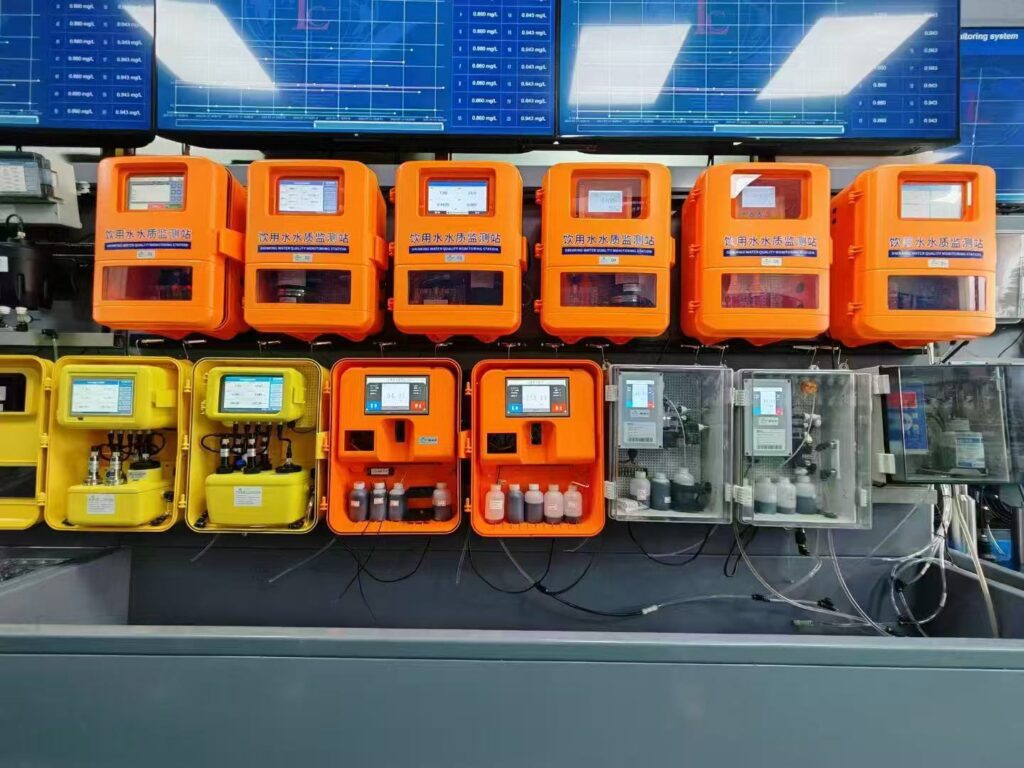
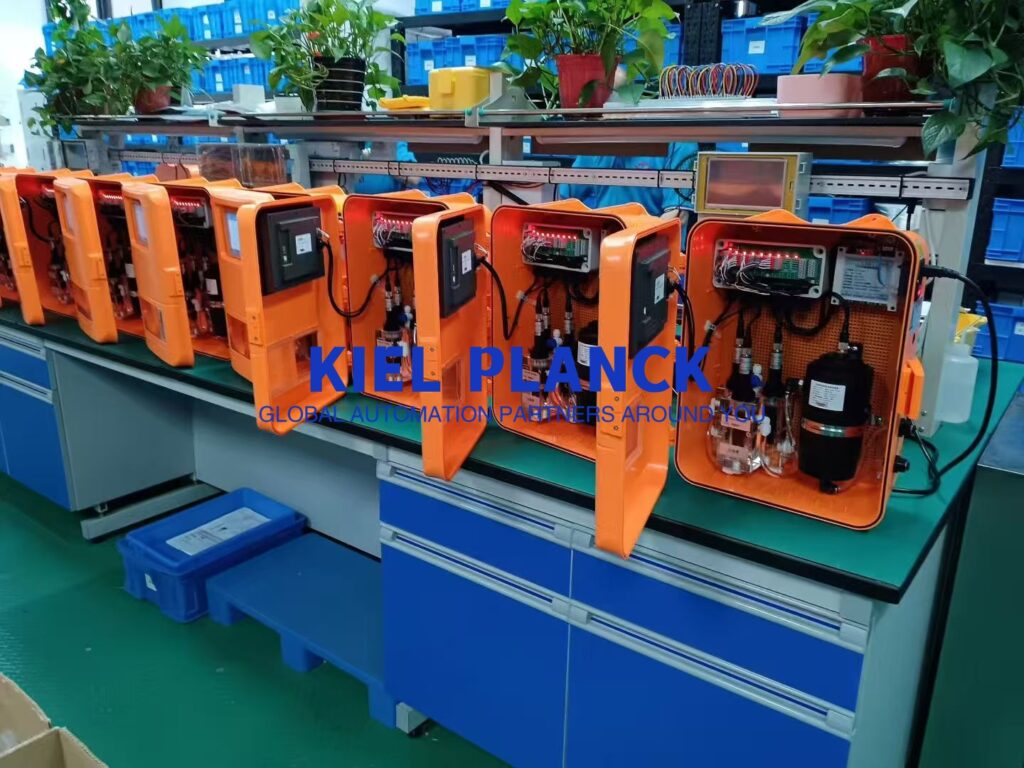
In the daily operation of water quality testing laboratories, many long-standing problems restrict overall testing efficiency and data standardization, including complex testing indicators, low efficiency of single-parameter detection, cumbersome equipment maintenance, and fragmented data management. As an integrated precision testing device, the multi-parameter water quality analyzer enables simultaneous detection of multiple core water quality indicators. It integrates the whole process of sampling, chemical reaction, measurement, data analysis and data storage, fully adapting to standardized laboratory testing scenarios for surface water, drinking water, industrial wastewater and domestic sewage. Featuring high detection accuracy, integrated functions and simplified maintenance, it has become core equipment for modern water quality laboratories to improve efficiency and standardize testing procedures. This article comprehensively presents an integrated laboratory testing solution, covering equipment advantages, standardized testing procedures, professional maintenance and calibration systems, as well as typical application values.
1. Pain Points of Traditional Laboratory Water Quality Testing
Traditional laboratory water quality testing mainly relies on single-parameter analyzers, manual titration and independent spectrophotometer measurement, which cannot meet the demands of large-batch, high-precision and high-efficiency testing. The main limitations are summarized as follows. First, decentralized equipment leads to complicated operations. Indicators such as pH, dissolved oxygen, ammonia nitrogen, COD, total phosphorus and total nitrogen require separate instruments, resulting in large space occupation, tedious procedures and high labor costs. Second, extensive manual intervention causes inevitable human errors in reagent preparation, timing and reading, leading to poor testing repeatability. Third, batch testing cycles are long and inefficient, failing to support emergency monitoring and random sampling tasks with high timeliness requirements. Fourth, scattered maintenance across multiple devices results in inconsistent calibration and upkeep standards, easily causing instrument drift, accuracy attenuation and poor data traceability.
2. Core Advantages of the Integrated Laboratory Solution
The multi-parameter water quality analyzer effectively solves the defects of traditional testing modes. Centering on multi-index integration, high precision, full automation, low maintenance and complete traceability, it establishes a highly efficient and standardized laboratory testing system.
2.1 Integrated Detection Covering Full Core Indicators
The instrument integrates electrochemical measurement, optical spectrophotometry and intelligent titration technologies. It supports simultaneous detection of conventional physical and chemical indicators, including pH, dissolved oxygen, conductivity, turbidity, water temperature, ammonia nitrogen, COD, total phosphorus, total nitrogen, residual chlorine, water hardness and alkalinity. A single device replaces multiple single-parameter instruments, greatly reducing laboratory equipment investment, saving bench space and realizing one-stop comprehensive water quality detection.
2.2 High Precision Compliant with National Standards
Equipped with high-sensitivity sensors and high-resolution optical modules, the analyzer adopts built-in temperature compensation, algorithm calibration and anti-interference correction mechanisms to eliminate deviations caused by water turbidity, suspended solids and ambient temperature fluctuations. All testing procedures, reagent dosing logic and calculation algorithms strictly comply with national water quality detection standards. It delivers stable repeatability and controllable measurement errors, supporting direct data application for water quality evaluation, official test reports and environmental compliance filing.
2.3 Fully Automatic Operation Reducing Human Errors
The intelligent control system realizes full-process automatic operation, including sample pretreatment, quantitative reagent dosing, constant-temperature reaction, signal acquisition, concentration calculation and data storage. It minimizes manual participation, fundamentally reduces operational errors, lowers technical thresholds, and allows novice operators to complete standardized testing efficiently.
2.4 Intelligent and Traceable Data Management
Built-in large-capacity storage records complete testing information, including detection results, time stamps, operator information and calibration history. The system supports real-time data query, trend analysis, data export and automatic report generation. The standardized traceability system fully meets laboratory qualification review, data verification and quality management requirements.
3. Standardized Integrated Testing Implementation Plan
Based on conventional laboratory workflows, the solution builds a closed-loop testing procedure of sample pretreatment — standardized detection — data verification — result output — instrument reset, realizing standardized, efficient and normalized testing management.
3.1 Standardized Sample Pretreatment
Customized pretreatment rules are formulated for different water samples. Clean drinking water and surface water only need static settling and removal of floating impurities. For high-turbidity industrial wastewater and polluted water, the supporting pretreatment filter module intercepts suspended solids and particulate matter, eliminating sample interference, preventing module contamination and ensuring stable and accurate detection conditions.
3.2 High-Efficiency Batch Detection
Users can preset testing parameters and customized indicator combinations to support synchronous multi-index detection for single samples and continuous testing for multiple samples. Compared with traditional separate single-index testing, the overall efficiency is increased by 3–5 times, fully adapting to daily batch testing, emergency response and special sampling inspection scenarios.
3.3 Accurate Data Verification and Output
After testing, the system automatically outputs concentration data, real-time curves and over-limit alarms for abnormal indicators, enabling rapid water quality assessment. It supports one-click data export and intelligent report generation, significantly simplifying laboratory report compilation and improving overall operational efficiency.
4. Professional Operation, Calibration and Maintenance System for Long-Term Accuracy
Stable instrument performance is the premise of reliable laboratory testing. A complete set of standardized maintenance, periodic calibration and troubleshooting mechanisms is established to sustain long-term precision and avoid data drift and equipment failure.
4.1 Daily Routine Maintenance
After each test, rinse sensors, colorimetric cells and sampling pipelines with pure water to remove residual samples and reagents and prevent scaling and contamination. Electrochemical sensors shall be stored with dedicated protective solution to avoid membrane drying and performance degradation during long-term standby. Keep the instrument in a dry, constant-temperature and electromagnetic-interference-free environment. Regularly inspect and replace aging filter elements, sealing rings and failed consumables.
4.2 Hierarchical Periodic Calibration
A standardized calibration cycle is implemented to guarantee full-parameter accuracy. pH and conductivity sensors are calibrated with standard buffer solutions every 3–7 days; dissolved oxygen sensors complete air calibration weekly; optical indicators such as ammonia nitrogen, COD and total phosphorus adopt full standard curve calibration monthly. Full-scale recalibration is required after long-distance transportation, drastic environmental changes and before high-precision testing. All calibration results must be verified with standard control samples and recorded completely for traceability.
4.3 Rapid Troubleshooting Mechanism
For common laboratory anomalies including unstable data, low accuracy, slow sensor response and sampling failure, targeted troubleshooting rules are adopted. Fluctuating data is usually solved by probe cleaning, bubble removal and temperature stabilization. Low accuracy is mainly corrected by renewing reagents, recalibrating instruments and strengthening sample pretreatment. Slow sensor response can be fixed by probe activation or replacement of aging sensors. System hardware abnormalities can be recovered through restart, dust removal, drying and timely replacement of damaged consumables, minimizing instrument downtime.
5. Application Scenarios and Solution Value
This integrated solution is widely applicable to third-party testing laboratories, environmental monitoring stations, water service testing centers, university research laboratories and enterprise quality inspection rooms. It covers full business scenarios including drinking water safety inspection, surface water ecological monitoring, industrial wastewater compliance detection and water quality research experiments.
In terms of laboratory operation, the integrated device reduces hardware investment and maintenance costs, while automatic workflows cut labor costs and greatly improve testing throughput. In terms of detection quality, standardized procedures and precise calibration eliminate large errors and non-traceable data defects, enhancing accuracy, authority and compliance of test results. In the long run, intelligent data management conforms to the digital and standardized development trend of modern laboratories, supporting comprehensive upgrading of efficient operation, accurate detection and compliant management.
6. Conclusion
The multi-parameter water quality analyzer provides an efficient integrated laboratory testing solution that solves the traditional limitations of scattered equipment, cumbersome workflows, low efficiency and unstable accuracy. Centering on integrated detection, automatic operation, intelligent data management and standardized maintenance, it builds a complete and modern laboratory water quality testing system. The deep integration of equipment and standardized procedures effectively improves laboratory testing efficiency, reduces operational costs, and ensures long-term accurate, compliant and traceable detection data. It provides solid and reliable technical support for water quality safety supervision, ecological environmental governance and water-related scientific research.
Scan the QR code to receive more detailed information.