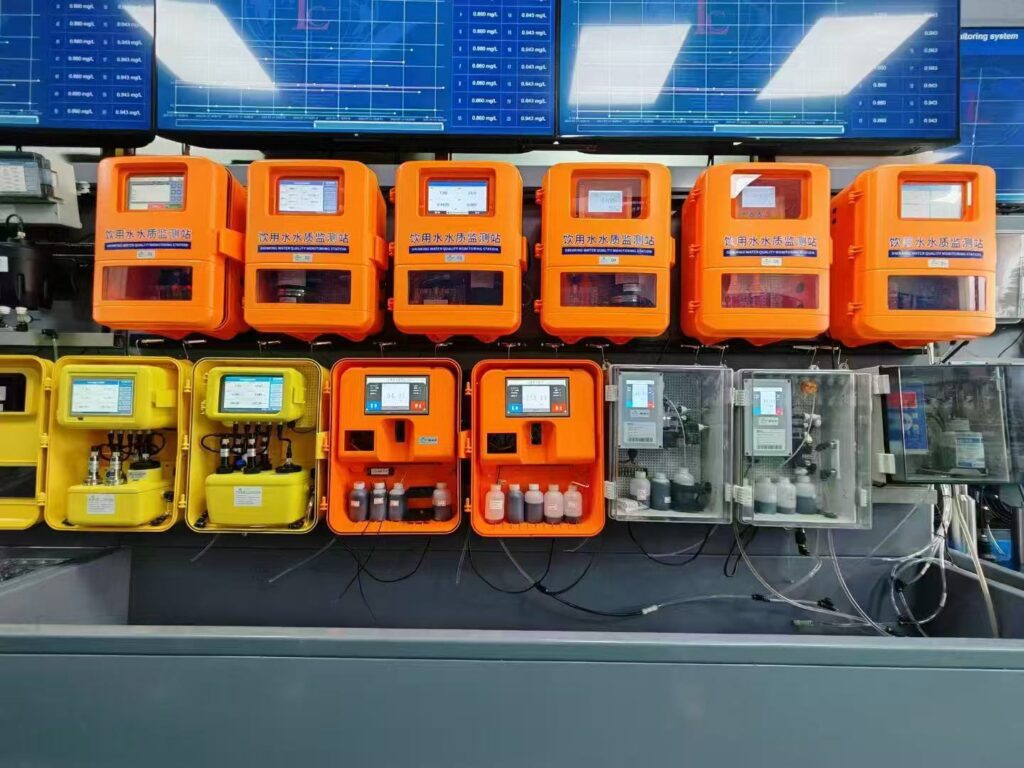
Multi-parameter water quality analyzers, including portable and benchtop models, are widely deployed for environmental monitoring, industrial wastewater inspection, aquaculture water management, and drinking water quality verification. To sustain long-term measurement accuracy, stable operational performance, and extended service life, standardized routine maintenance, periodic scientific calibration, and targeted troubleshooting are indispensable. This guide systematically elaborates on standardized maintenance procedures, professional calibration specifications, and common fault diagnosis and solutions for multi-parameter water quality analyzers.
1. Routine Daily & Periodic Maintenance
Daily maintenance focuses on daily cleaning, environmental management and consumable inspection, which can effectively avoid most common equipment failures and data anomalies caused by pollution and improper storage.
1.1 Sensor Maintenance
Sensors for pH, dissolved oxygen, conductivity and turbidity are core precision components and are highly susceptible to contamination by suspended solids, algae, organic residues and sediment. After each field or laboratory test, rinse all sensor probes thoroughly with deionized or purified water to remove residual water sample contaminants. For probes stained with stubborn attachments, use a soft sponge or lint-free cloth for gentle wiping; never use hard tools to scratch the sensing membrane or optical lens, which may cause permanent damage.
For long-term storage, keep electrochemical sensors wet with dedicated protective storage solution to prevent dehydration, membrane aging and performance attenuation. Optical sensors shall be kept clean and dry to avoid dust accumulation affecting light transmission and detection accuracy.
1.2 Equipment & Pipeline Maintenance
Regularly clean the instrument shell, colorimetric cells, sampling pipelines and filter components to block dirt accumulation. Check the sampling pipeline for blockage, air leakage or water leakage weekly, and dredge blocked pipelines in a timely manner. Replace filter elements regularly according to usage frequency to ensure clean and impurity-free sampling. For portable devices, inspect battery status routinely; avoid long-term overcharging or complete power loss to extend battery cycle life.
1.3 Operating Environment Maintenance
Place and store the analyzer in a dry, dust-free, well-ventilated and constant-temperature environment. Avoid direct sunlight, strong electromagnetic interference, high temperature, low temperature and humid condensation conditions. Field operation shall avoid severe vibration and corrosive gas erosion to protect internal circuits and precision modules.
2. Standard Calibration Specifications & Procedures
Calibration is the core measure to eliminate instrument drift, offset errors and ensure traceable and accurate detection data. Different sensors and detection indicators correspond to independent standardized calibration cycles and methods.
2.1 Calibration Cycle
For conventional daily monitoring scenarios, pH and conductivity sensors require zero and slope calibration every 3 to 7 days. Dissolved oxygen sensors need regular calibration every 7 to 10 days. Optical indicators such as COD, ammonia nitrogen, turbidity and total phosphorus require full standard curve calibration every 1 month. For high-precision testing scenarios or after long-distance transportation and severe environmental changes, perform full-item calibration before formal testing.
2.2 Key Calibration Operations
pH Calibration: Adopt two-point or three-point calibration with standard buffer solutions (acidic, neutral and alkaline) to correct electrode potential deviation and ensure accurate pH response in different water samples.
Dissolved Oxygen Calibration: Complete air calibration in saturated humidity air to eliminate atmospheric pressure and temperature interference, and calibrate with zero-oxygen solution for high-precision detection requirements.
Optical Parameter Calibration: Use certified standard solutions for gradient calibration to establish a standard absorbance-concentration curve, and eliminate system errors of optical components and reagent differences.
2.3 Post-Calibration Verification
After each calibration, use standard control samples for verification tests. Only when the detection error is within the national standard allowable range can the instrument be put into formal use. Record all calibration data, time and operator information to form complete equipment maintenance files.
3. Common Faults & Professional Troubleshooting
During long-term operation, multi-parameter analyzers may encounter problems such as unstable data, large detection errors, unresponsive sensors and system failures. The following summarizes typical faults and targeted solutions.
3.1 Unstable or Fluctuating Detection Data
Causes: Contaminated sensor surface, unstable ambient temperature, incomplete sensor activation, bubble interference in colorimetric cells or pipelines, and unstable power supply.
Solutions: Clean and maintain the sensor probe again; place the instrument in a constant-temperature environment for preheating and stabilization; exhaust bubbles in pipelines and colorimetric cells; switch to a stable power supply or fully charge the portable device; re-calibrate if necessary.
3.2 Large Detection Deviation and Low Accuracy
Causes: Expired calibration solution, outdated standard curve, sensor aging and drift, failed detection reagents, incomplete sample pretreatment, and serious electrode membrane contamination.
Solutions: Replace standard calibration solutions and detection reagents; perform full-scale recalibration; deeply clean or replace aging sensors; strengthen sample filtration and impurity removal pretreatment to eliminate water body interference.
3.3 Slow Sensor Response
Causes: Dry and aging sensor membrane, surface dirt coverage, long-term non-use leading to sensor passivation, and low ambient temperature.
Solutions: Activate the sensor with dedicated activation solution; thoroughly clean the probe surface; extend the instrument preheating time in low-temperature environments; replace severely aging sensors.
3.4 System and Hardware Abnormalities
Causes: Excessive dust inside the instrument, circuit damp damage, program crash, pipeline blockage leading to sampling failure, and battery aging.
Solutions: Regularly dedust the instrument interior and keep it dry; restart the device to repair program exceptions; clean and dredge the sampling pipeline and filter element; replace aging batteries and damaged hardware accessories in time.
4. Long-Term Operation Optimization Tips
To maintain the long-term stable performance of multi-parameter water quality analyzers, users shall formulate standardized operation and maintenance management systems. Avoid high-load continuous operation for a long time, conduct regular comprehensive equipment inspection every quarter, and arrange professional third-party calibration and annual verification. Standardize operation procedures to avoid misoperation damage, and replace vulnerable consumables such as filter elements, reagents and sealing parts regularly. Scientific maintenance and standardized troubleshooting can effectively reduce equipment failure rate, reduce operation and maintenance costs, and ensure the authenticity, accuracy and traceability of water quality detection data.
5. Conclusion
Routine maintenance, standardized calibration and scientific troubleshooting are three core pillars for the stable and efficient operation of multi-parameter water quality analyzers. Standardized daily maintenance avoids preventive failures, periodic calibration guarantees detection accuracy, and targeted troubleshooting rapidly resolves operational anomalies. Strict implementation of the above management specifications can maximize the service life and detection performance of the instrument, providing reliable technical support for water quality monitoring, environmental law enforcement, industrial production control and water ecological protection.
Scan the QR code to receive more detailed information.