Water quality analyzers vary widely in detection principles, functional configurations, accuracy grades and application scenarios. Improper instrument selection often leads to insufficient detection accuracy, mismatched operating conditions, wasted equipment investment, or failure to meet environmental compliance and laboratory accreditation requirements. For environmental monitoring, industrial wastewater treatment, municipal water supply, aquaculture and laboratory testing institutions, scientific and targeted instrument selection is the premise of stable monitoring, accurate data output and standardized operation. This practical guide summarizes core selection dimensions, key judgment criteria and scenario-based matching rules to help users quickly select the most suitable water quality analyzer.
1. Clarify Core Testing Goals and Indicator Requirements
The first step in instrument selection is to define actual testing demands, including detection indicators, concentration ranges and data accuracy standards, which directly determine the basic model and functional configuration of the analyzer.
For conventional daily water quality inspection scenarios such as tap water, surface water and aquaculture water, only basic physical and chemical indicators are required, including pH, dissolved oxygen, conductivity, turbidity and water temperature. In this case, portable multi-parameter analyzers or basic benchtop analyzers with electrochemical sensors can fully meet the demands, featuring low cost and fast response.
For industrial sewage discharge, environmental compliance monitoring and laboratory precision analysis, it is necessary to detect pollution indicators such as COD, ammonia nitrogen, total phosphorus, total nitrogen and residual chlorine. Users need to select optical spectrophotometric analyzers or standardized online monitoring instruments that comply with national environmental protection detection standards, ensuring that the detection method, linear range and accuracy meet official filing and audit requirements.
For special industrial scenarios such as chemical wastewater, boiler circulating water and printing and dyeing wastewater, targeted indicators including alkalinity, water hardness, sulfide and heavy metal ions shall be focused on, and customized functional models are required to match special testing demands.
2. Select Instrument Type According to Application Scenarios
Different working environments determine the applicable instrument form factor. Three mainstream types cover all current water quality monitoring scenarios, with clear functional boundaries.
2.1 Portable Analyzers for Field and Emergency Detection
Portable analyzers are compact, battery-powered and easy to carry, supporting outdoor field patrol, environmental law enforcement sampling, sudden water pollution emergency detection and aquaculture on-site inspection. They feature simple operation and real-time data output, suitable for mobile and unfixed detection scenarios. However, their long-term stability and ultra-low concentration precision are slightly lower than laboratory and online models, making them ideal for rapid screening and field qualitative and quantitative detection.
2.2 Benchtop Analyzers for Laboratory Precision Testing
Benchtop multi-parameter analyzers are designed for professional laboratories, with high-precision optical circuits, stable sensor systems and complete temperature compensation algorithms. They support trace concentration detection and standard curve calibration, providing high-repeatability and traceable data. They are applicable to third-party testing laboratories, environmental monitoring stations and scientific research institutions for precise water sample analysis, data verification and experimental research.
2.3 Online Continuous Monitoring Analyzers for Fixed Industrial Sites
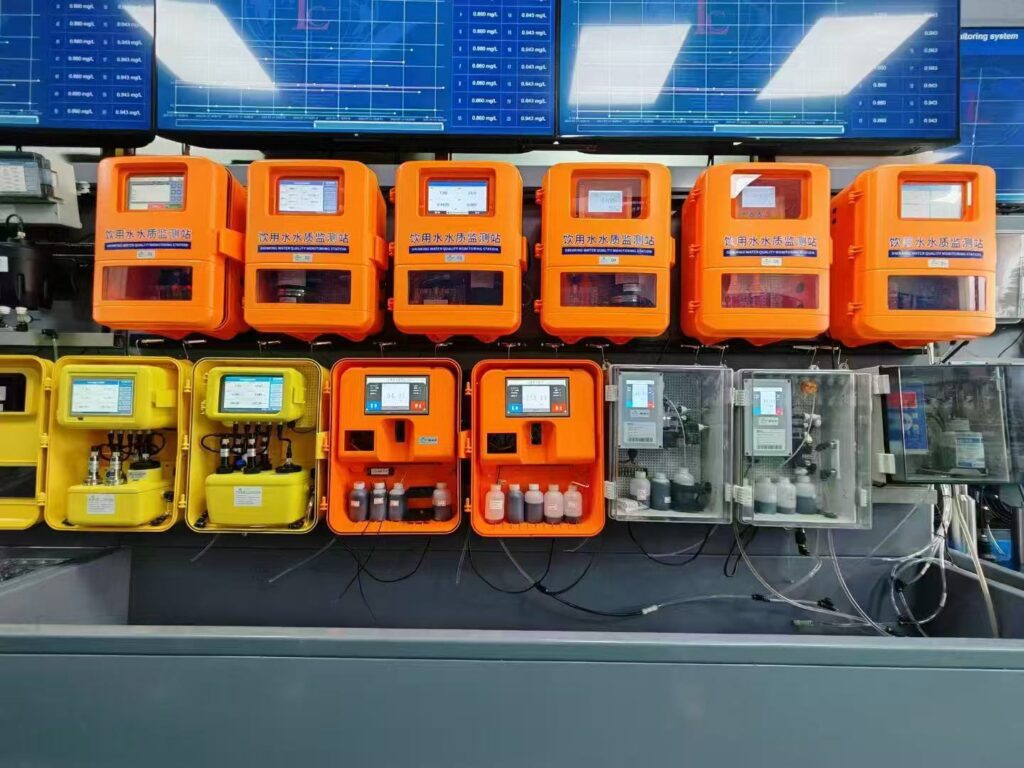
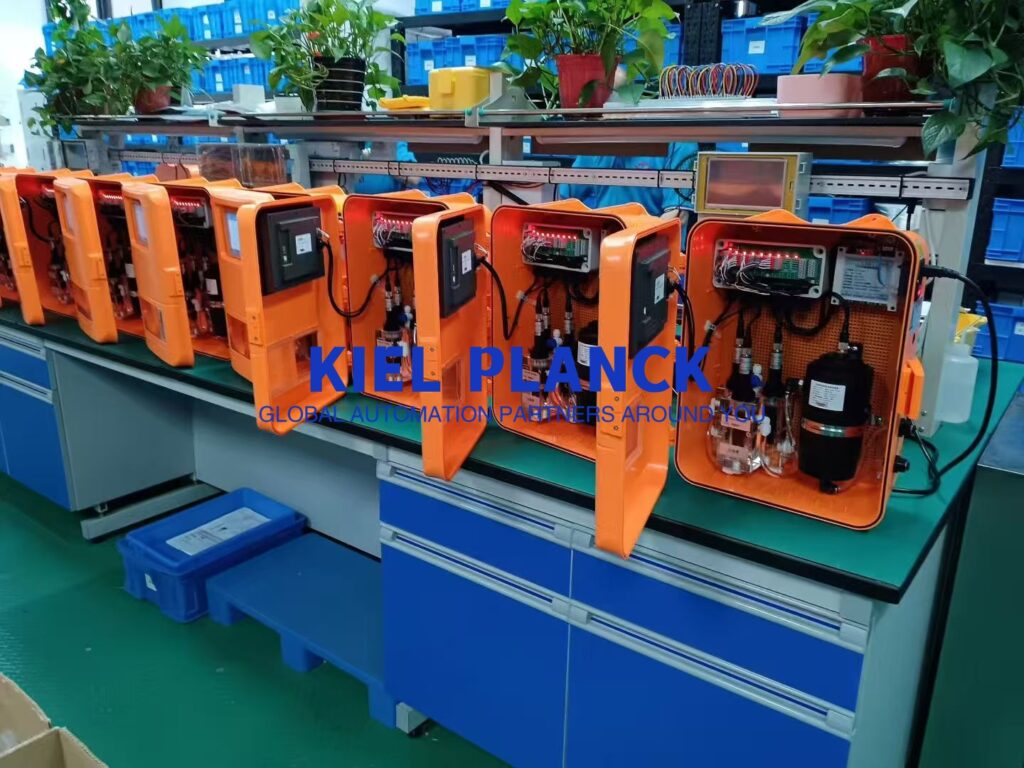
Online water quality analyzers support 24-hour unattended automatic sampling, detection and data transmission. Equipped with automatic cleaning, reagent automatic supplement and over-limit alarm linkage functions, they are suitable for fixed-point long-term monitoring of sewage discharge outlets, river automatic monitoring stations and municipal water supply pipelines. They can realize real-time data docking with environmental supervision platforms, meeting continuous compliance monitoring requirements.
3. Match Water Sample Characteristics and Operating Conditions
Water sample turbidity, impurity content, temperature range and on-site environmental conditions are key restrictive factors for instrument selection, which can effectively avoid data distortion and equipment damage caused by mismatched working conditions.
For clean water bodies such as tap water and natural surface water with low suspended solids and stable water quality, conventional standard analyzers can achieve ideal detection effects. For high-turbidity, high-impurity and high-viscosity industrial wastewater, it is essential to select instruments with supporting pretreatment filtering modules, anti-pollution probes and anti-blocking sampling pipelines to prevent sensor contamination and pipeline blockage.
In terms of ambient conditions, indoor laboratory environments have minor interference, so standard benchtop models are sufficient. For outdoor workshops, open-air monitoring points and high-humidity and high-dust industrial sites, priority should be given to instruments with high waterproof and dustproof grades, good sealing performance and wide temperature adaptability to ensure stable operation in harsh environments.
4. Verify Detection Accuracy, Standards and Data Compliance
For scenarios involving environmental protection filing, enterprise discharge compliance and laboratory qualification certification, instrument compliance and accuracy are core selection indicators.
Users must confirm that the instrument’s detection principles and reagent methods comply with local and national standard specifications, and have official environmental protection certification and inspection qualification. Instruments that meet standard methods can ensure that the detection data is authoritative, traceable and legally valid for submission and audit.
In terms of precision parameters, select matching range, resolution and repeatability indicators according to actual concentration levels. For trace water quality testing, instruments with lower detection limits and higher resolution are required; for conventional industrial monitoring, standard precision models can balance performance and cost.
5. Evaluate Intelligent Functions and Expandability
Modern water quality analyzers’ intelligent configurations determine operational efficiency and long-term usability. It is necessary to focus on automatic calibration, automatic cleaning, data management and remote transmission functions during selection.
Highly intelligent instruments support automatic sampling, reagent dosing and result calculation, reducing manual intervention and human errors. Built-in data storage, trend analysis, one-click export and automatic report generation can greatly improve laboratory and on-site operation efficiency. For industrial intelligent management scenarios, select instruments with WiFi, 4G remote transmission and DCS/PLC system docking functions to realize digital closed-loop monitoring.
In addition, priority should be given to instruments with expandable sensor interfaces and customizable detection items, which can upgrade testing functions later according to business expansion, avoiding repeated equipment procurement.
6. Comprehensive Assessment of Operation Cost and After-Sales Service
Instrument selection should not only focus on initial procurement cost, but also comprehensively evaluate long-term operation and maintenance costs, including reagent consumption, filter element replacement, sensor aging replacement and daily maintenance difficulty.
Select equipment with universal and low-cost consumables and simple maintenance procedures to reduce later operation pressure. Meanwhile, perfect after-sales service system is essential, including professional technical guidance, rapid fault response, instrument calibration support and long-term accessory supply, ensuring stable and continuous instrument operation throughout the service life.
7. Summary of Selection Principles
Scientific selection of water quality analyzers needs to follow the core logic of demand matching, scenario adaptation, standard compliance and cost optimization. Clarify detection indicators and accuracy requirements first, select portable, benchtop or online models according to application scenarios, match functional configurations based on water sample and environmental characteristics, verify compliance and intelligent performance, and finally balance operation cost and after-sales guarantee. Following the above practical selection rules can effectively avoid equipment mismatch and resource waste, maximize instrument detection performance, and provide accurate, stable and compliant data support for water quality monitoring and water environment management.
Scan the QR code to receive more detailed information.