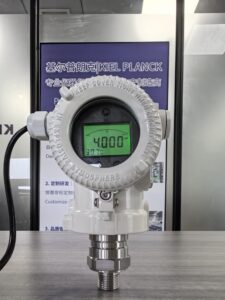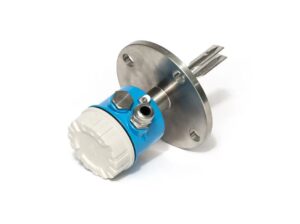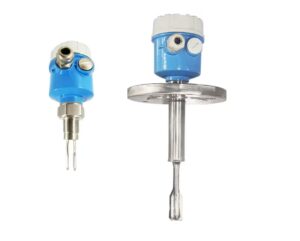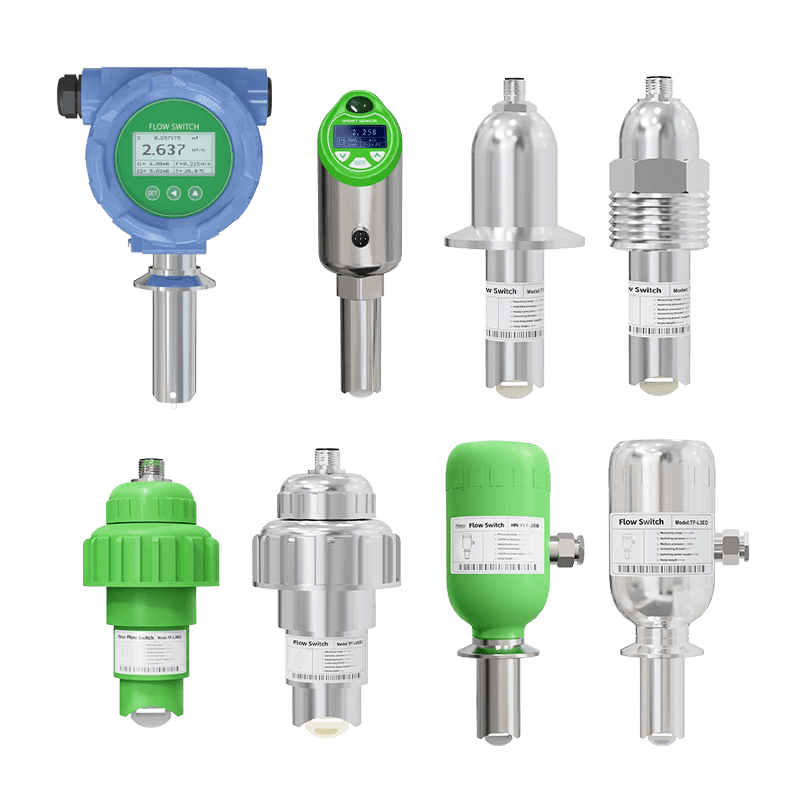
Online moisture analyzers are critical real-time detection devices widely applied in food processing, pharmaceutical production, chemical materials, mining metallurgy, building materials and biomass energy industries. They continuously monitor the moisture content of solid particles, powder materials and semi-finished products during production, providing real-time data basis for process parameter adjustment, product quality control and standardized production management. However, affected by complex on-site working conditions, material characteristics, long-term continuous operation and irregular maintenance, online moisture analyzers frequently suffer from data drift, unstable readings, slow response, equipment alarm faults and other abnormal problems. These issues will directly lead to inaccurate production parameter adjustment, unqualified product quality and reduced production efficiency. This article conducts an in-depth sorting and analysis of typical common faults of online moisture analyzers, explores root causes, and proposes targeted solutions and standardized preventive maintenance strategies.
1. Common Data Abnormity Problems and Countermeasures
Data instability and inaccurate measurement are the most frequent problems in the long-term operation of online moisture analyzers, which are mainly manifested in data fluctuation, obvious deviation, fixed-value drift and unresponsive data update.
1.1 Unstable and Fluctuating Measurement Data
Problem Manifestation: The real-time moisture value jumps frequently without changes in material properties and production working conditions, with large amplitude fluctuation and poor repeatability, failing to reflect the actual moisture state of materials.
Root Causes: First, the material feeding is uneven, with discontinuous material layer thickness, material accumulation or material gap at the detection position, resulting in inconsistent detection signals; second, on-site environmental interference such as dust floating, air flow fluctuation and ambient temperature mutation affects optical or microwave detection signals; third, the sensor probe surface is attached with dust, debris and sticky materials, interfering with signal penetration and induction; fourth, unstable equipment power supply causes disordered signal acquisition.
Solutions & Optimization Measures: Optimize the on-site feeding structure to ensure uniform and stable material transportation and keep the detection material layer thickness consistent; install dust-proof and wind-shielding baffles for the equipment to reduce environmental air flow and dust interference; regularly clean the sensor detection surface before and after operation to remove residual material adhesion; configure stabilized voltage power supply to avoid current fluctuation interference; set reasonable data filtering and average processing parameters in the system to eliminate accidental data jitter.
1.2 Large Measurement Deviation and Data Drift
Problem Manifestation: The detected moisture value is continuously higher or lower than the laboratory manual detection value, with stable deviation, and the error gradually increases with the extension of operation time.
Root Causes: Long-term operation leads to aging and sensitivity attenuation of sensor components; the instrument lacks regular calibration, resulting in offset of the internal standard curve; changes in material temperature, particle size and bulk density are not matched with temperature compensation parameters; long-term accumulation of fine dust on the probe causes signal attenuation; seasonal temperature and humidity changes cause systematic drift of the instrument.
Solutions & Optimization Measures: Establish a regular calibration mechanism, conduct comparison calibration with laboratory standard values weekly, and correct the system standard curve in a timely manner; activate and optimize the built-in temperature and density compensation algorithm to adapt to material state changes; thoroughly clean and maintain the sensor regularly to eliminate residual accumulation interference; perform full-scale recalibration and parameter reset after seasonal environment changes or long-term continuous operation to eliminate systematic drift.
1.3 Slow Data Response and Hysteresis
Problem Manifestation: When the material moisture content changes suddenly, the instrument data cannot be updated synchronously, with obvious detection lag, which cannot meet the requirements of real-time process adjustment.
Root Causes: The system detection interval parameter is set too long; the sensor signal processing module is aged with slow signal transmission efficiency; excessive dirt coverage on the probe surface delays signal induction; excessive material stacking thickness weakens signal penetration.
Solutions & Optimization Measures: Appropriately shorten the detection cycle and data refresh interval according to production rhythm; inspect and replace aging signal acquisition modules regularly; strengthen daily cleaning of the sensor to ensure sensitive signal induction; adjust the equipment installation height and detection distance to ensure effective signal penetration and rapid response.
2. Equipment Hardware and Operational Faults
In addition to data abnormalities, online moisture analyzers operating in harsh industrial environments for a long time are prone to hardware failures such as sensor abnormality, system startup failure and transmission interruption, affecting continuous production monitoring.
2.1 Sensor Abnormity and Fault Alarm
Problem Manifestation: The system prompts sensor fault, abnormal signal loss and detection failure, and cannot collect valid moisture data.
Root Causes: The sensor probe is severely worn, scratched or corroded; the internal cable interface is loose, aging or short-circuited due to long-term vibration; high temperature and humidity on site cause damage to the sensor precision components; excessive dust accumulation causes probe failure.
Solutions & Optimization Measures: Regularly inspect the sensor appearance and sealing performance, replace severely worn and corroded probes in a timely manner; check and fasten signal cables and connectors regularly to avoid virtual connection and line aging; install heat insulation and moisture-proof protection devices for equipment in high-temperature and high-humidity workshops; clean dust and debris inside the probe protection cover regularly to ensure normal sensor operation.
2.2 System Startup Failure and Program Crash
Problem Manifestation: The equipment cannot be started normally, the screen is stuck, or the program crashes frequently during operation, resulting in monitoring interruption.
Root Causes: Long-term uninterrupted operation leads to system program cache accumulation and operation jam; unstable power supply and instantaneous power failure cause program data loss; internal circuit damp and dust accumulation cause circuit board failure; improper parameter modification leads to system operation conflict.
Solutions & Optimization Measures: Regularly restart the equipment to clear system cache and maintain stable program operation; configure emergency power supply and voltage stabilization equipment to avoid sudden power failure damage; regularly dedust and dry the internal circuit of the instrument to prevent damp short circuit; strictly standardize parameter modification operations, and restore factory settings and re-configure parameters in case of program confusion.
2.3 Remote Data Transmission Interruption
Problem Manifestation: The on-site instrument operates normally, but the background system cannot receive data, resulting in disconnection of remote monitoring.
Root Causes: Network signal instability and network port loose connection; transmission module aging and signal attenuation; inconsistent background protocol configuration; on-site electromagnetic interference affects data transmission signal.
Solutions & Optimization Measures: Regularly check network lines and interfaces to ensure stable connection status; inspect and replace aging transmission modules regularly; verify and match on-site and background communication protocols; add electromagnetic shielding measures for equipment in strong interference environments to ensure stable data transmission.
3. Hidden Troubles Caused by Improper Installation and Working Condition Mismatch
Most long-term recurrent faults of online moisture analyzers are derived from unreasonable early installation position and mismatched working condition adaptation, which are easy to be ignored in daily operation.
Common Hidden Troubles: The equipment is installed at the material inlet, outlet or material accumulation dead angle, resulting in unstable detection medium; the installation distance is too far or too close, exceeding the effective detection range of the sensor; long-term exposure to strong light, high temperature and corrosive gas environment without protection; the equipment is affected by mechanical vibration for a long time, resulting in component displacement and parameter offset.
Preventive Solutions: Select a stable and uniform material transportation section for equipment installation to avoid material mutation and dead-angle detection; adjust the installation height and detection distance strictly in accordance with the instrument manual to ensure detection within the optimal range; install protective covers, heat insulation and corrosion-proof accessories for equipment in harsh environments; add shock absorption gaskets and fixing devices to reduce mechanical vibration interference.
4. Standardized Daily Maintenance and Preventive Management Strategy
To fundamentally reduce the failure rate of online moisture analyzers and maintain long-term stable and accurate detection performance, standardized daily maintenance and preventive management must be implemented, forming a complete operation guarantee system.
Daily Inspection: Check equipment operation status, data stability, probe cleanliness and power network status before and after daily production, and clean surface dust and material residues in time.
Regular Calibration and Comparison: Carry out manual sampling comparison calibration every week, conduct full parameter calibration and system error correction every month, and eliminate data drift in advance.
Regular Component Inspection and Replacement: Regularly check sensor aging degree, line loss and module performance, and replace vulnerable parts such as probes and transmission modules regularly according to service life.
Working Environment Optimization: Keep the equipment operating environment dry, dust-free and well-ventilated, eliminate strong light, vibration and electromagnetic interference, and optimize on-site working conditions continuously.
Operation Standardization: Standardize parameter modification, equipment startup and shutdown, and fault handling operations to avoid human-induced equipment abnormalities and data errors.
5. Conclusion
Online moisture analyzers are key equipment for industrial production process control and product quality supervision. Common problems such as data fluctuation, measurement deviation, slow response and hardware faults are mainly caused by environmental interference, material characteristic changes, insufficient maintenance and mismatched working conditions. Through in-depth analysis of fault root causes, targeted adoption of technical optimization solutions, and implementation of standardized daily inspection, regular calibration and preventive maintenance mechanisms, enterprises can effectively reduce equipment failure rate, eliminate detection data errors, ensure long-term stable and reliable operation of online moisture monitoring equipment, and provide accurate and real-time data support for intelligent and refined production management.
Scan the QR code to receive more detailed information.