
How to select the frequency based on different storage tank operating conditions?
High-frequency non-contact radar level meters are widely used in industrial tank measurement, with 6GHz, 26GHz, and 80GHz being the three mainstream frequency bands. Although all of them adopt microwave time-of-flight measurement theory, differences in frequency, wavelength, beam angle and signal characteristics lead to distinct performance in measurement accuracy, anti-interference ability and environmental adaptability.
Structure and Operating Principles of Guided Wave Radar and Non-Contact Radar Level Gauges
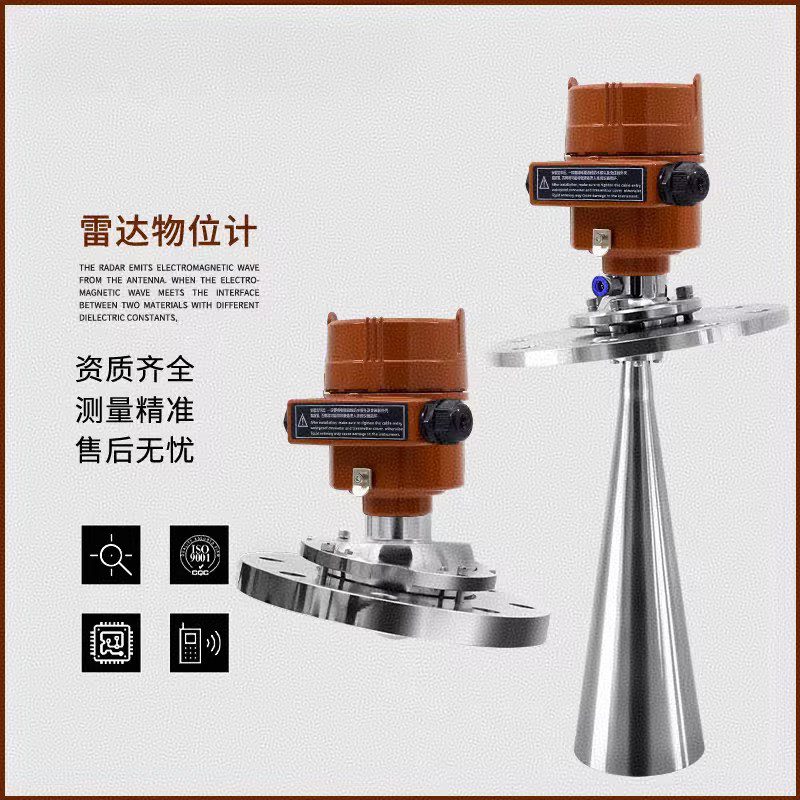
Guided wave radar and non-contact radar are two mainstream radar level measurement technologies widely used in industrial process monitoring. Although both work based on microwave electromagnetic wave reflection theory, they differ fundamentally in structural design, working mechanisms, and medium applicability. Guided wave radar adopts contact probe transmission, while non-contact radar realizes non-invasive measurement through air-propagating microwaves.
Principle Comparison and Application Scenarios of Pulse Radar and FMCW Radar Level Meters
As two mainstream types of radar level measuring equipment, pulse radar and Frequency Modulated Continuous Wave (FMCW) radar level meters are widely used in industrial liquid and solid level monitoring. Both devices rely on the reflection principle of high-frequency microwaves, but they adopt completely different signal transmission and data processing mechanisms, leading to significant differences in measurement accuracy, anti-interference performance and applicable working conditions.
Basic Measurement Principle of Radar Level Meters

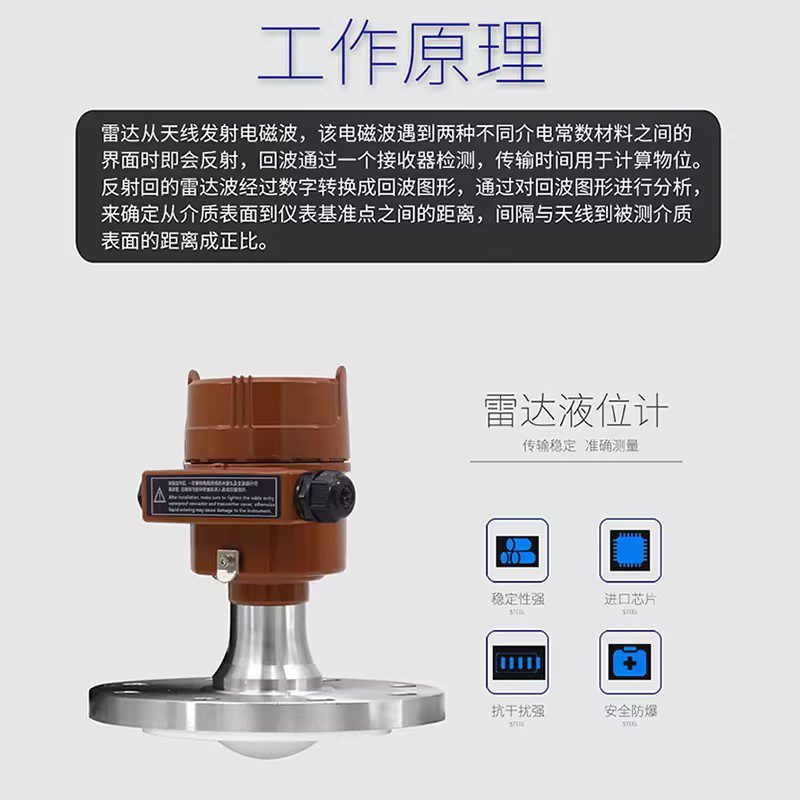
Radar level meters are widely adopted industrial measuring instruments for liquid and solid level monitoring, featuring high precision, strong stability, and excellent adaptability to harsh working conditions. Different from traditional mechanical and ultrasonic level measuring devices, radar level meters work based on the propagation and reflection law of high-frequency electromagnetic waves.

