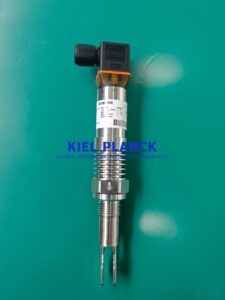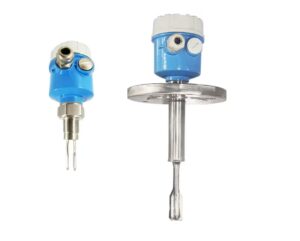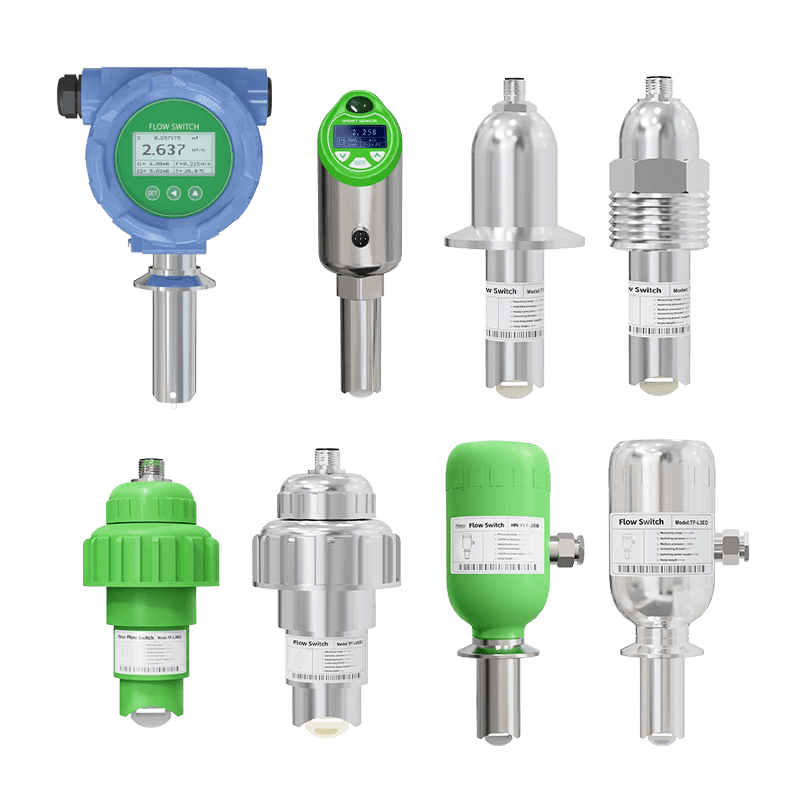
Many industrial users mistakenly believe that tuning fork switches are unsuitable for viscous media, while the core problem lies in mismatched ordinary models and unreasonable parameter settings rather than principle defects. This article analyzes the internal mechanism of false actions caused by high-viscosity hanging materials and scaling, distinguishes the performance differences between standard and anti-sticking optimized tuning forks, and summarizes targeted selection, installation and debugging solutions. It provides practical technical guidance for stable and reliable level detection in high-viscosity and scaling-prone industrial scenarios.
1. Introduction
Different from mechanical float switches and capacitive sensors, tuning fork level switches judge liquid level status by monitoring resonant frequency changes. When the fork is exposed in air, it maintains a stable high-frequency vibration; when covered by liquid, vibration damping causes frequency attenuation and outputs a level signal. This principle works stably for clean and low-viscosity media. Nevertheless, high-viscosity fluids and easy-scaling media will form residual coatings and hardened deposits on the fork surface after the liquid level drops. These persistent attachments change the fork’s vibration characteristics, leading the sensor to misjudge the empty state as a full-level state, which becomes the most common source of on-site false actions. Clarifying the adaptation boundary and optimization methods is critical to solving long-term monitoring instability in viscous working conditions.
2. Mechanism of False Actions Caused by Hanging Materials and Scaling
The essential cause of frequent misoperations is vibration frequency distortion induced by medium adhesion. Standard tuning fork switches are designed for clean media with fixed vibration sensitivity and short response delay. In high-viscosity environments, viscous residues do not drain completely after the liquid level recedes, forming thin sticky films on the fork tines. With cyclic liquid level fluctuation, residual materials accumulate and gradually harden into scale layers. These attachments increase the fork’s overall mass and generate continuous damping effect, reducing the resonant frequency consistently. The sensor cannot distinguish real liquid coverage from residual scaling adhesion, thus locking in a persistent false alarm state. Unlike instantaneous foam or turbulence interference, scaling-induced false actions are permanent and cumulative, resulting in long-term failure of point-level interlock control.
3. Performance Differences Between Standard and Optimized Tuning Fork Switches
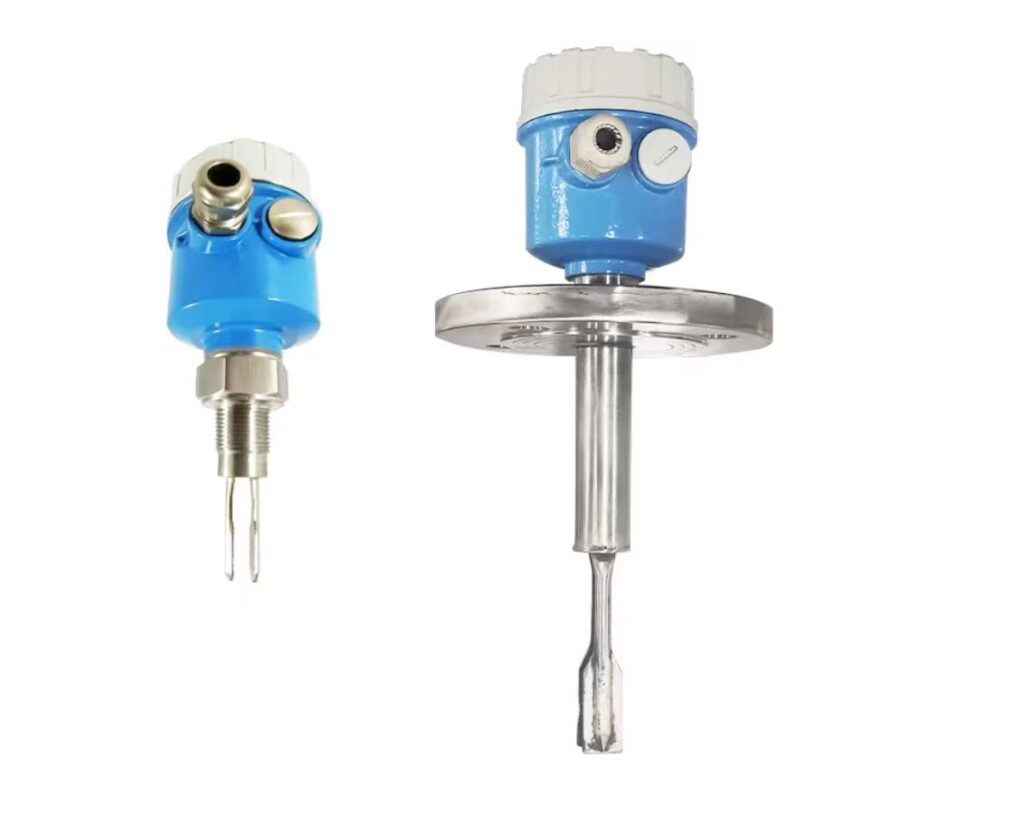
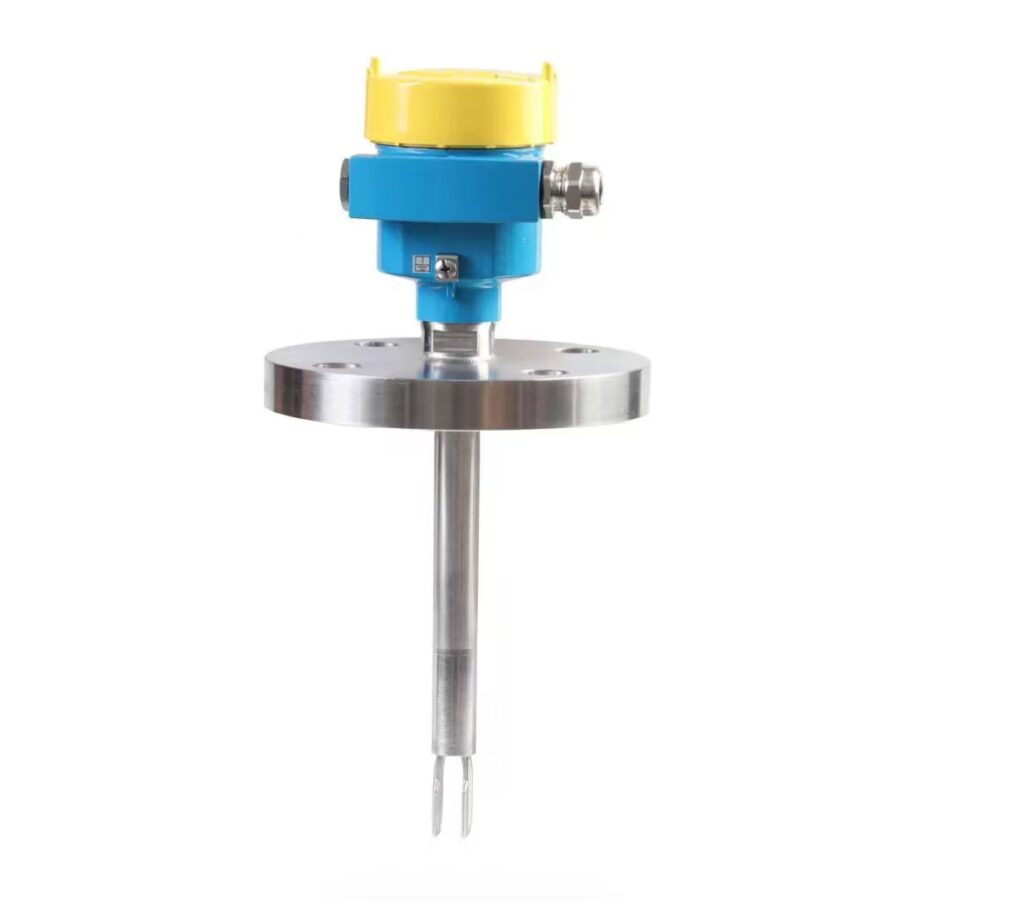
Ordinary general-purpose tuning forks are completely unsuitable for high-viscosity scaling conditions. Their common smooth fork bodies lack anti-sticking treatment, and fixed sensitivity easily captures residual attachment signals, causing frequent misjudgments. In contrast, industrial upgraded anti-scaling tuning forks effectively avoid such defects through targeted optimization. First, they adopt high-polish mirror surface treatment and special anti-adhesion coating to reduce medium adsorption and promote automatic drainage of viscous fluids. Second, they support adjustable sensitivity threshold and intelligent frequency filtering logic, which automatically identifies stable liquid coverage and filters thin residual hanging materials. Third, enhanced high-amplitude vibration produces slight self-cleaning effects, preventing loose dirt from accumulating and forming hard scale.
4. On-Site Optimization Solutions for High-Viscosity Scaling Conditions
To eliminate false actions fundamentally, comprehensive optimization of model selection, installation and parameters is required. In terms of installation, vertical downward installation is mandatory for viscous media, utilizing gravity to accelerate residual medium drainage and minimize fork residue. For media prone to rapid crystallization and hard scaling, side-mounted structures or elevated installation positions can avoid long-term immersion and reduce scaling accumulation. In terms of parameter debugging, properly extend signal confirmation delay and lower sensitivity threshold to shield thin hanging material interference and only respond to effective full liquid coverage. Meanwhile, establish regular maintenance cycles to clean hardened scale and restore fork vibration accuracy. For ultra-high viscosity and heavy scaling working conditions, customized anti-sticking and self-cleaning tuning fork models must be prioritized instead of standard versions.
5. Conclusion
Standard tuning fork level switches indeed suffer from frequent false actions in high-viscosity and scaling-prone media due to residual hanging materials and vibration frequency distortion. However, such failures are caused by model mismatch rather than inherent principle limitations. Optimized anti-scaling tuning forks with polished surfaces, adjustable sensitivity and self-cleaning vibration functions can perfectly adapt to viscous working conditions and effectively eliminate false alarms. Industrial users should abandon universal selection habits, adopt differentiated configuration and standardized installation strategies for high-viscosity scenarios. Scientific matching and daily maintenance can ensure long-term stable and accurate point-level detection, realizing reliable automatic interlock control for complex industrial fluid systems.
Scan the QR code to receive more detailed information.