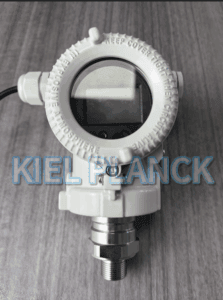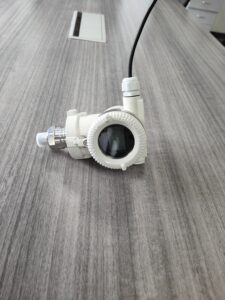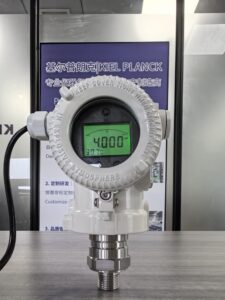
This single-dimensional comparison often leads to mismatched model selection, hidden measurement drift and high later maintenance costs. Although both belong to silicon piezoresistive sensing technology, their internal chip structure and stress conduction mechanisms are fundamentally different. This article systematically compares the core performance gaps between the two sensor technologies beyond accuracy, analyzes their respective applicable industrial scenarios, and clarifies the inherent advantages and limitations of monocrystalline and diffused silicon transmitters. It provides scientific and comprehensive selection guidelines for pressure measurement in complex industrial working conditions.
1. Introduction
Diffused silicon and monocrystalline silicon are the two most mainstream core sensing technologies for industrial pressure transmitters. Diffused silicon transmitters dominate the medium-end market with cost-effective and mature technology, while monocrystalline silicon products represent high-end industrial measurement standards. Many purchasers only focus on the accuracy grade marked on the nameplate during selection, assuming that minor accuracy gaps are the only difference. In actual field operation, performance differences in temperature drift, long-term stability, anti-overload capability and measuring range flexibility determine the long-term operational reliability of transmitters. Neglecting these key indicators will cause stable precision loss in high-temperature, fluctuating pressure and long-cycle continuous operation scenarios, resulting in inaccurate process control and energy statistics deviation.
2. Essential Principle Differences Behind Performance Gaps
The fundamental difference lies in chip manufacturing and stress sensing mechanisms. Diffused silicon technology forms strain resistors by doping impurities on the surface of silicon wafers. The resistors are attached to the chip surface, and pressure stress is transmitted indirectly, leading to inconsistent stress response and poor temperature linearity. In contrast, monocrystalline silicon sensors adopt integral single-crystal structure design. The stress-sensitive unit is integrated inside the pure crystal chip without surface doping attachment. The overall stress conduction is uniform and stable, with minimal structural hysteresis and inherent temperature drift, forming a natural advantage in basic stability that diffused silicon cannot match.
3. Core Performance Differences Beyond Nominal Accuracy
First, temperature stability varies significantly. Diffused silicon chips rely heavily on software temperature compensation to offset errors. Under drastic temperature fluctuations, residual drift is obvious, and measurement repeatability declines sharply. Monocrystalline silicon chips feature ultra-low inherent temperature drift, maintaining stable output in wide temperature ranges from low temperature to high temperature, with far stronger environmental adaptability, especially suitable for northern winter low-temperature and high-temperature steam pipeline working conditions.
Second, long-term drift performance differs greatly. The annual drift of diffused silicon transmitters is generally ±0.2% FS, and structural fatigue will gradually accumulate after long-term vibration and pressure impact, requiring annual calibration. Monocrystalline silicon products achieve an annual drift of ±0.05% FS, with stable performance for many years, effectively reducing frequent calibration workload and long-term maintenance costs.
Third, overload resistance and impact resistance are differentiated. Industrial pipelines often generate water hammer and instantaneous pressure peaks. Diffused silicon has weak anti-impact capability and is prone to chip fatigue and permanent drift after overpressure impact. Monocrystalline silicon’s integral crystal structure has excellent mechanical stability, strong overload resistance, and can withstand frequent pressure fluctuations without structural deformation, adapting to harsh fluctuating pressure working conditions.
Fourth, the turndown ratio gap determines application flexibility. The turndown ratio of diffused silicon transmitters is usually limited to 10:1, unable to balance high and low flow measurement. Monocrystalline silicon supports a maximum turndown ratio of 200:1, covering ultra-wide pressure range changes, realizing accurate measurement of both low micro-pressure and high working pressure, and greatly improving equipment versatility.
4. Scenario-Based Scientific Selection Principles
Diffused silicon transmitters are suitable for conventional stable working conditions with constant temperature, stable pressure and ordinary precision requirements, such as conventional water supply, general gas and conventional process monitoring, achieving optimal cost performance. Monocrystalline silicon transmitters are mandatory for high-precision custody transfer, high-temperature and low-temperature variable working conditions, frequent pressure fluctuation pipelines, and long-term unattended operation scenarios. Users should abandon the single accuracy judgment standard and match products according to environmental fluctuation degree, operation cycle and measurement importance.
5. Conclusion
The difference between monocrystalline silicon and diffused silicon pressure transmitters is far more than nominal accuracy. The essential gaps in temperature stability, long-term drift, anti-overload impact and turndown ratio are the key factors determining field operational performance. Diffused silicon is cost-effective for conventional stable scenarios, while monocrystalline silicon excels in harsh and high-precision working conditions with its stable crystal structure and excellent comprehensive performance. Industrial users should establish multi-dimensional selection thinking, avoid misleading judgment relying solely on accuracy parameters, and select matched sensing technologies according to actual working condition characteristics, so as to ensure long-term accurate, stable and low-maintenance operation of industrial pressure measurement systems.
Scan the QR code to receive more detailed information.