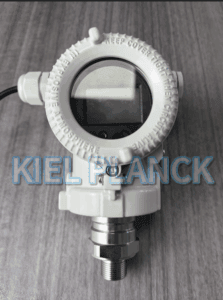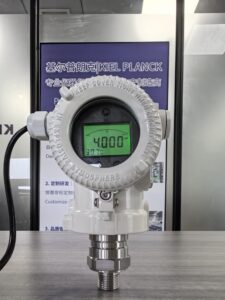
Long-term high-temperature fatigue, thermal stress deformation and micro-medium erosion will continuously change diaphragm elasticity and stress characteristics, resulting in irreversible measurement drift. This article analyzes the internal failure mechanism of mismatched diaphragms under 180°C high temperature, compares the performance differences between standard and high-temperature customized diaphragms, and summarizes correct material selection principles for high-temperature working conditions. It provides practical guidance to solve short-cycle drift faults of high-temperature pressure transmitters.
1. Introduction
High-temperature media such as saturated steam, hot circulating oil and high-temperature chemical solution are common in petrochemical, pharmaceutical and thermal power industries, with a stable medium temperature of 180°C. Many engineering teams still select ordinary 316L stainless steel diaphragms for cost-saving habits, which are only suitable for temperatures below 120°C. In the early stage of operation, the instrument data remains normal with no obvious abnormalities. However, after three to six months of continuous high-temperature impact, slow zero drift begins to appear and gradually accumulates, leading to increasing measurement errors, frequent recalibration and unstable process control. This short-cycle failure is not caused by circuit drift or installation problems, but by the inherent structural fatigue and material performance attenuation of unsuitable diaphragms under long-term 180°C thermal load.
2. Core Mechanism: Why Mismatched Diaphragms Drift Rapidly at 180°C
The essential reason for half-year drift is irreversible material performance degradation of ordinary diaphragms under sustained high temperature. Standard 316L diaphragms have limited thermal stability. When working continuously at 180°C, far exceeding their rated temperature threshold, the internal metal grain structure undergoes slow thermal rearrangement, resulting in reduced elastic uniformity and increased residual stress. Each temperature rise and fall cycle produces tiny thermal deformation that cannot recover completely. Accumulated micro-deformation changes the diaphragm’s pressure-stress response curve, causing continuous zero offset and span drift.
In addition, high-temperature media will accelerate micro-corrosion and oxidation on ordinary diaphragm surfaces. At 180°C, even clean steam and industrial water generate subtle oxidation and scaling on common stainless steel. For chemical media containing trace chloride and acid-base components, high-temperature erosion is more obvious. Micro-pitting and uneven surface stress further disrupt the sensor’s linear response. Unlike instantaneous temperature drift that can be compensated by software, material fatigue and structural deformation are permanent and cannot be eliminated by calibration, resulting in repeated drift soon after recalibration.
3. Performance Gap Between Standard and High-Temperature Diaphragms
Ordinary 316L diaphragms are designed for normal and medium temperature environments below 120°C, with low high-temperature creep resistance. They are prone to elastic fatigue and permanent deformation under long-term 180°C constant temperature. In contrast, high-temperature optimized diaphragms such as upgraded 316L high-temperature grade, Hastelloy and titanium alloy diaphragms undergo special thermal treatment and grain stabilization processing. They maintain stable mechanical elasticity and minimal thermal deformation at 180°C or even higher temperatures, effectively resisting high-temperature fatigue and slow stress drift.
Moreover, matched high-temperature filling fluid is also essential. Ordinary filling oil will produce thermal expansion and viscosity changes at 180°C, exacerbating signal deviation. High-temperature diaphragms are always equipped with high-temperature resistant filling media, ensuring stable pressure transmission and avoiding auxiliary drift caused by thermal fluid variation.
4. Correct Selection and Application Standards for 180°C Working Conditions
For sustained 180°C medium temperature working conditions, ordinary standard diaphragms are strictly prohibited. Users must select dedicated high-temperature resistant diaphragm materials and high-temperature customized transmitter models. If the medium is pure steam and hot water, high-temperature stabilized 316L diaphragms meet the requirements. For corrosive high-temperature media, Hastelloy or tantalum diaphragms are required to resist high-temperature chemical erosion. Meanwhile, install remote capillary diaphragm seals for ultra-stable measurement, isolate high-temperature heat conduction, and avoid long-term thermal impact on the sensor core.
Field maintenance should also abandon the misunderstanding that “all stainless steel diaphragms are universal”. Regular zero recalibration can only solve superficial data deviation, but cannot repair material fatigue damage. Only correct early selection can fundamentally eliminate short-cycle drift faults.
5. Conclusion
The frequent six-month drift of pressure transmitters under 180°C medium conditions is a typical selection error caused by mismatched ordinary diaphragms. Long-term high-temperature thermal fatigue, irreversible structural deformation and micro high-temperature corrosion are the root causes of continuous zero drift and performance attenuation. Standard diaphragms cannot adapt to sustained 180°C operation, while professional high-temperature customized diaphragms maintain stable mechanical and chemical properties in high-temperature environments. Industrial users must distinguish conventional and high-temperature diaphragm scenarios, abandon universal low-cost matching, and select targeted high-temperature resistant materials for 180°C working conditions. Correct diaphragm selection is the key to ensuring long-term stability and low-drift operation of high-temperature pressure transmitters.
Scan the QR code to receive more detailed information.