Nevertheless, power‑plant working conditions including high temperature, heavy vibration, radiation exposure and pressure fluctuation raise strict requirements on product qualification, material performance and functional safety. This article introduces core application scenarios of monocrystalline silicon pressure transmitters in different power‑generation types, sorts out key procurement evaluation dimensions, and builds a practical compliance checklist covering standard certification, environmental adaptability, documentation traceability and after‑sales qualification. It aims to help purchasers select qualified safety‑grade transmitters, reduce measurement drift and equipment failure risks, and support long‑term safe operation of power‑plant process systemsIEC Websto….
Keywords: safety‑grade instrument; monocrystalline silicon pressure transmitter; power‑plant procurement; compliance checklist; functional safety
1. Introduction
Thermal power, nuclear power and thermoelectric co‑generation facilities operate under continuous high‑load conditions. Pressure signals collected by transmitters directly participate in boiler over‑pressure protection, reactor safety interlock, heat‑network regulation and emergency shutdown logic; inaccurate measurement may trigger false interlock or hidden safety hazards for the whole unit. Compared with conventional diffused‑silicon transmitters, monocrystalline silicon sensing elements deliver superior performance in precision and long‑term stability, which fits well with power‑plant long‑cycle running requirements. However, safety‑grade instruments for nuclear and large thermal power units cannot adopt general industrial‑grade procurement standards. Procurement teams need to distinguish grade‑division requirements among nuclear safety‑class, thermal‑power safety‑related and general auxiliary instruments, and complete full‑item compliance verification before incoming acceptance.
2. Application Characteristics of Monocrystalline Silicon Pressure Transmitters in Power Plants
In thermal power plants, monocrystalline silicon pressure transmitters are deployed for boiler drum pressure, superheater outlet pressure and feed‑water pipeline monitoring, facing challenges of high‑temperature steam impact, mechanical vibration and electromagnetic interference. High‑precision and low‑drift performance guarantees stable closed‑loop control for combustion and water‑supply systems.
For nuclear power plants, safety‑grade monocrystalline silicon transmitters serve reactor coolant systems, pressurizers and residual‑heat removal loops. Apart from high temperature and high pressure, they must withstand gamma‑neutron radiation, seismic load and accident‑condition environmental tests, and satisfy 1E‑class safety‑related qualification specifications.
In thermoelectric power plants, transmitters focus on heat‑supply pipeline pressure, heat‑exchanger differential pressure and circulating‑water system measurement. Medium contains scaling and corrosive components, so diaphragm material selection and anti‑fatigue performance become major concerns.
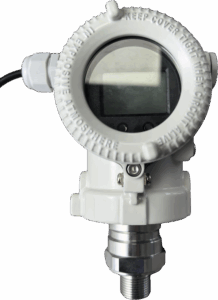
Common technical indicators for power‑plant‑oriented monocrystalline silicon transmitters cover measurement accuracy up to 0.075% FS, annual long‑term stability ≤0.1% FS, support for HART digital communication, and optional SIL2/SIL3 functional‑safety certification for safety‑related loopsMade-in-Ch….
3. Core Procurement Evaluation Dimensions and Compliance Checklist
3.1 Standard and certification compliance
Suppliers shall provide valid certification documents matching project safety grades. Nuclear‑related projects need IEC 62887 nuclear‑instrument qualification report, seismic qualification test data, and functional‑safety SIL certificates issued by authorized third‑party organizationsIEC Websto…. Thermal‑power safety‑related loops shall meet IEC 61508 functional‑safety requirements; explosion‑proof certificates shall match site hazardous‑area division. All certificates must show corresponding transmitter model numbers without ambiguous scope.
3.2 Performance and environmental adaptability compliance
Key check items include measurement range over‑margin design, operating temperature range, anti‑vibration test level, radiation‑resistance index (for nuclear sites), medium‑contact diaphragm material (316L stainless steel, Hastelloy etc.), filling‑liquid type for high‑temperature working conditions, and protection grade not lower than IP67. Suppliers need to submit complete type‑test reports instead of only general product brochures.
3.3 Documentation and traceability compliance
Safety‑grade instrument procurement emphasizes full‑life‑cycle traceability. Required deliverables include serial‑number‑correlated calibration certificates, material inspection certificates, manufacturing process records, qualification identification documents, operation‑maintenance manuals and spare‑part lists. Each batch of products shall realize traceability from raw‑material incoming inspection to finished‑product delivery.
3.4 Supplier qualification compliance
Evaluate supplier’s power‑plant project reference cases, safety‑grade instrument production qualification, after‑sales response cycle, on‑site calibration service capacity and long‑term spare‑part supply guarantee capability. Avoid brokers without original‑manufacturer authorization for safety‑critical loops.
4. Common Pitfalls in Practical Procurement
Many procurement failures originate from confusing general‑industrial‑grade products with safety‑grade ones. Ordinary monocrystalline silicon transmitters without nuclear‑qualification or seismic‑test reports cannot be applied in nuclear safety‑related systems, even with good static‑precision parameters. In thermal‑power bidding, purchasers shall explicitly list compliance‑check items in technical specifications, rather than merely taking price as the major assessment factor. Incoming acceptance must verify consistency between physical product and certification parameters to prevent certificate over‑scope application.
Conclusion
Monocrystalline silicon pressure transmitters provide high‑reliability pressure‑measurement solutions for thermal, nuclear and thermoelectric power plants, yet their safety performance cannot rely solely on nominal product parameters. Scientific procurement management must combine project safety grades, sort out standardized compliance checklists covering certification, environmental adaptability, document traceability and supplier capacity, and strictly implement technical‑specification review and incoming verification. Implementing full compliance management during procurement can effectively reduce measurement drift and unexpected failure risk of field instruments, ensure reliable execution of unit interlock‑protection logic, and lay a solid foundation for long‑term safe and stable operation of power‑generation facilities.
Scan the QR code to receive more detailed information.