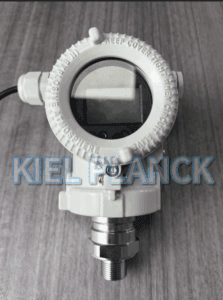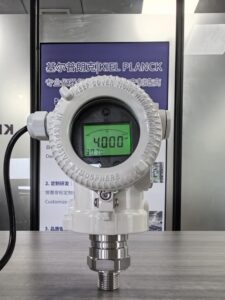
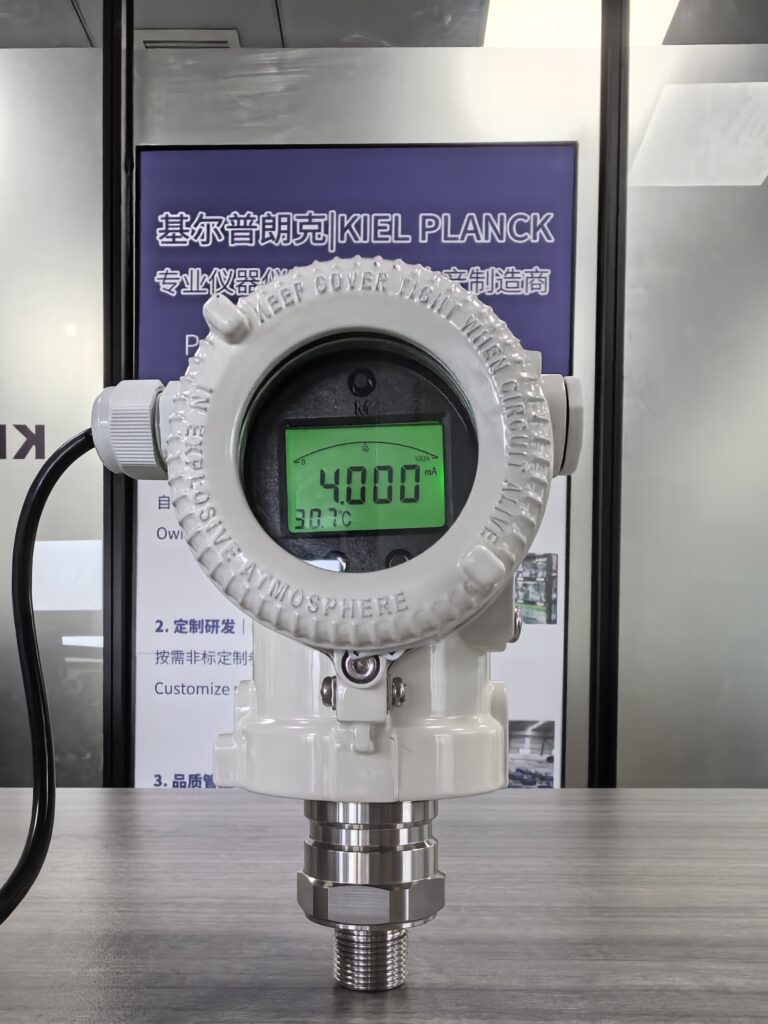
In industrial measurement, three common problems can affect production efficiency: pressure cannot be detected, measurement results are inaccurate, or the response is too slow.
A high-accuracy silicon pressure transmitter can help address these challenges when the instrument is properly selected for the application. However, accuracy alone does not guarantee reliable measurement. Measuring range, long-term stability, response time, installation, and process conditions must also be considered.
This guide explains the key selection factors for industrial applications.
1. Choose the Right Measuring Range
Selecting an appropriate pressure range is the first step toward reliable measurement.
If the measuring range is too large, small pressure changes may become harder to distinguish. If the range is too small, pressure peaks may exceed the instrument’s limits and cause damage.
Before selection, confirm the normal operating pressure, maximum pressure, and possible pressure fluctuations.
For most applications, the normal operating pressure should fall within a suitable portion of the selected range. The ideal range depends on the process and the manufacturer’s recommendations.
2. Check Accuracy and Measurement Error
High accuracy is essential in applications that require precise pressure monitoring and process control.
When comparing pressure transmitters, check the stated accuracy specification and what it includes. Depending on the manufacturer, accuracy may be expressed as a percentage of full scale and may account for factors such as nonlinearity, hysteresis, and repeatability.
For example, a transmitter with a stated accuracy of ±0.1% of full scale on a 10 bar range has a corresponding accuracy limit of ±0.01 bar under the conditions defined by its specification.
This does not necessarily represent the total error under all operating conditions. Temperature effects, long-term drift, calibration, and installation can also influence measurement results.
Always compare specifications using the same measurement range and test conditions.
3. Evaluate Long-Term Stability
Stable measurement is important for equipment that operates continuously.
A transmitter with poor long-term stability may gradually develop measurement deviations, increasing the need for recalibration and maintenance.
When selecting a silicon pressure transmitter, review its long-term stability data, repeatability, temperature compensation, and calibration requirements.
Applications involving continuous production or demanding process control may benefit from a transmitter with verified stability performance.
4. Consider Response Time
In some applications, pressure changes rapidly. A slow measurement response may delay control actions or make pressure fluctuations harder to monitor.
Response time should therefore match the actual process requirements.
Check the manufacturer’s response-time specification and determine whether it refers to the sensing element, the transmitter output, or the complete measurement system.
The output configuration, signal filtering, sampling rate, and connected control equipment can also affect the overall response.
For applications involving rapid pressure changes, evaluate the complete system rather than relying on a single specification.
5. Match the Transmitter to the Working Conditions
A high-accuracy transmitter must also be suitable for its installation environment.
Consider the following factors before ordering:
Medium compatibility: Confirm that the wetted materials are suitable for the measured fluid or gas.
Operating temperature: Check the process and ambient temperature limits.
Overpressure: Verify the allowable overload and pressure limits.
Process connection: Select the correct thread, flange, or other connection.
Output signal: Confirm compatibility with the PLC or control system.
Environmental protection: Check enclosure protection and any hazardous-area requirements.
These factors help prevent premature failure and measurement problems.
6. Select the Appropriate Sensor Technology
Silicon pressure transmitters are used in many industrial measurement applications because they can offer high sensitivity and good measurement performance.
However, different sensing structures and product designs have different strengths. The appropriate choice depends on the pressure range, medium, temperature, accuracy requirements, and total cost of ownership.
Do not select a transmitter based on the sensor technology alone. Review the complete instrument specifications and verify that the product meets the actual process requirements.
Common Applications
High-accuracy silicon pressure transmitters may be used in suitable applications such as:
Industrial equipment and machinery
Water treatment systems
Hydraulic equipment
Chemical process monitoring
Energy and power equipment
Pressure monitoring in automated production lines
The selected model must be compatible with the specific medium and operating conditions.
Frequently Asked Questions
Q1: Does higher accuracy always mean better measurement?
Not necessarily. A suitable measuring range, good stability, correct installation, and proper calibration are also essential.
Q2: How can I improve pressure measurement accuracy?
Choose an appropriate range, verify the accuracy specification, control temperature effects where possible, and follow the manufacturer’s installation and calibration instructions.
Q3: How do I choose the right pressure transmitter?
Provide the operating pressure, maximum pressure, medium, temperature, required accuracy, output signal, and process connection to your supplier.
Conclusion
Selecting a high-accuracy silicon pressure transmitter requires more than choosing the smallest accuracy percentage. Measuring range, stability, response time, material compatibility, and installation conditions all influence actual performance.
By evaluating these factors before purchasing, engineers can reduce measurement errors, improve process monitoring, and select a pressure transmitter that meets their application requirements.
Need help selecting a pressure transmitter? Contact our team with your operating conditions and technical requirements to identify a suitable model for your application.
Scan the QR code to receive more detailed information.