Introduction
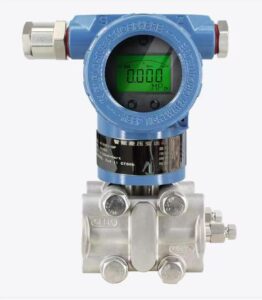
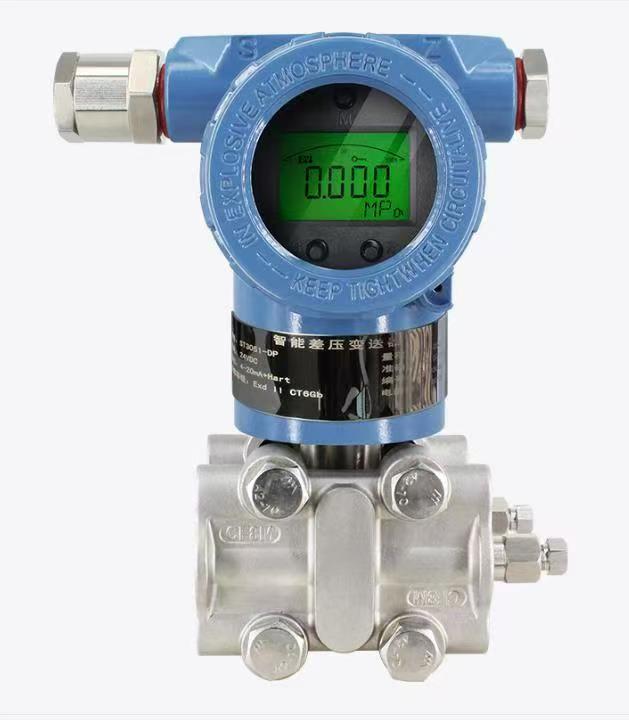
Differential pressure transmitters are commonly used for level measurement in closed vessels and separators.
When selecting an instrument for a three-phase separator, buyers may compare accuracy specifications such as 0.1% and 0.5%.
But does higher accuracy always provide better economic value?
The answer depends on the measurement range, liquid density, process stability, and control requirements.
1. Understanding the Accuracy Difference
A 0.1% accuracy specification is numerically better than 0.5%.
However, the comparison is meaningful only when both specifications use the same reference basis and measurement conditions.
For example, accuracy may be expressed as a percentage of calibrated span or full-scale range.
Always check the manufacturer’s specification.
2. Why Differential Pressure Range Matters
Separator level measurement may involve a relatively small differential pressure range.
If the transmitter is selected with an unnecessarily large range, the measurement may use only a small part of its available span.
This can reduce the practical benefit of a high accuracy specification.
Correct range selection is therefore essential.
3. Other Factors Affecting Measurement Performance
In a three-phase separator, measurement performance may also be influenced by:
Oil and water density differences
Interface level changes
Process temperature
Gas pressure fluctuations
Pressure tap elevation
Impulse line condition
Diaphragm seal and capillary effects
A more accurate transmitter cannot compensate for incorrect process assumptions or poor installation.
4. How to Compare the Costs
The initial purchase price is only one part of the decision.
Compare:
Instrument purchase price
Required measurement uncertainty
Calibration requirements
Maintenance costs
Control and product quality benefits
Potential production losses caused by inaccurate measurement
A 0.1% instrument may be worthwhile when the application requires tighter measurement performance.
A 0.5% instrument may be sufficient for less demanding monitoring applications, depending on the complete system requirements.
5. Which Accuracy Should You Choose?
Choose based on the required measurement uncertainty and control tolerance.
Ask the supplier to provide accuracy definitions, stability specifications, and performance information for the actual calibrated range.
Conclusion
The difference between 0.1% and 0.5% should be evaluated in the context of the complete separator measurement system.
Correct range selection, density compensation, and installation quality may be just as important as the transmitter’s accuracy specification.
Scan the QR code to receive more detailed information.