Introduction: Why High-Temperature Oil Measurement Requires Special Attention
High-temperature oil systems are designed to transfer thermal energy or circulate heated oil through industrial equipment.
A typical system may include:
Oil storage or expansion tank.
Circulation pump.
Heater or heat exchanger.
Supply and return pipelines.
Control valves.
Filters.
Pressure and temperature monitoring points.
Flow monitoring devices.
The operating conditions may vary considerably between applications. Some systems operate at moderate temperatures, while others use specially designed thermal fluids at much higher temperatures.
As temperature increases, oil viscosity generally changes. This can influence flow behavior, pressure loss, pump performance, and the suitability of certain measurement technologies.
High temperature may also damage an instrument if the sensor is installed directly on a hot process connection without a suitable thermal arrangement.
The first step is therefore to obtain the actual operating and design conditions before selecting instruments.
1. Pressure Measurement: Avoid Direct Exposure to Excessive Temperature
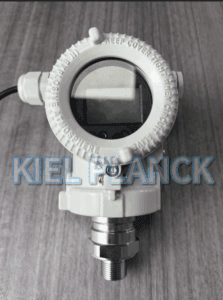
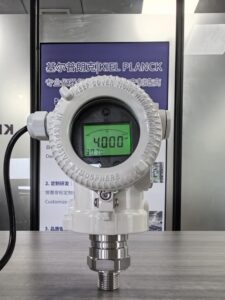
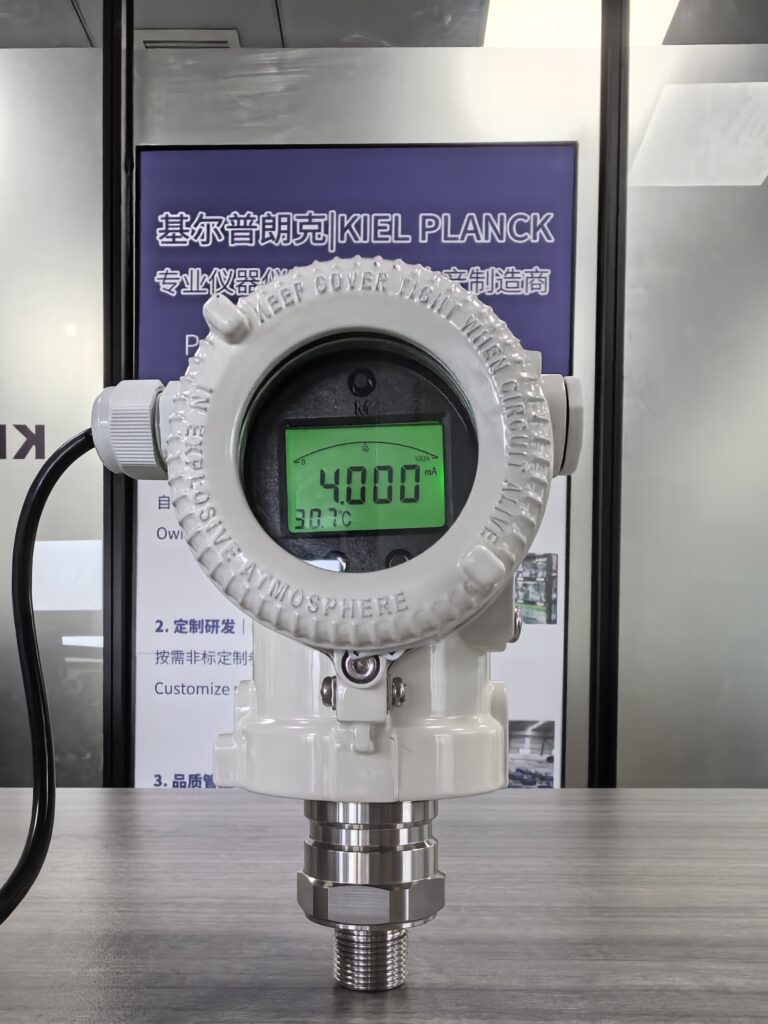
Pressure transmitters are commonly used at pump outlets, supply manifolds, and other designated points in high-temperature oil systems.
One of the most important selection factors is the process temperature at the transmitter connection.
The temperature rating of the transmitter electronics is not necessarily the same as the allowable process temperature at the sensing diaphragm.
Engineers should check:
Normal oil temperature.
Maximum continuous temperature.
Short-term temperature peaks.
Ambient temperature.
Pressure range.
Pressure pulsation.
Wetted material compatibility.
If the process temperature exceeds the transmitter’s specified limit, a suitable cooling arrangement, remote mounting solution, or approved temperature isolation design may be required.
The exact installation method should follow the transmitter manufacturer’s instructions. A long impulse line or cooling element should not be added without considering its effect on response time, pressure transmission, and maintenance.
2. Selecting the Correct Pressure Range
High-temperature oil pumps may operate under changing conditions during startup, normal operation, shutdown, and abnormal events.
The pressure transmitter range should be selected according to the actual operating pressure and credible pressure excursions.
An unnecessarily wide range may reduce the usefulness of small pressure changes. An excessively narrow range may be unsuitable if startup or transient pressure exceeds the calibrated span.
It is also important to distinguish between:
Normal operating pressure.
Maximum operating pressure.
Design pressure of the piping or equipment.
Allowable transmitter overload.
Proof or burst pressure specifications.
These values describe different engineering limits and should not be treated as interchangeable.
A monocrystalline silicon pressure transmitter may be considered where its specified process temperature, pressure range, accuracy, stability, and wetted materials meet the application requirements.
3. Flow Measurement: Oil Viscosity Changes the Selection
Flow measurement in high-temperature oil systems can be more complicated than measuring water.
Oil viscosity changes with temperature. A flowmeter calibrated or selected for one operating condition may not provide the expected performance under another condition.
Before selecting a flowmeter, confirm:
Oil type and composition.
Minimum and maximum operating temperature.
Viscosity at the relevant temperatures.
Normal and maximum flow rates.
Pipe diameter.
Pressure and pressure loss limitations.
Required measurement accuracy.
Available installation space.
Different flowmeter technologies have different operating principles and limitations.
Turbine flowmeter
A turbine flowmeter uses a rotating element to measure flow. It may be suitable for certain clean, low-viscosity liquids within the instrument’s specified range. High viscosity, contamination, or unsuitable flow conditions can affect performance.
Electromagnetic flowmeter
An electromagnetic flowmeter is designed for electrically conductive liquids. Many thermal oils are not sufficiently conductive for conventional electromagnetic measurement, so this technology should not be selected without confirming the fluid’s electrical conductivity.
Coriolis mass flowmeter
A Coriolis flowmeter measures mass flow and can be suitable for many liquid applications. However, pressure drop, pipe size, temperature rating, installation, and cost must be evaluated.
Positive displacement flowmeter
Some positive displacement designs can be suitable for viscous liquids. The selected model must be checked for temperature, viscosity, pressure loss, and maintenance requirements.
No single flowmeter technology is suitable for every high-temperature oil system.
4. Monitor Pump Inlet and Outlet Conditions
Pressure measurement at the pump inlet and outlet can help operators understand the pump’s operating condition.
The difference between inlet and outlet pressure may provide useful information when interpreted alongside pump curves, flow, temperature, and system resistance.
However, pressure readings alone cannot confirm pump performance.
For example, low discharge pressure may be related to insufficient suction conditions, pump wear, incorrect rotation, a bypass valve, or another process issue. The actual cause requires further investigation.
The measurement points should be selected according to the pump manufacturer’s recommendations and the system P&ID.
5. Flow Switch or Flowmeter: Which One Should You Use?
The choice depends on what the control system needs to know.
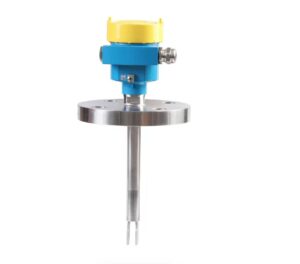
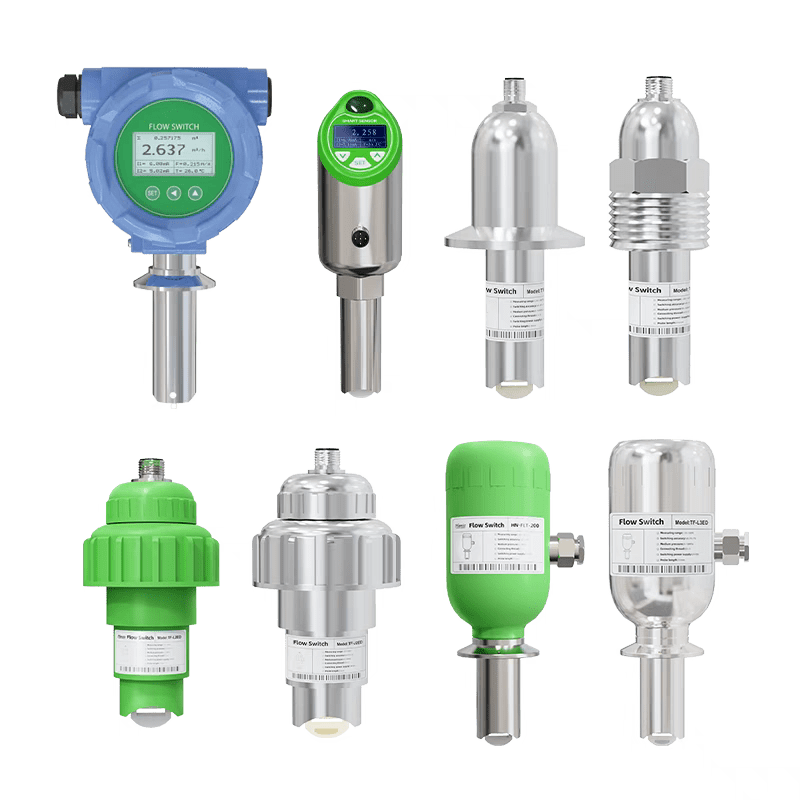
A flow switch provides a discrete signal when flow reaches a defined condition. It may be used to confirm that circulation is present or to generate an alarm when flow falls below a specified threshold.
A flowmeter provides a continuous measurement signal. It can support flow indication, trending, control, and process analysis.
For a high-temperature oil pump, the selected device must be suitable for the actual oil temperature and viscosity.
If the application requires only confirmation of minimum circulation, a flow switch may be sufficient. If operators need to monitor the flow rate continuously, a flowmeter may be more appropriate.
The alarm or control setpoint should be based on the equipment design and process requirements, not on an arbitrary value.
6. Common Installation Problems
Several installation mistakes can affect pressure and flow measurement.
Installing a transmitter too close to a hot pump body
Excessive heat may affect the instrument if the installation exceeds its ambient or process temperature limits.
Ignoring vibration
Pumps can generate mechanical vibration. The transmitter and process connection should be installed with suitable support.
Selecting a flowmeter without checking viscosity
Viscosity can affect some measurement technologies, especially when the operating temperature changes significantly.
Ignoring straight-run requirements
Some flowmeters require suitable upstream and downstream pipe lengths. Follow the specific manufacturer’s installation instructions.
Failing to consider thermal expansion
Hot oil pipelines expand during operation. Instrument connections and supports should be designed to avoid excessive mechanical stress.
7. High-Temperature Oil Instrumentation Checklist
| Measurement point | Parameter | Main considerations |
|---|---|---|
| Pump inlet | Pressure | Suction conditions, temperature, range |
| Pump outlet | Pressure | Operating pressure, pulsation, overload |
| Oil supply line | Flow | Viscosity, temperature, flow range |
| Oil return line | Flow or temperature | Process monitoring requirements |
| Heater outlet | Temperature | Sensor range and installation |
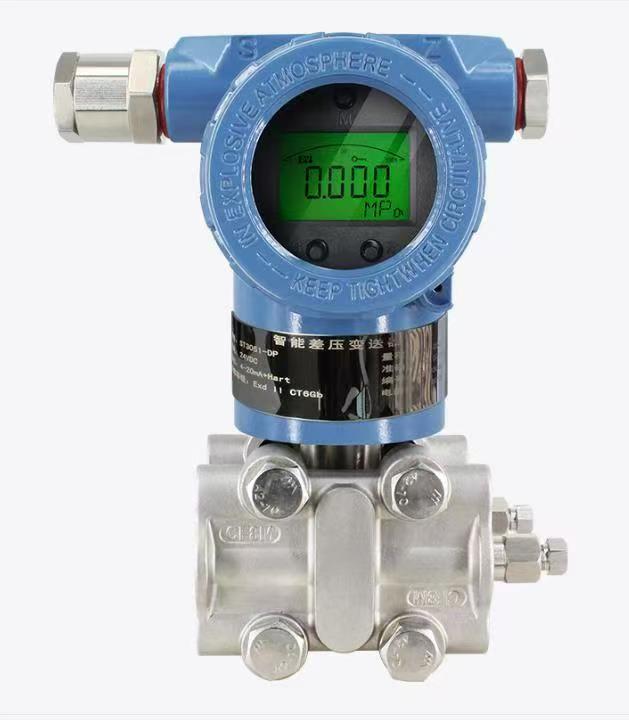
| Filter inlet/outlet | Differential pressure | Clean-filter baseline and alarm limit |
| Oil reservoir | Level | Tank design and oil properties |
The final list depends on the actual process design and equipment manufacturer’s requirements.
Conclusion
High-temperature oil pump instrumentation requires careful evaluation of process temperature, oil viscosity, pressure range, material compatibility, and installation conditions.
Pressure transmitters should be protected from excessive temperature and selected according to actual operating conditions. Flowmeters and flow switches must be compatible with the oil’s viscosity and temperature.
For industrial pump manufacturers and thermal system integrators, the best way to avoid measurement problems is to provide complete process data before selecting instruments. A suitable instrument is not simply one with a high temperature rating—it is one that can measure reliably under the complete operating conditions.
.
Scan the QR code to receive more detailed information.