Introduction: The Role of Accumulators in Hydraulic Systems
An accumulator stores energy by using compressed gas or another designed mechanism to maintain pressure in a hydraulic system. It may be used in compressor control systems, hydraulic power units, industrial machinery, and other equipment.
Depending on the design, an accumulator can provide several functions:
Supplying additional hydraulic flow during peak demand.
Maintaining pressure during short interruptions in pump supply.
Reducing pressure pulsations.
Compensating for leakage or small changes in system volume.
Supporting emergency or standby hydraulic functions where specifically designed.
The accumulator must operate within its specified pressure limits. If the pressure condition is not monitored correctly, operators may receive misleading information about the available hydraulic energy or the condition of the system.
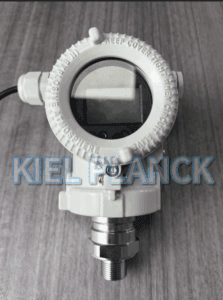
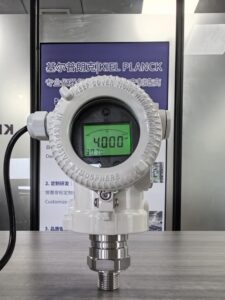
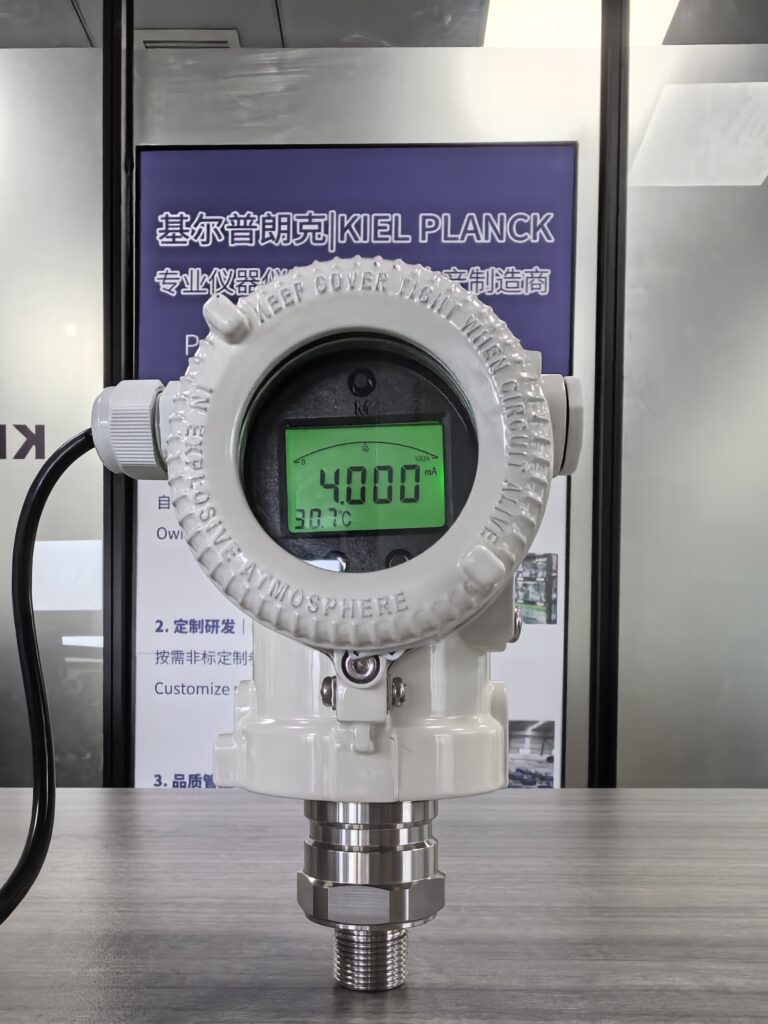
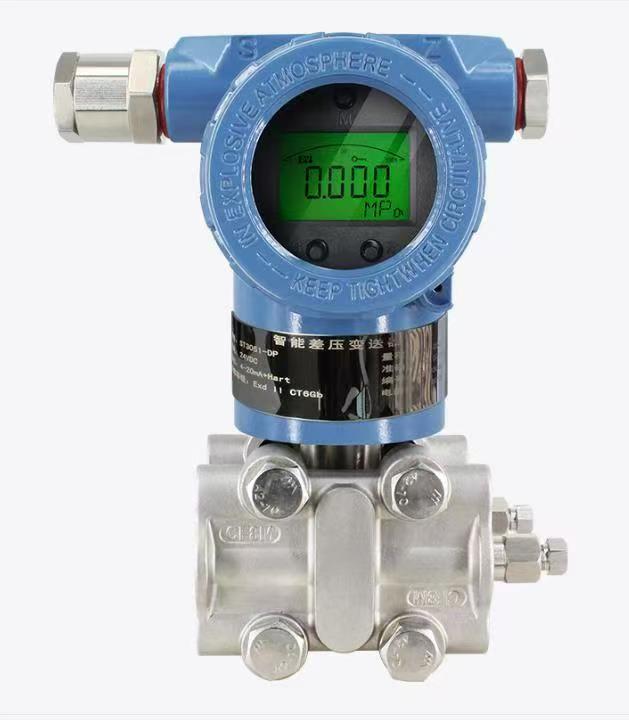
A pressure transmitter provides an electrical signal that can be displayed locally or transmitted to a PLC or DCS. This allows the operating team to observe pressure trends and configure alarms according to the equipment requirements.
1. Why Long-Term Measurement Stability Matters
Pressure transmitters operate continuously in many hydraulic systems. Over time, measurement output may be influenced by sensor characteristics, temperature changes, mechanical stress, electronics, and installation conditions.
Long-term stability describes how much the instrument’s measurement performance may change over a specified period under defined conditions.
A transmitter with good long-term stability can help:
Maintain consistent pressure monitoring.
Reduce unnecessary calibration adjustments.
Improve confidence in historical pressure trends.
Support more reliable alarm evaluation.
Reduce the risk of confusing measurement drift with an actual process change.
However, long-term stability specifications must be read carefully. Manufacturers may express stability as a percentage of URL, calibrated span, or another reference over a defined period.
These values should not be compared directly unless their reference conditions are equivalent.
For example, a stability figure expressed as a percentage of URL is not necessarily equivalent to the same percentage of calibrated span. The time period and environmental conditions must also be considered.
2. Important Accumulator Pressure Measurement Points
The required pressure measurement location depends on the accumulator design and hydraulic circuit.
Possible monitoring points include:
Accumulator fluid-side pressure
This measurement indicates the hydraulic pressure available on the fluid side of the accumulator. It may be used for pressure indication, alarms, or control functions.
Hydraulic pump discharge pressure
This point helps operators monitor the pressure generated by the pump. It is not automatically equivalent to accumulator pressure, particularly when valves, check valves, or other components separate the two locations.
Hydraulic manifold pressure
A manifold measurement may help verify the pressure supplied to actuators or other equipment.
Gas pre-charge pressure
The gas pre-charge condition is a separate parameter and must be checked according to the accumulator manufacturer’s maintenance procedure. It should not be assumed that a fluid-side pressure transmitter can directly measure the gas pre-charge condition in every accumulator design.
The P&ID and accumulator documentation should define which pressure measurements are required.
3. How to Select a Pressure Transmitter for an Accumulator
Measurement Range
The calibrated range should cover the normal operating pressure and the expected operating variations.
Do not select a range only from the accumulator’s maximum design pressure. The normal working range and possible transient pressure conditions must also be considered.
Overload Capability
Hydraulic systems may experience pressure spikes. The transmitter’s allowable overload and pressure containment specifications should be checked against the system conditions.
Overload capability is not the same as a normal continuous operating range. A transmitter should not be operated continuously above its specified measurement range simply because its datasheet lists a higher overload value.
Long-Term Stability
Ask the manufacturer for the long-term stability specification, including:
Reference basis.
Specified time period.
Temperature conditions.
Pressure range conditions.
Whether the figure applies to the complete transmitter or only the sensing element.
A clearly defined specification is more useful than a general statement such as “excellent stability.”
Accuracy and Repeatability
Accuracy determines how closely the indicated value corresponds to the applied pressure under specified conditions. Repeatability describes how consistently the instrument responds when the same pressure is applied repeatedly.
Both characteristics may matter in accumulator monitoring, particularly where pressure thresholds are used for alarms.
Process Connection and Wetted Materials
Confirm compatibility with the hydraulic oil and the system connection. The diaphragm and process connection should be suitable for the fluid, pressure, and temperature.
Electrical Output
Check compatibility with the PLC, DCS, or local monitoring system. Confirm the required output, power supply, wiring, and alarm interface.
4. Temperature Effects and Installation Conditions
Hydraulic equipment may operate in environments with changing ambient temperatures. Oil temperature can also rise during continuous operation.
Temperature changes may influence transmitter performance and the pressure condition inside the hydraulic system.
When installing a pressure transmitter, consider:
Ambient temperature around the instrument.
Hydraulic oil temperature.
Vibration from nearby pumps.
Pressure pulsation.
Mechanical stress on the process connection.
Cable routing and electrical interference.
Access for inspection and calibration.
If the pressure connection is exposed to strong vibration, suitable mechanical support and installation practices should be considered.
The transmitter should be installed in accordance with the manufacturer’s instructions. A suitable pressure range cannot compensate for a poorly designed installation.
5. Pressure Alarms and Control Logic
Accumulator pressure alarms should be established according to the hydraulic system design.
A low-pressure alarm may indicate that the accumulator or hydraulic system is not maintaining the required pressure. A high-pressure alarm may indicate an abnormal pressure condition.
However, the alarm limits should not be copied from another project. They must be based on the accumulator specifications, hydraulic circuit design, equipment operating requirements, and control philosophy.
If the pressure signal is used for a safety-related function, the complete measurement loop must be evaluated. This includes the sensor, wiring, logic solver, power supply, alarm or shutdown device, and required diagnostic arrangements.
A standard pressure transmitter should not automatically be considered a safety instrumented system component without confirming its certification and suitability for the required function.
6. Commissioning and Maintenance
Before commissioning, verify the transmitter’s range, output scaling, installation location, and alarm configuration.
A practical checklist includes:
Confirm the pressure connection against the P&ID.
Check that the selected range matches the operating conditions.
Verify process connection sealing.
Confirm output wiring and power supply.
Compare the reading with a suitable reference instrument.
Test high- and low-pressure alarm logic.
Record calibration and commissioning information.
During operation, compare pressure trends with pump status, actuator demand, and system behavior. A sudden pressure change may be caused by the process, accumulator condition, a valve problem, or a measurement fault.
Calibration intervals should be established according to the equipment manufacturer’s recommendations, site maintenance procedures, and the importance of the measurement.
Conclusion
Accurate accumulator pressure monitoring is important for hydraulic system operation. A pressure transmitter with well-defined long-term stability can help maintain consistent measurement information and reduce the risk of interpreting instrument drift as a real pressure change.
However, stability alone does not determine suitability. The measurement range, overload capability, accuracy, temperature performance, materials, installation, and alarm requirements must all be evaluated.
For compressor manufacturers and hydraulic power unit integrators, selecting the pressure transmitter from the actual accumulator operating conditions is the best way to build a reliable monitoring arrangement.
Scan the QR code to receive more detailed information.