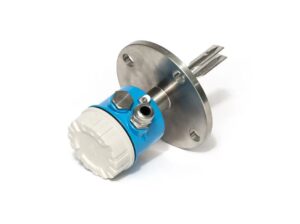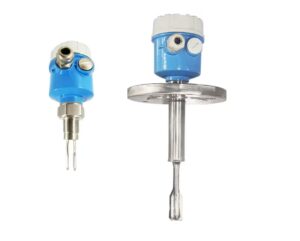
Step 2: Clean the Probe (the Most Common Cause of Failures)
Adherent medium, limescale, viscous residues, accumulated powder or surface foam on the probe will interfere with capacitance signals.
Cut off power and empty the tank first to ensure safety. Wipe PTFE-coated probes with alcohol or dilute acid to remove dirt and scale, and polish stainless steel probes to eliminate sticky sludge. For powder silo measuring probes, clear caked and bridged solid materials around the rod. After full cleaning, perform empty-tank zero calibration and full-tank span calibration to reset the capacitance reference value.
Step 3: Recalibrate for Calibration-Related Failures
Typical abnormal manifestations include fixed unchanged readings, large measurement deviations, and output locked at 4mA or 20mA.
Carry out zero point calibration under empty tank status when the entire probe is exposed to air. Then fill the tank with medium to the full measuring range to complete full-scale span calibration. For RF admittance capacitive level gauges, run extra adhesion compensation calibration to offset errors caused by thin residual liquid film on the probe. Recalibration is mandatory after probe cleaning, medium replacement or probe assembly replacement.
Step 4: Eliminate Abnormalities Caused by Measured Media
Step 5: Inspect Damaged Probes and Electronic Hardware
Step 6: Suppress Electromagnetic Signal Interference
Common Fault Phenomena and Corresponding Solutions
-
No output signal
Causes: Power supply failure, broken signal wires, damaged internal circuit board
Handling: Test and fix power supply and wiring; replace the electronic measuring head if the circuit is broken.
-
Fixed and unchanging readings
Causes: The probe is fully covered by medium residues, probe insulation breakdown
Handling: Thoroughly clean the probe and re-calibrate zero and span; replace the probe if insulation is damaged.
-
Measured reading higher than actual liquid level
Causes: Liquid surface foam, persistent sticky liquid film on the probe
Handling: Complete adhesion compensation calibration for RF admittance models, or install an anti-foam protective sleeve on the probe.
-
Measured reading lower than actual liquid level
Causes: Powder material bridging, probe touching the tank inner wall or internal components
Handling: Adjust the probe installation position, clear the arched materials around the measuring rod.
-
Continuous unstable signal drift
Causes: Strong electromagnetic interference, fluctuating power supply voltage
Handling: Lay shielded cables, add signal isolators, and stabilize the input power supply.
-
Failed measurement of pure water medium
Causes: Conventional capacitive probe without RF admittance function
Handling: Upgrade to RF admittance capacitive level gauge.
Safety Operation Reminders
- Cut off the power supply before disassembling the probe for cleaning or maintenance.
- For storage tanks containing flammable, corrosive or high-temperature media, isolate the process pipeline, empty the tank and fully ventilate before any maintenance work.
- Do not disassemble explosion-proof level gauges in hazardous areas without cutting off power.
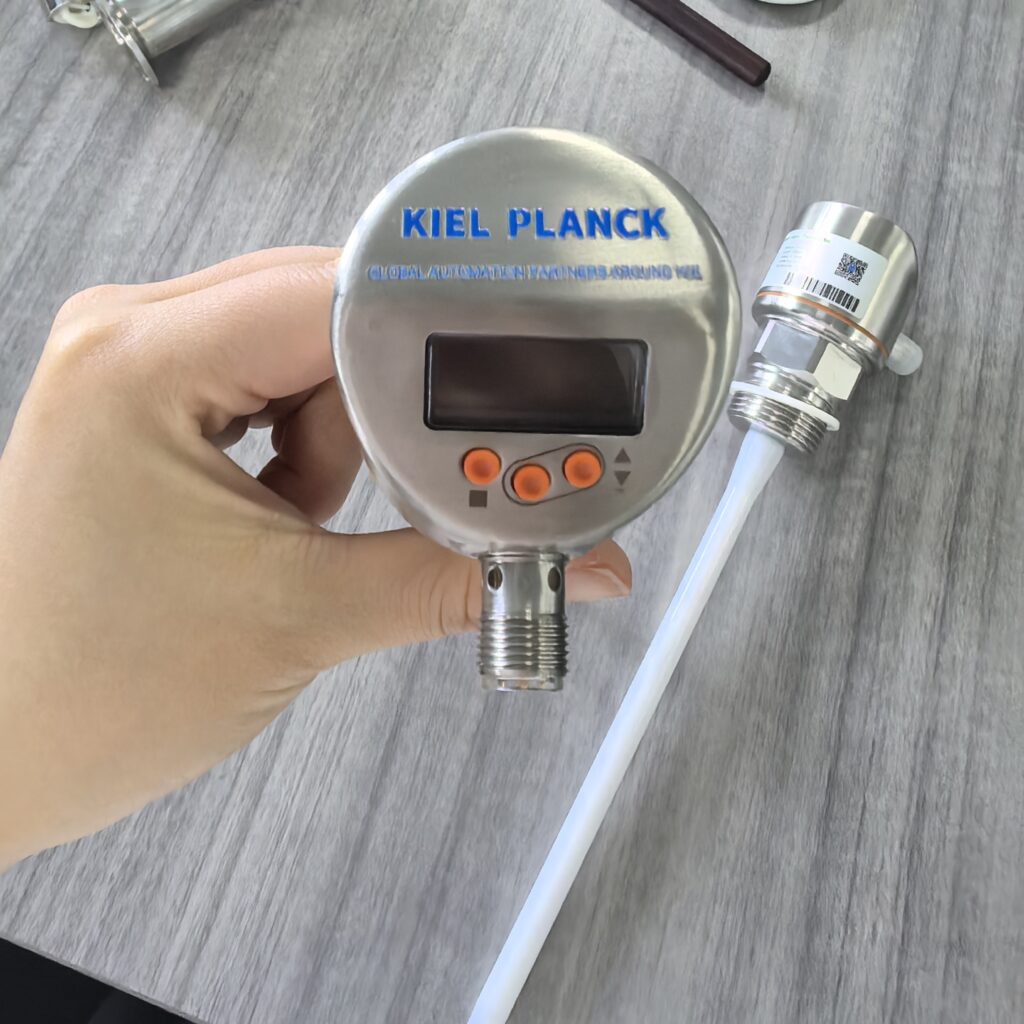
Scan the QR code to receive more detailed information.