1. Overview
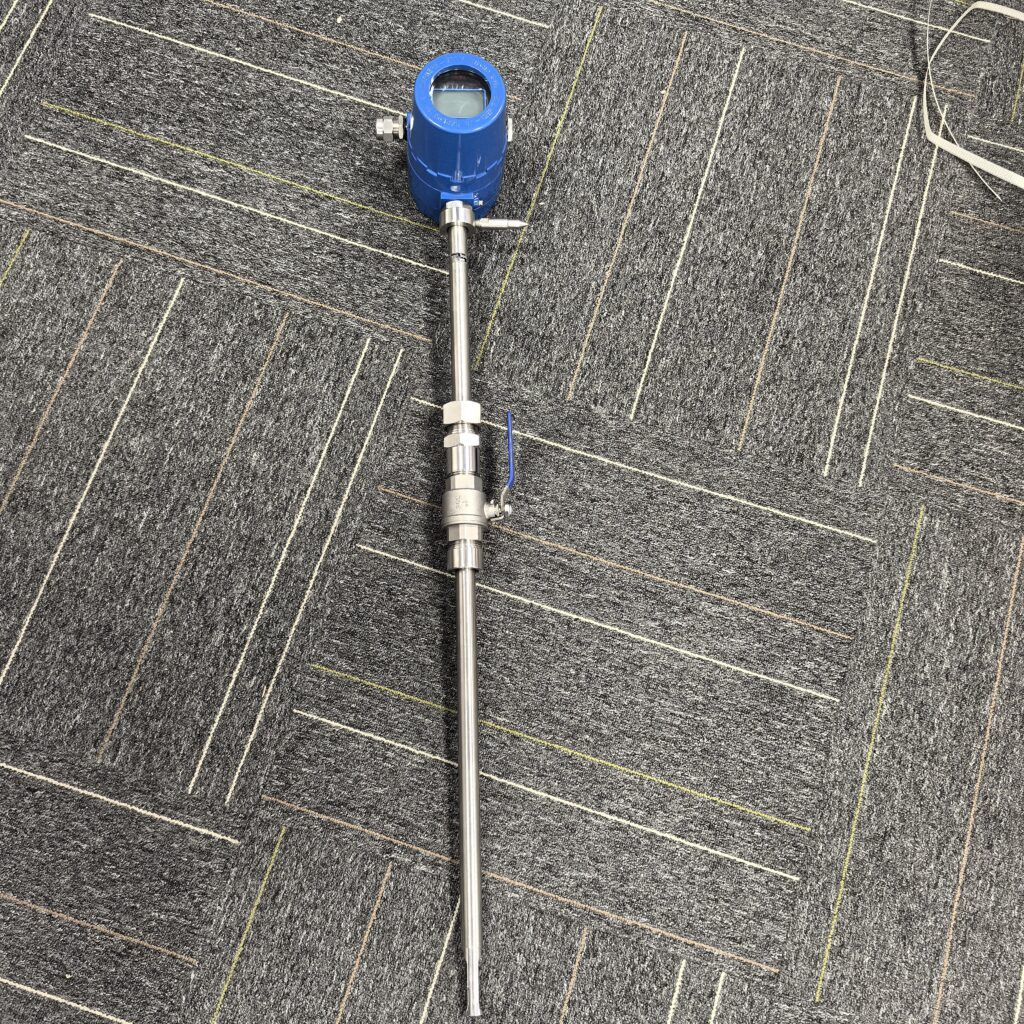
As one of the three mainstream gas flow measurement principles, thermal gas mass flow meters adopt heat transfer detection technology, mainly including constant temperature difference mode and constant power mode. Different from Coriolis mass flow meters and laminar differential pressure flow meters, thermal flow meters occupy the dominant market share in precision micro and medium gas flow measurement. This article comprehensively analyzes its pros and cons, applicable and inapplicable working conditions, and makes a horizontal comparison with the other two mainstream gas mass flow meters to help users complete accurate model selection.
2. Working Principle Overview
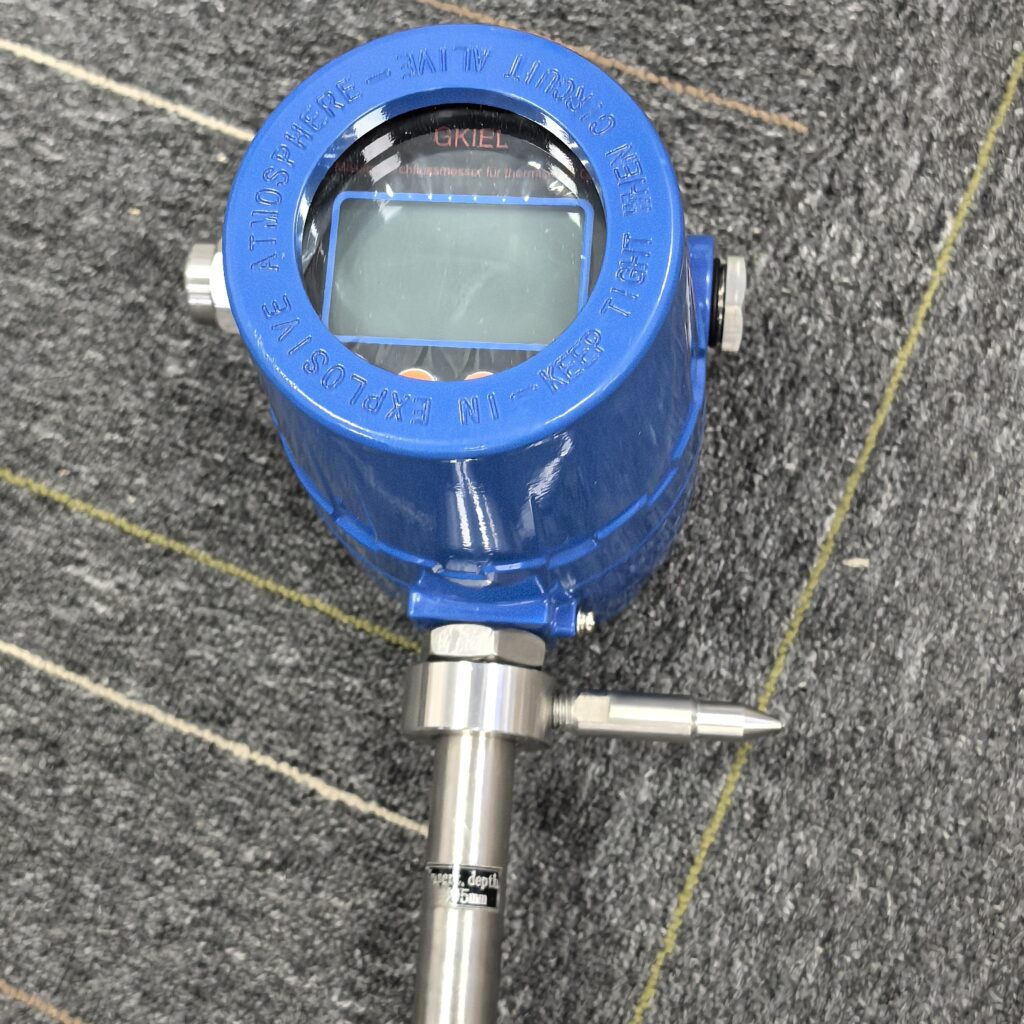
Based on the principle that flowing gas takes away heat proportionally to its mass flow rate, most industrial thermal flow meters apply the constant temperature difference control mode. Two platinum sensors are arranged on the capillary bypass channel: one heats constantly while the other detects real-time temperature. The system adjusts heating power to keep a fixed temperature difference, and the compensated heating power directly corresponds to gas mass flow. It realizes direct mass flow measurement without extra temperature and pressure compensation.
3. Detailed Advantages of Thermal Gas Mass Flow Meters
- Direct mass flow measurement: Free from interference of gas pressure and ambient temperature fluctuation, no need for external temperature and pressure compensation modules.
- Excellent performance for micro flow measurement: Ultra-high sensitivity for tiny gas flow, unmatched by differential pressure and Coriolis flow meters in low-flow scenarios.
- Fast response and high repeatability: Response time within 100ms, suitable for dynamic gas flow fluctuation and closed-loop flow control.
- Low pressure loss: Bypass split-flow structure brings negligible flow resistance, keeping stability of original gas pipeline.
- Integrated control function: Can be matched with solenoid valve to form MFC for automatic flow setting and steady control.
- Cost-effective for medium and small flow: Lower purchase and maintenance cost compared with Coriolis mass flow meters.
4. Detailed Disadvantages of Thermal Gas Mass Flow Meters
- Susceptible to medium contamination: Fine capillary sensing channel is easy to be blocked by oil mist, dust, moisture and condensate, causing zero drift and measurement error.
- Gas-specific calibration requirement: Measurement data depends on gas specific heat capacity; instrument recalibration is mandatory after changing gas medium.
- Poor performance for ultra-large flow: High manufacturing cost for large-range models, not economical for industrial large-bore gas pipelines.
- Not suitable for complex mixed gas: Low measuring accuracy for uncalibrated multi-component mixed gas with unstable specific heat capacity.
5. Applicable and Inapplicable Working Conditions
5.1 Applicable Conditions
- Clean, dry single-component conventional gas: nitrogen, oxygen, argon, compressed air and other inert gases.
- Micro, small and medium gas flow measurement and closed-loop control scenarios.
- Precision manufacturing industries requiring fast response and high flow control accuracy.
- Pipeline sites with strict requirements for low pressure loss.
5.2 Inapplicable Conditions
- Gas containing dust, oil mist, water vapor and other impurities.
- Ultra-large flow industrial gas delivery pipelines.
- Unstable multi-component mixed gas without fixed specific heat capacity.
- High-temperature gas with severe heat radiation interference.
6. Horizontal Comparison with Other Two Mainstream Gas Mass Flow Meters
Items | Thermal Mass Flow Meter | Coriolis Mass Flow Meter | Laminar Differential Pressure Flow Meter |
|---|---|---|---|
Core Principle | Heat transfer detection | Coriolis force phase difference | Laminar pressure drop change |
Applicable Flow Range | Micro & medium flow | Medium & large flow | Large industrial flow |
Anti-pollution Ability | Weak | Medium | Strong |
Cost Level | Medium | High | Low |
Main Application | Semiconductor, laboratory, vacuum coating | Special corrosive gas, high-precision large flow | Industrial pipeline large flow monitoring |
7. Conclusion
Thermal gas mass flow meters have irreplaceable advantages in micro and medium precise gas flow measurement thanks to fast response, low pressure loss and direct mass measurement. Restricted by structural characteristics, they are not suitable for dirty gas and ultra-large flow working conditions. Users should select flow meters according to gas cleanliness, flow range and field working conditions, combining with Coriolis or differential pressure products for optimal matching.
Scan the QR code to receive more detailed information.