Traditional manual pH detection methods feature low frequency, serious data lag and large human errors, which cannot adapt to the needs of modern intensive and intelligent aquaculture. Real-time pH monitoring technology, relying on intelligent water quality sensors and automatic data collection systems, can continuously track pH changes in aquaculture water bodies and provide timely early warnings of abnormal water quality. This article expounds the importance of stable pH conditions for aquaculture, analyzes the advantages and working principles of real-time pH monitoring, summarizes key application points and existing challenges in aquaculture scenarios, and puts forward practical optimization strategies. It aims to provide theoretical and practical references for standardized water quality management and sustainable development of aquaculture industry.
1. Introduction
With the rapid expansion of intensive aquaculture, high-density breeding and frequent feeding have greatly increased the pressure on water environment regulation. A stable water ecological environment is the foundation of healthy aquaculture. pH value reflects the acidity and alkalinity of aquaculture water, and its dynamic balance is closely linked to dissolved oxygen, ammonia nitrogen and nitrite indicators. In natural aquaculture environments, pH is affected by photosynthesis of plankton, microbial decomposition of organic matter, and water exchange conditions, showing diurnal and seasonal fluctuations. Manual intermittent detection can only capture discrete data, easily missing sudden pH abnormalities caused by weather changes, excessive feeding and water pollution. Real-time pH monitoring makes up for the defects of traditional detection methods, realizes 24-hour uninterrupted water quality supervision, and has become an essential technical means for modern precision aquaculture.
2. Significance of Real-time pH Monitoring for Aquaculture
Stable pH range is crucial for the survival and growth of aquatic organisms. Most common aquaculture species adapt to a weakly alkaline water environment of 7.5 to 8.5. When the pH is too low, the water body becomes acidic, which will inhibit the activity of beneficial microorganisms, reduce the decomposition efficiency of organic waste, and damage the gill and digestive system of aquatic animals, resulting in slow growth and reduced disease resistance. Excessively high pH will increase the toxicity of ammonia nitrogen in water, cause body surface damage and respiratory distress of aquatic organisms, and lead to mass death in serious cases.
Real-time monitoring can effectively avoid the risks caused by pH fluctuations. Different from manual detection that requires regular sampling, intelligent monitoring sensors can continuously record pH data, capture subtle and short-term changes in water quality, and send out early warning signals once the value exceeds the safe range. This allows farmers to take timely measures such as water exchange, aeration and water quality conditioning, eliminating potential hazards in the early stage and reducing breeding losses. In addition, long-term continuous pH data can help farmers summarize water quality change rules, formulate scientific feeding and water management plans, and improve the level of refined breeding.
3. Key Application Technologies and Practical Points
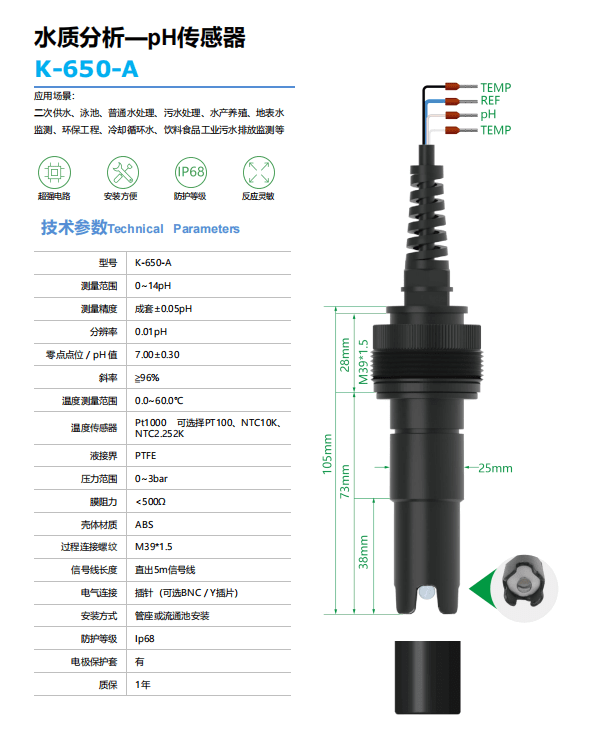
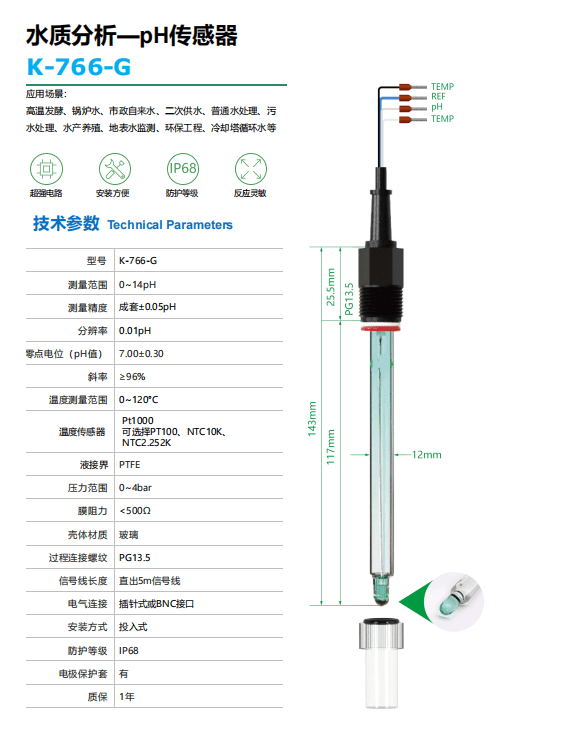
The core of real-time pH monitoring in aquaculture is high-precision and anti-fouling pH sensors suitable for complex breeding water bodies. Aquaculture water contains a large amount of feed residues, aquatic excreta and suspended sediments, which are easy to adhere to the sensor probe and affect detection accuracy. Therefore, sensors with anti-fouling coating and automatic cleaning function are preferred in practical application. Meanwhile, water temperature changes will interfere with pH measurement results, so equipment with automatic temperature compensation function is essential to ensure data accuracy in different seasons and water temperature environments.
In terms of layout and maintenance, monitoring probes should be placed in the main water body of the pond, avoiding dead corners of water flow and shallow water areas to ensure representative detection data. It is necessary to calibrate the sensor regularly and clean the surface attachments to prevent data drift. In addition, combining real-time pH data with dissolved oxygen and turbidity monitoring data can realize multi-dimensional water quality evaluation and more accurate water environment regulation.
4. Challenges and Optimization Strategies
At present, the popularization of real-time pH monitoring in small and medium-sized aquaculture farms still faces some challenges. Low-cost monitoring equipment has poor stability and short service life, while high-precision intelligent equipment has high initial investment costs. In addition, many farmers lack professional operation and data analysis capabilities, resulting in the failure to make full use of monitoring data to guide breeding production.
To solve these problems, it is necessary to select cost-effective monitoring equipment according to the scale of breeding, and strengthen daily maintenance to extend the service life of equipment. Industry departments and technical institutions should carry out professional training to improve farmers’ awareness of intelligent monitoring and data application capabilities. Meanwhile, the development of low-power, long-life and low-cost intelligent monitoring sensors should be promoted to reduce the popularization threshold of real-time monitoring technology.
5. Conclusion
Real-time pH monitoring is an indispensable part of modern intelligent aquaculture water quality management. It breaks through the limitations of traditional manual detection, realizes real-time perception and early warning of water pH changes, effectively guarantees the healthy growth of aquatic organisms, and reduces economic losses caused by water quality deterioration. Although the current application still has problems such as high equipment cost and insufficient technical popularization, with the continuous development of sensor technology and intelligent agriculture, real-time pH monitoring will be further popularized and optimized. Standardized and intelligent pH monitoring management will help promote the transformation of aquaculture from extensive mode to precise and efficient ecological mode, and boost the sustainable and high-quality development of the aquaculture industry.
Scan the QR code to receive more detailed information.