Diaphragm hydrogen compressors are pivotal core equipment in hydrogen refueling stations and hydrogen energy industrial systems, with the diaphragm chamber serving as the key compression unit for high-purity hydrogen. The real-time pressure state of the diaphragm chamber directly determines compression efficiency, diaphragm service life and system operation safety. Traditional manual inspection and regular sampling monitoring methods suffer from delayed data acquisition, low monitoring precision and poor real-time performance, which cannot meet the intelligent and safe operation requirements of modern hydrogen compression systems. This paper proposes a complete design scheme for an online pressure monitoring system for hydrogen compressor diaphragm chambers, focusing on system overall architecture design, hardware selection, signal transmission scheme and key software functions. Furthermore, it analyzes the defects of conventional transmitter layout and carries out targeted layout optimization based on the characteristics of diaphragm chamber pressure fluctuation and hydrogen medium attributes. The optimized layout effectively eliminates measurement errors caused by installation position, vibration interference and pipeline pressure delay. The experimental results show that the designed online monitoring system features high real-time performance and stable measurement data, which can realize continuous and accurate monitoring of diaphragm chamber pressure. It provides effective technical support for fault early warning, operation parameter adjustment and equipment maintenance of diaphragm hydrogen compressors.
1. Introduction
With the rapid iteration and large-scale promotion of hydrogen energy technology, high-efficiency and safe hydrogen compression equipment has become an indispensable part of the hydrogen energy industrial chain. Diaphragm hydrogen compressors rely on metal diaphragms to isolate mechanical transmission structures and hydrogen media, achieving zero-leakage and high-purity hydrogen compression, and are widely applied in high-standard hydrogen supply scenarios. In the actual operation process, the diaphragm chamber bears periodic high-frequency pressure impact, and abnormal pressure changes such as overpressure, pressure fluctuation anomaly and residual pressure accumulation will easily cause diaphragm fatigue damage, seal failure and even hydrogen leakage accidents.
Online pressure monitoring is the core means to grasp the operating state of the diaphragm chamber in real time. Most existing monitoring systems adopt traditional fixed-point transmitter layout, which is prone to signal distortion and data lag under the influence of compressor mechanical vibration and unbalanced pipeline pressure distribution. Unreasonable layout not only reduces monitoring accuracy, but also affects the timeliness of fault judgment. Therefore, designing a specialized online pressure monitoring system and optimizing the transmitter layout is of great practical significance for improving the operation reliability and intelligent monitoring level of hydrogen compressors.
2. Overall Design of Diaphragm Chamber Pressure Online Monitoring System
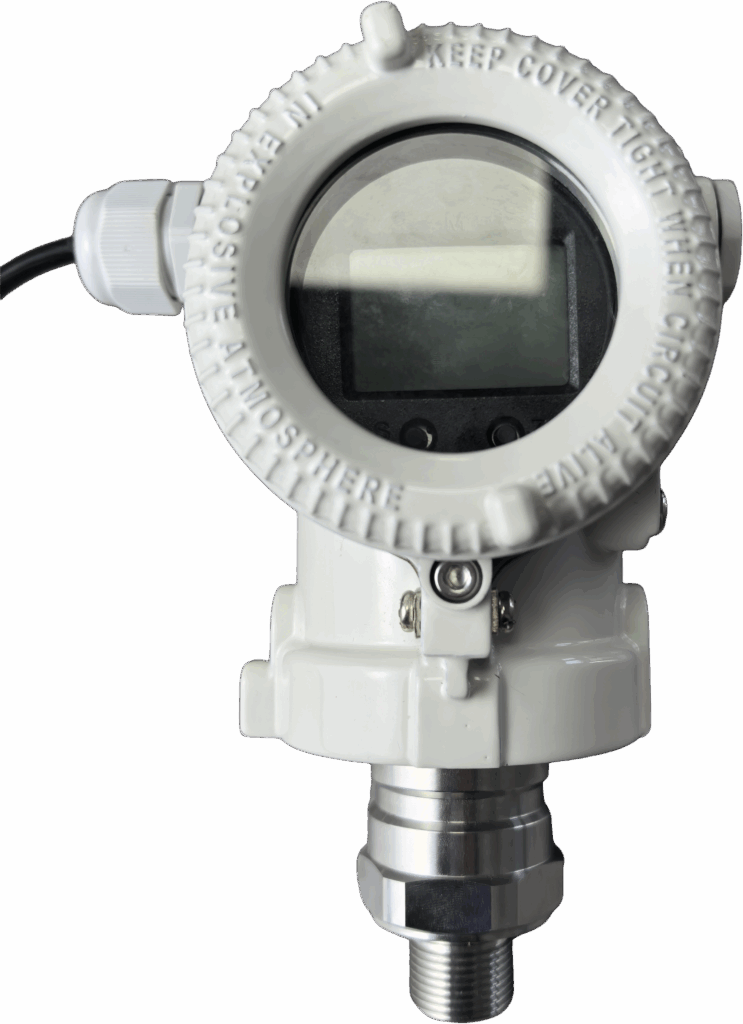
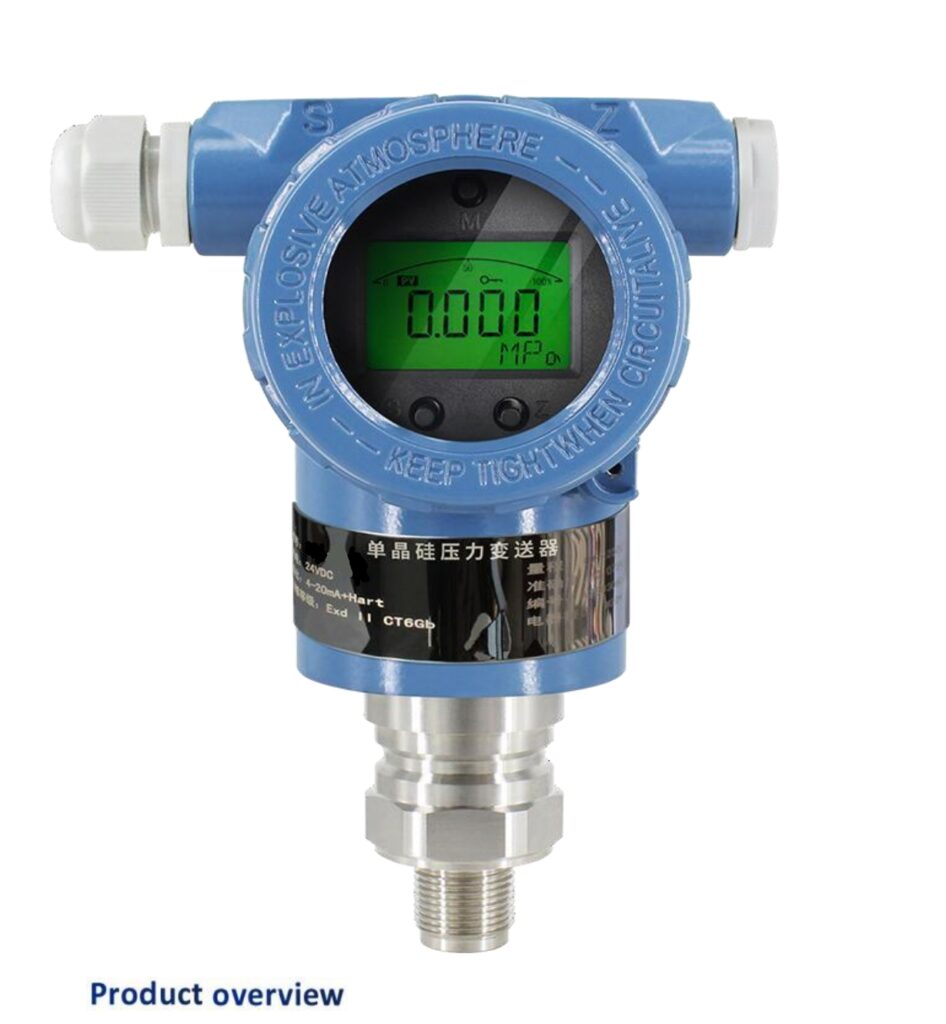
The online monitoring system adopts a hierarchical architecture of “field data acquisition layer, signal transmission layer and upper computer monitoring layer”, which realizes full-process automatic acquisition, transmission, analysis and early warning of diaphragm chamber pressure data. In the field data acquisition layer, high-precision hydrogen-resistant pressure transmitters are selected as core acquisition components, adapting to the high-pressure, permeable and flammable characteristics of hydrogen medium. The transmitters support real-time collection of dynamic pressure signals of the diaphragm chamber with high frequency, avoiding data missing caused by low sampling rate in traditional monitoring.
The signal transmission layer adopts shielded cable wired transmission combined with anti-interference processing technology. Considering the strong electromagnetic interference and mechanical vibration in the compressor operation site, the transmission circuit is equipped with signal isolation modules to eliminate external interference and ensure stable and undistorted signal transmission. The upper computer monitoring layer is built based on industrial control configuration software, realizing real-time data display, historical data storage, pressure curve analysis, overpressure threshold alarm and operation data statistics functions. The system can automatically record pressure change data during compressor start-up, steady operation and shutdown, providing complete data support for equipment operation analysis and fault tracing.
3. Defects of Traditional Transmitter Layout
In conventional engineering applications, pressure transmitters are mostly installed on the main inlet and outlet pipelines of the compressor, rather than directly facing the diaphragm chamber. This indirect layout has obvious technical defects. First, there is pipeline pressure transmission delay, resulting in inconsistent collected pressure data with the actual pressure state of the diaphragm chamber, failing to capture instantaneous pressure impact and micro-fluctuation signals. Second, the pipeline installation position is susceptible to fluid turbulence and pipeline vibration, causing periodic jitter of measurement data and reducing monitoring stability.
In addition, the traditional single-point layout cannot reflect the pressure balance state inside the diaphragm chamber. The asymmetric pressure distribution in the chamber will lead to local overpressure, which cannot be identified by single-point monitoring, easily causing hidden equipment faults. Meanwhile, unreasonable installation distance and angle will increase zero drift error of the transmitter, further reducing the accuracy and reliability of online monitoring.
4. Transmitter Layout Optimization Strategy
Aiming at the defects of traditional layout, this paper proposes a multi-point proximity installation layout optimization scheme suitable for diaphragm chamber pressure monitoring. First, the transmitters are arranged close to the diaphragm chamber pressure measuring hole, shortening the pressure transmission pipeline to the greatest extent, eliminating signal transmission delay, and ensuring that the collected data can truly reflect the real-time pressure changes of the compression chamber.
Second, a symmetric double-point layout is adopted inside the diaphragm chamber. Two high-precision transmitters are installed at the upper and lower measuring ports of the chamber respectively to monitor the pressure state of different areas, effectively judging the internal pressure balance and avoiding monitoring blind areas caused by single-point detection. Third, combined with the compressor vibration characteristics, the transmitters are fixed with damping brackets to isolate mechanical vibration interference and suppress data jitter. At the same time, the horizontal installation mode is adopted to avoid liquid column zero drift caused by vertical installation, ensuring long-term measurement stability.
In terms of layout matching, transmitters with explosion-proof and hydrogen-permeation-resistant properties are selected to adapt to the harsh working environment of hydrogen compression. The sampling frequency is unified with the system response speed to realize synchronous tracking of dynamic pressure changes in the diaphragm chamber during high-frequency operation of the compressor.
5. Conclusion
Aiming at the problems of poor real-time performance, low accuracy and monitoring blind areas in traditional diaphragm chamber pressure monitoring of hydrogen compressors, this paper completes the overall design of the online monitoring system and optimizes the transmitter layout scheme. The designed three-layer monitoring system realizes full-automatic and high-precision collection and analysis of chamber pressure data. The optimized symmetric proximity layout effectively solves the defects of signal delay, vibration interference and single-point monitoring limitation in traditional layout, significantly improving the authenticity and stability of monitoring data. The optimized monitoring system can accurately capture transient pressure changes and abnormal fluctuations of the diaphragm chamber, realize early warning of potential faults such as diaphragm overload and unbalanced internal pressure. It effectively improves the safe operation level and intelligent monitoring capability of diaphragm hydrogen compressors, and provides a reliable design reference for the optimization and upgrading of online monitoring systems for hydrogen energy compression equipment.
Scan the QR code to receive more detailed information.