Diaphragm hydrogen compressors are core precision equipment in hydrogen energy storage, fuel cell power generation and petrochemical hydrogen supply systems, featuring zero leakage, high compression efficiency and stable operation for pure hydrogen medium. The differential pressure between the compressor inlet and outlet is a key operational parameter that directly reflects compression performance, equipment operating status and system safety. Pressure transmitters serve as the core monitoring components for differential pressure signals, and their measurement accuracy determines the reliability of system control, fault early warning and operational optimization. This paper systematically analyzes the accuracy requirements of differential pressure transmitters adapted to diaphragm hydrogen compressors. It discusses the accuracy classification standards, key influencing factors and engineering application thresholds under actual working conditions, explores the adverse impacts of insufficient measurement accuracy on compressor operation, and summarizes targeted accuracy matching and calibration optimization strategies. The study shows that high-precision transmitters with an accuracy of ±0.1% to ±0.25% full scale are required for mainstream diaphragm hydrogen compressor operating conditions to ensure long-term stable and accurate differential pressure monitoring, providing technical support for the safe and efficient operation of hydrogen compression systems.
1. Introduction
With the rapid development of the hydrogen energy industry, high-purity and leakage-free hydrogen compression technology has become a key link in the industrial hydrogen supply chain. Different from traditional piston compressors, diaphragm hydrogen compressors rely on flexible diaphragms to isolate the compression cavity and transmission mechanism, completely avoiding hydrogen medium pollution and leakage risks, and are widely used in high-precision hydrogen compression scenarios such as hydrogen refueling stations and energy storage power stations. The inlet and outlet differential pressure of the compressor characterizes the compression load and working efficiency. Abnormal differential pressure fluctuations often indicate diaphragm fatigue failure, pipeline blockage, gas leakage or parameter mismatch, which may lead to equipment shutdown or even hydrogen safety accidents if not detected in time.
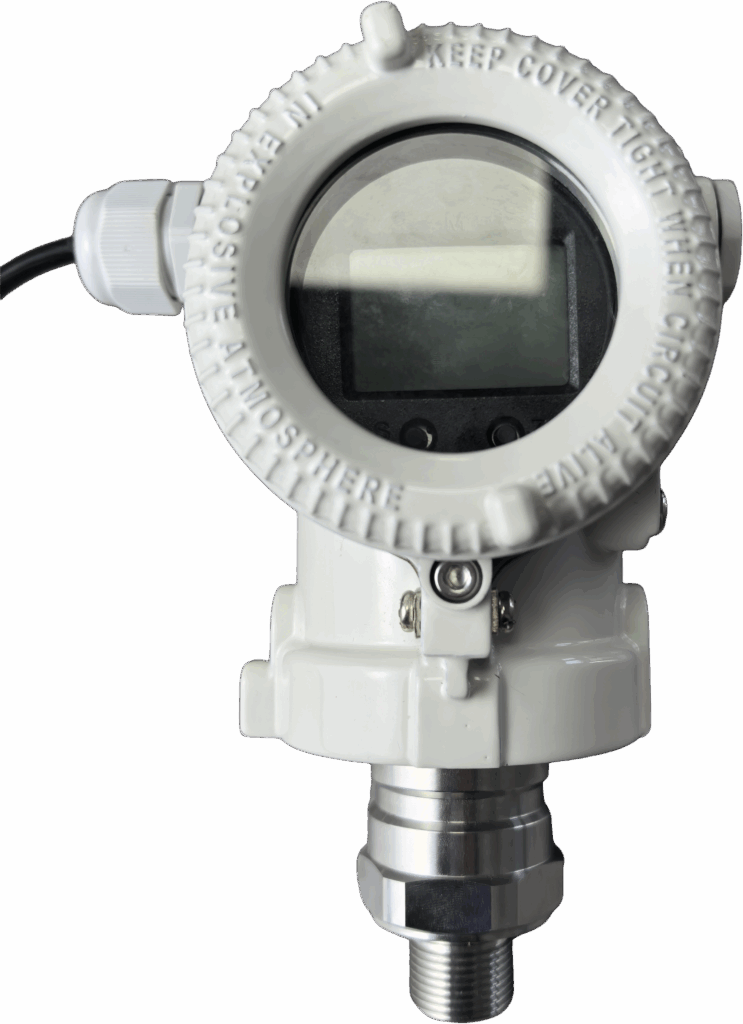
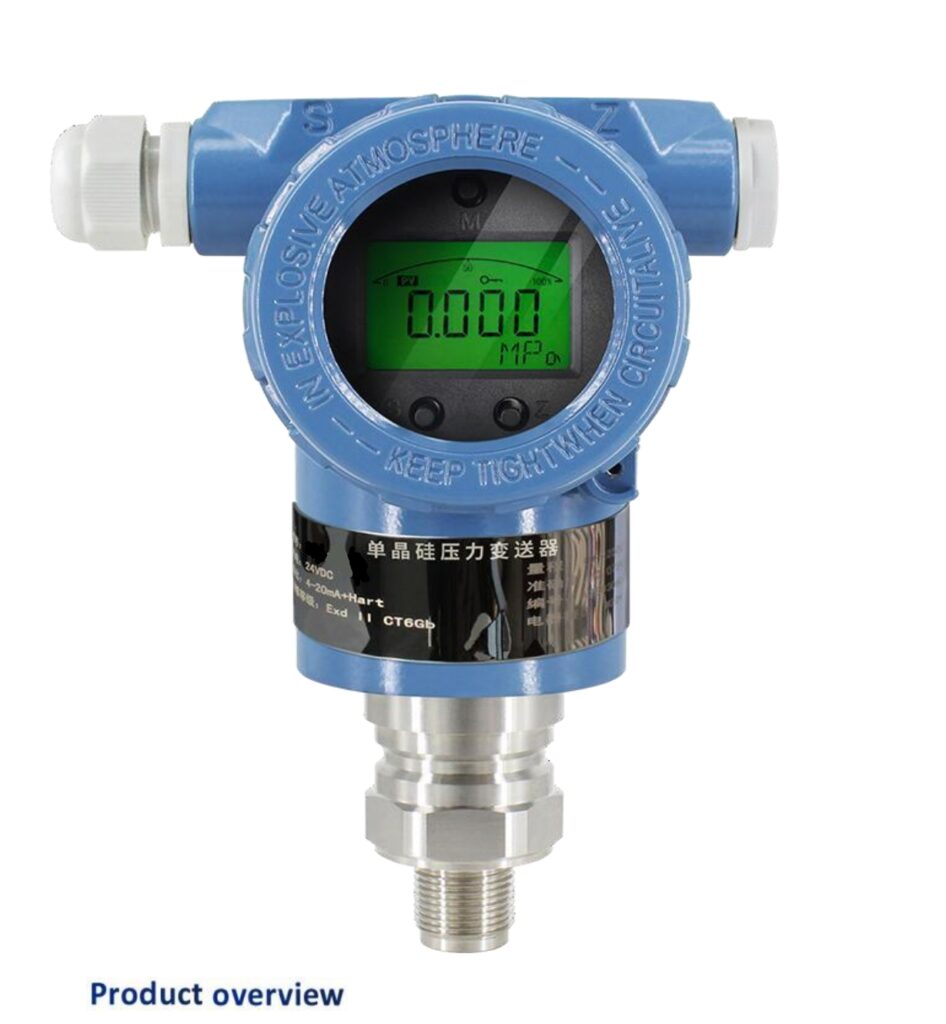
Pressure transmitters convert tiny differential pressure changes into standard electrical signals for real-time acquisition by the distributed control system (DCS). Measurement accuracy is the primary performance index of transmitters. In the high-pressure and high-purity hydrogen working environment, conventional low-precision transmitters cannot meet the requirements of fine monitoring and precise control. Therefore, clarifying the accurate accuracy requirements of differential pressure transmitters for diaphragm hydrogen compressors is of great significance for improving system operation stability and reducing maintenance costs.
2. Core Accuracy Requirements for Differential Pressure Transmitters
The accuracy grade of industrial pressure transmitters is defined based on the maximum allowable error of full-scale measurement, which is divided into multiple grades such as ±0.075%, ±0.1%, ±0.25% and ±0.5%. Combined with the operating characteristics of diaphragm hydrogen compressors, the accuracy requirements are divided into conventional monitoring and safety-critical working conditions.
For conventional steady-state operation monitoring, the compressor operates under fixed load with stable differential pressure changes, and transmitters with an accuracy of ±0.25% FS can meet basic monitoring needs. This accuracy level effectively captures conventional pressure fluctuations caused by load changes and provides reliable data for daily operation recording and efficiency evaluation. For safety-critical scenarios such as variable load operation, start-stop switching and high-pressure hydrogen compression, higher precision is mandatory. Transmitters with an accuracy of ±0.1% FS are required to identify tiny abnormal pressure deviations, realize early warning of incipient faults such as diaphragm micro-deformation and pipeline resistance increase, and avoid misjudgment or missed judgment of the control system.
In addition to static accuracy, long-term stability is an extended accuracy requirement for transmitter application. The long-term drift of qualified hydrogen-specific differential pressure transmitters should be less than 0.2% per year, which can reduce frequent calibration errors and ensure consistent measurement accuracy during long-term continuous operation of the compressor. Different from general industrial differential pressure measurement, hydrogen medium has low density and strong permeability, so the transmitter must maintain high accuracy under long-term hydrogen immersion and high static pressure conditions.
3. Key Factors Affecting Transmitter Measurement Accuracy
The actual measurement accuracy of differential pressure transmitters in diaphragm hydrogen compressor systems is affected by multiple environmental and technical factors. First, temperature drift is a major interference factor. The compressor will generate heat during continuous operation, and the ambient temperature fluctuation range can reach -40°C to +85°C. Temperature changes will cause zero-point offset and sensitivity deviation of the transmitter sensor, reducing actual measurement accuracy.
Second, static pressure interference cannot be ignored. The inlet and outlet of the compressor are in high-static-pressure operating conditions. Excessive static pressure will cause elastic deformation of the transmitter measuring cell, resulting in static pressure errors. Uncompensated static pressure errors will directly lead to distortion of differential pressure measurement data. Third, installation errors and medium interference also affect accuracy. Unreasonable installation angle will cause liquid column zero-point offset of the transmitter capillary, while hydrogen micro-permeation will cause slow performance attenuation of ordinary sensors.
Moreover, signal response characteristics are closely related to effective accuracy. For compressor transient pressure fluctuation monitoring, the transmitter response time needs to be less than 100 ms. Excessively slow response will lead to signal lag, resulting in inaccurate capture of instantaneous differential pressure changes and reducing the effective measurement accuracy of dynamic working conditions.
4. Engineering Application and Accuracy Optimization Strategies
In engineering practice, the accuracy selection of differential pressure transmitters must match the operating parameters of diaphragm hydrogen compressors. For medium and low-pressure compression systems with low fluctuation frequency, ±0.25% FS precision transmitters can be selected to balance measurement performance and economic cost. For high-pressure hydrogen compression and unattended automatic operation systems, ±0.1% FS high-precision explosion-proof transmitters are mandatory to meet safety monitoring standards.
To maintain long-term accuracy, targeted optimization and calibration measures are required. First, select hydrogen-resistant capacitive or piezoresistive sensing elements to avoid accuracy attenuation caused by hydrogen medium corrosion and permeation. Second, perform zero-point calibration and static pressure compensation before installation to eliminate installation deviation and static pressure errors. Third, establish a regular calibration mechanism to correct long-term drift errors and ensure that the measurement accuracy always meets the operating threshold. In addition, digital signal processing technology can be used to filter interference signals, further improving the stability and authenticity of differential pressure measurement data.
5. Conclusion
The differential pressure monitoring of diaphragm hydrogen compressor inlet and outlet puts forward strict hierarchical accuracy requirements for pressure transmitters, which are significantly higher than those of conventional industrial differential pressure measurement. The comprehensive analysis shows that ±0.25% FS accuracy is the basic guarantee for conventional operating monitoring, and ±0.1% FS high precision is the core requirement for safety-critical and dynamic working condition monitoring. Temperature drift, static pressure interference, long-term performance drift and installation errors are the main factors restricting measurement accuracy. Reasonable selection of accuracy grades, adoption of hydrogen-resistant sensors, and regular calibration and error compensation can effectively maintain the measurement accuracy of transmitters. Standardizing the accuracy matching and maintenance management of differential pressure transmitters is crucial to improve the operational safety, stability and intelligent monitoring level of diaphragm hydrogen compression systems, and provides a reliable technical basis for the large-scale application of hydrogen energy compression equipment.
Scan the QR code to receive more detailed information.