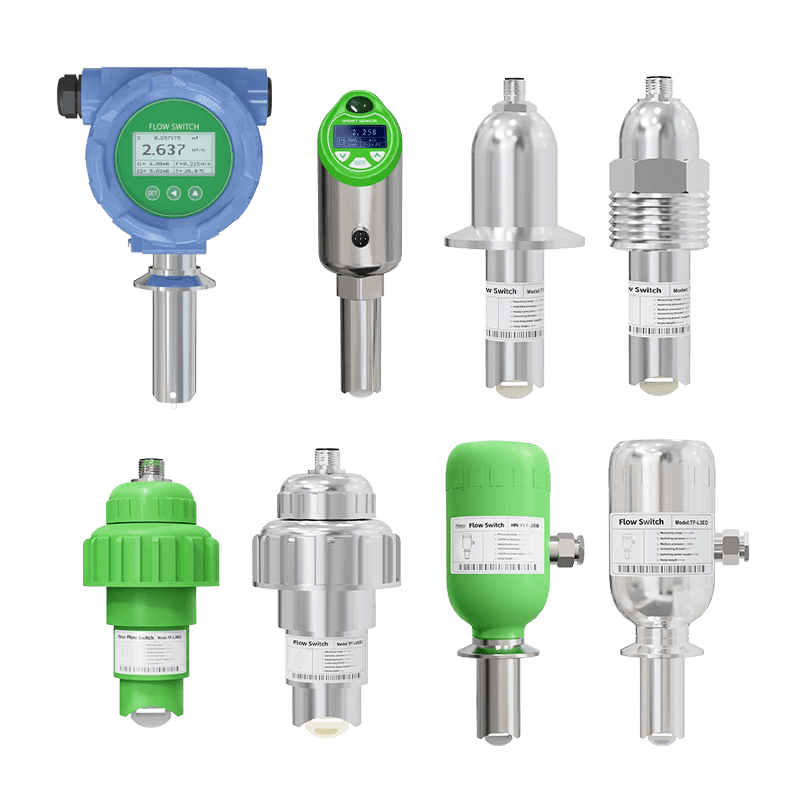
I. Mechanism of Brittle Fracture Liquid nitrogen medium maintains a constant temperature of -196℃. When the switch rapidly cools from ambient temperature (25℃), the linear shrinkage coefficients of various components are inconsistent, generating significant thermal stress due to the temperature difference within the components. At low temperatures, the molecular chains of polymer materials tighten, residual processing stress in the metal is released, and this, combined with the alternating mechanical stress from the reciprocating sliding of the float and the vibration stress from the vaporization of the tank, causes microcracks to initiate and propagate at stress concentration points, ultimately leading to brittle fracture, shell breakage, seal failure, and switch malfunction. The overall risk of brittle fracture is determined by four factors: material selection, structural manufacturing process, frequency of thermal cycling, and external impact.
II. Risk Assessment of Brittle Fracture for Each Component
1. Guide Rod and Double Float Metal Shell (Stainless Steel Parts)
304, 304L, and 316L are austenitic face-centered cubic crystals with no low-temperature brittle transition point. The base material has sufficient toughness at -196℃, resulting in a low risk of brittle fracture. Ordinary 201 and carbon steel have a body-centered cubic structure and become brittle at -40℃. They pose an extremely high risk of brittle fracture in liquid nitrogen environments and are strictly prohibited from use.
High-risk areas are concentrated at the circumferential weld of the float and the end weld of the guide rod: Ordinary spot welds have coarse grains in the heat-affected zone and retain residual welding stress, leading to preferential cracking after thermal cycling; for stamped floats and thin-walled guide rods that have not undergone cryogenic stress relief, the probability of shrinkage and misalignment cracking at locations with uneven wall thickness increases significantly; 316L exhibits better low-temperature stability than 304L and has a lower risk of brittle fracture under long-term liquid nitrogen conditions.
2. Non-metallic body of the float: PP and ordinary PE plastics have embrittlement temperatures above -60℃, and completely lose their toughness at -196℃. They will shatter completely with slight bumps or liquid level fluctuations, posing an extremely high risk of brittle fracture, and are prohibited from use in liquid nitrogen; PVDF has an embrittlement temperature of -62℃, with a long-term use limit of -40℃. It hardens and becomes brittle in a liquid nitrogen environment, and is prone to cracking and leakage under alternating hot and cold temperatures, making it a high-risk material that is prohibited; PTFE (tetrafluoroethylene) retains its toughness at -196℃, and the base material has no risk of spontaneous embrittlement, but its low-temperature impact resistance decreases. It will locally crack when subjected to heavy impacts or severe vibrations, posing a medium to low risk of brittle fracture, making it the preferred material for liquid nitrogen floats.
3. Seals and Lead Wire Rubber Sheaths: Conventional nitrile and silicone seals harden and lose elasticity at low temperatures, shrinking and widening the sealing gap, leading to ring breakage and water ingress, posing a high risk of brittle fracture failure. Only low-temperature resistant perfluororubber can be used at -196℃, with low low-temperature shrinkage and less brittleness, making it a safe choice for seals.
4. Built-in Reed Switch Assembly: Conventional industrial reed switches have a rated operating lower limit of -55℃. At -196℃, the glass tube and metal reed shrinkage rates differ, causing the glass tube to crack due to internal stress and the reed to deform and jam, resulting in incorrect normally open and normally closed states. Custom-designed low-temperature reed switches undergo sealing stress pretreatment, can withstand liquid nitrogen temperatures, and have no risk of glass brittleness. Ordinary reed switches have an extremely high risk of failure and brittle fracture.
III. Assessment of Additional Risks in Operating Environments
* **Instantaneous Cooling Condition:** Liquid nitrogen is directly introduced into the tank from a room-temperature switch, resulting in a short-term temperature difference of 221°C. This leads to the maximum instantaneous thermal stress peak, with a brittle fracture probability >60%, classifying it as a high-risk operating condition.
* **Cold-Heat Cycling Condition:** The tank is intermittently filled with liquid nitrogen and heated to vaporize. Multiple daily temperature changes from room temperature to -196°C cause repeated accumulation of residual stress. After 30–100 cycles, welds and plastic floats are prone to progressive cracking, posing a medium-to-high risk.
* **Vibration Condition:** The combined vibrations from the liquid nitrogen pump and tank depressurization, along with the impact of the float’s rise and fall, cause continuous stress accumulation, significantly shortening the brittle fracture cycle. The risk is significantly reduced in static, sealed storage tanks.
IV. Comprehensive Risk Level Classification
Low Risk (Safe and Usable): Guide rod/float 316L + PTFE float + cryogenic reed + perfluorinated seal. It undergoes cryogenic stress relief treatment at -196℃ at the factory. With minimal exposure to temperature fluctuations, the probability of brittle fracture is <5%.
Medium Risk (Use with Caution): 304L stainless steel + PTFE float, ordinary industrial reed, ordinary fluororubber seal. Exposure to temperature fluctuations poses a risk of cracking in welds and reeds with prolonged use.
High Risk (Liquid Nitrogen Prohibited): 201 carbon steel, PP/PVDF float, conventional reed, ordinary rubber seal. Immersion in liquid nitrogen will cause it to crack and become unusable within a short time.
V. Measures to Prevent Brittle Fracture and On-site Maintenance
1. Production End: Stainless steel components undergo cryogenic treatment after welding to eliminate residual stress; weld corners are rounded and ground to eliminate stress sharpness; liquid nitrogen dedicated switches uniformly use 316L+PTFE structure, customized cryogenic reeds, and perfluorinated seals;
2. Commissioning and Installation: Direct immersion of the entire unit in liquid nitrogen at room temperature is prohibited; phased and slow pre-cooling is required to avoid sudden cooling shocks; installation includes shock-absorbing sleeves to reduce tank vibration transmission;
3. Daily Maintenance: Regularly inspect float surface cracks and weld leaks; under low-temperature conditions, striking or bumping the switch body is prohibited; under frequent temperature alternation conditions, disassemble and re-inspect the seals and reed switch performance every six months.
.
Scan the QR code to receive more detailed information.