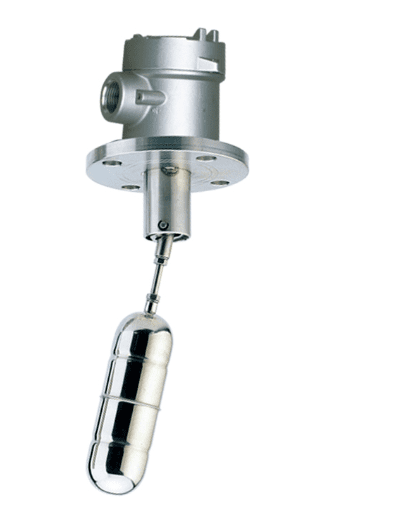
The salt spray test of the dual float level switch is based on GB/T10125-2021 and ISO9227 neutral salt spray test specifications, using a 5% sodium chloride solution and a 35℃ test environment. It is divided into four corrosion resistance levels according to the usage environment, corresponding to different test durations. Level 1 is for general inland indoor use, with a neutral salt spray test duration of 24 to 48 hours, typically using 201 stainless steel and ordinary PP plastic. Level 2 is a standard industrial grade, also the routine inspection standard for products leaving the factory, with a test duration of 72 to 96 hours, standard configuration of passivated 304 stainless steel and PVDF float structure, suitable for outdoor factory areas and conventional chemical storage tanks. Level 3 is suitable for coastal near-shore saline environments, with a test duration of 168 to 500 hours, using high-quality passivated 304 or 316 stainless steel. Level 4 is for heavy-duty corrosion protection in marine environments, used for offshore equipment and high-salt chemical environments, requiring a neutral salt spray test duration of 500 to 1000 hours or more, with the main body using 316L, Hastelloy, or full PTFE corrosion-resistant materials. If alternating salt spray testing is used, conventional products require two cycles totaling 48 hours, coastal products require four cycles totaling 96 hours, and marine corrosion-resistant products require at least ten cycles.
The product’s corrosion resistance level is classified according to the GB/T6461 rust rating standard, with a maximum score of ten levels. The product acceptance standard is level eight. Level ten is the best level, with no red rust on the substrate after testing and white rust area accounting for less than 0.1%. Level nine products have only a very small area of red rust, and the size and quantity of single-point corrosion are controlled, which is the standard for 316 stainless steel. Level eight allows the total red rust area to be in the range of 0.1% to 0.5%, which is the minimum acceptable level for 304 stainless steel. Level seven and below products with excessive rust area and large areas of rust spots on the substrate are considered unqualified for corrosion resistance. White rust area less than 5% is considered compliant during testing, while the presence of red rust on the substrate is considered unqualified.
In terms of material corrosion resistance, PP and ABS plastic double float switches typically need to withstand 96 hours without swelling, cracking, or leakage; 201 stainless steel can only withstand 24 hours without red rust; ordinary 304 stainless steel can withstand 48-72 hours, and passivated 304 can withstand 200-500 hours without substrate corrosion; 316 and 316L native stainless steel can withstand salt spray for over 120 hours, and passivated 316L can withstand 800-1000 hours of neutral salt spray.
After the salt spray test, in addition to visual inspection for rust, performance testing is also required: the float should slide smoothly up and down without jamming, the switch contacts should have normal on/off logic without malfunction, the wiring cavity should be sealed intact without water ingress, and the overall insulation resistance should not be less than 20 megohms. Failure to meet any of these standards constitutes a failed test. Export products comply with the ASTM B117 salt spray standard. Inland models require 96 hours of salt spray, while products exported to Southeast Asia and coastal areas are required to undergo 168 hours of neutral salt spray.
Scan the QR code to receive more detailed information.