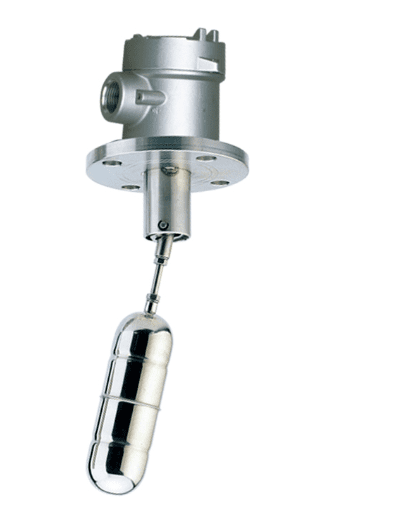
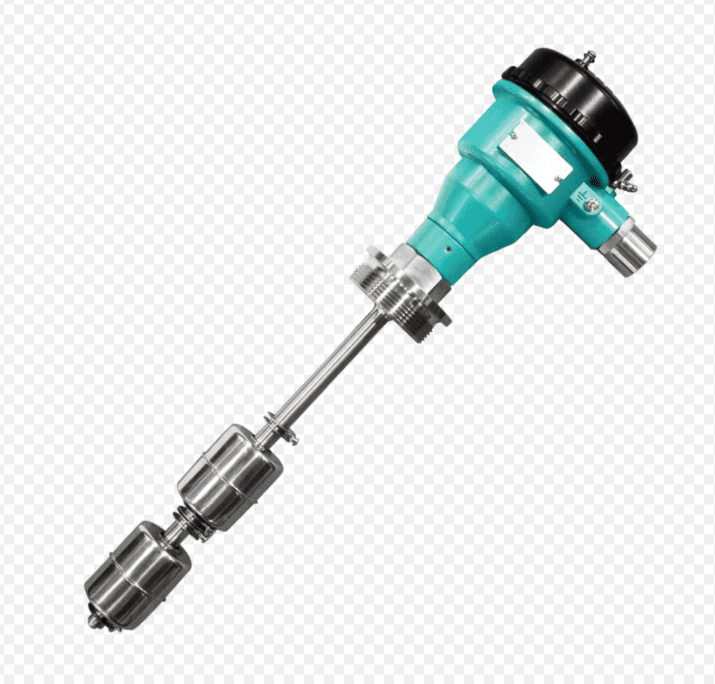
Common Faults, Causes, Troubleshooting, and Routine Maintenance of Float Level Switches
I. Common Faults, Causes, and On-site Troubleshooting Methods
Fault 1: Liquid level changes, switch does not operate (not conducting/not disconnecting)
Causes:
① Float is stuck by debris, scale, or entangled material inside the tank, unable to rise or fall with the liquid level;
② Severe scale buildup on the guide rod, causing the float to seize up;
③ Internal reed switch burnt out, contacts stuck/open circuit;
④ Wiring loose, power cord broken, control cabinet terminals loose;
⑤ Installation position misaligned, float hitting the tank side wall limit stop.
Troubleshooting:
Manually lift the float to observe if it can slide freely up and down; if stuck, clean away dirt and entangled debris;
Use a multimeter in continuity mode to measure the two ends of the wire, manually move the float; no change in continuity = reed switch damaged and needs replacement;
Check wiring terminals and cable for damage.
Fault 2: Liquid level not reached the set point, switch malfunctions, frequent start-stops
Causes:
① Large medium fluctuations, excessive foam on the liquid surface, causing the float to sway up and down due to wave surges;
② Aging reed switch contacts, excessive sensitivity;
③ Installation too short, float too close to the inlet/outlet, fluid impacting the float;
④ Slight bending of the guide rod, causing the float to slide, jam, and rebound.
Troubleshooting:
Add a wave shield/surge sleeve to isolate liquid surface disturbances;
Adjust the switch installation position away from the inlet/outlet;
Test contact continuity, replace the reed assembly if frequent switching occurs.
Fault 3: Float sinks and fails to float due to water ingress.
Causes: Cracked or corroded welds on the float allow media to seep into the cavity; acids, alkalis, or wastewater corrode the float shell.
Troubleshooting: Remove the float and weigh it / shake it and listen to the water sound. If water has entered, replace it with a float of the same material (PP/304/316 stainless steel, select as needed).
Fault 4: Intermittent signal connection, poor contact.
Causes: ① Water ingress into the lead wire seal, internal wiring becomes damp and oxidized;
② Deformed guide rod, float magnetic position misaligned;
③ Damp, rusted, and loosely connected terminals.
Troubleshooting: Disassemble the junction box, clean out accumulated water, remove rust, and tighten terminals; dry internal wiring and reseal damaged rubber rings.
Fault 5: Shortened lifespan under high temperature/corrosive conditions.
Causes: Incorrect material selection: using ordinary PP floats for strong acids and alkalis, and ordinary plastic guide rods for high-temperature media.
Troubleshooting: Verify the medium temperature and pH; replace PVDF, 316L, and PTFE parts.
II. Daily Maintenance Techniques
1. Regular Inspection (Monthly Routine)
Visual Inspection: The float moves smoothly without obstruction, and there is no tangled fiber or sludge; the junction box is free of water ingress and condensation.
Actual Measurement: Manually simulate the liquid level and use a multimeter to verify that the operating point matches the setting.
2. Regular Descaling (Sewage, Sludge, Chemical Tanks: Once every 3 months)
Soak and scrub the guide rod and float with clean water and weak acid to remove scale; apply an anti-stick coating to viscous media that easily adhere.
3. Sealing Maintenance: Replace aged or cracked junction box seals promptly to prevent moisture from entering and burning out the reed switch; install a rainproof box for outdoor applications.
4. Operating Condition Adaptation Maintenance: For tanks prone to foaming: install anti-surge sleeves; For high temperatures (>80℃): select high-temperature resistant reed switches to avoid long-term high-temperature demagnetization failure; For corrosive media: regularly check float corrosion and prepare spare parts in advance.
5. Spare Parts Management: Keep reed cores, floats, and seals readily available for critical level switches; replace quickly if faulty.
III. Quick Troubleshooting Tips: If the switch is stationary, check the card and wiring; erratic jumping often indicates wave or misalignment; a sinking float indicates water ingress; intermittent operation indicates wiring issues; regularly clean scale buildup; choose the right materials to reduce rework.
Scan the QR code to receive more detailed information.