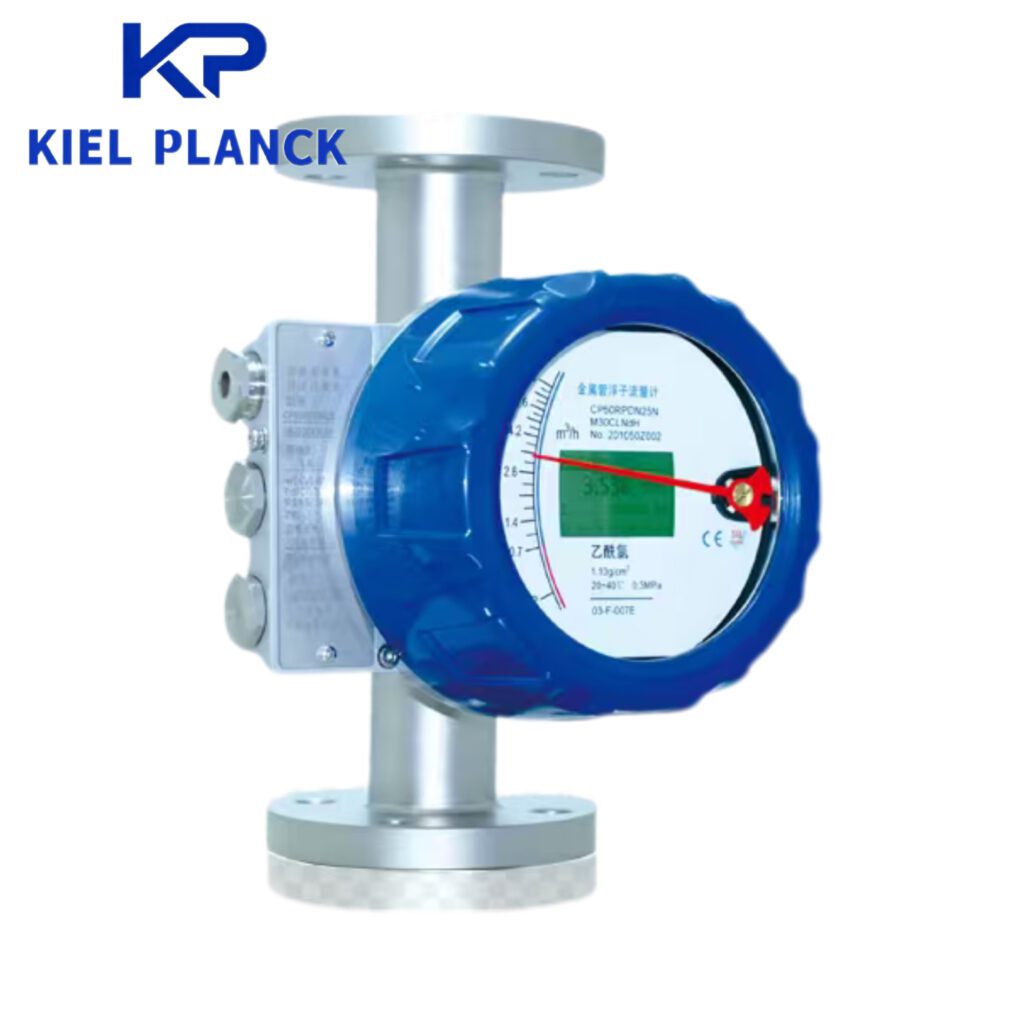
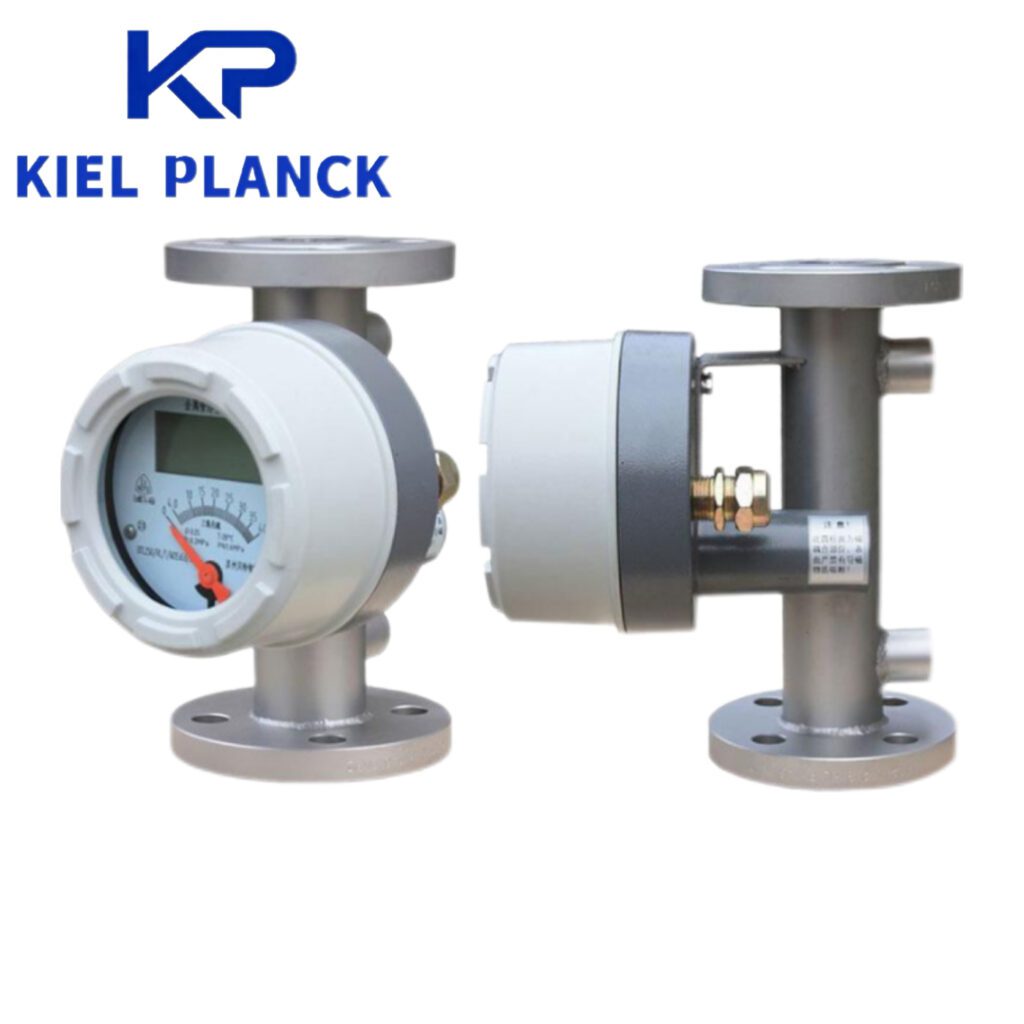
The core function of the insulation jacket of a metal tube float flowmeter is to maintain the temperature environment required by the process fluid, ensuring that the flowmeter can work normally and accurately under extreme temperature conditions. Specifically, this is manifested in three key functions: preventing the medium from solidifying/crystallizing, preventing the medium from vaporizing/vaporizing, and maintaining the stability of the medium viscosity.
I. Prevention of Medium Solidification or Crystallization (Insulation/Heat Tracing Function)
Application Scenarios: When measuring high-viscosity, high-melting-point media, such as asphalt, heavy oil, resin, and certain chemical raw materials (which easily solidify at room temperature).
Working Principle:
When the ambient temperature is lower than the medium’s freezing point, the medium will solidify, crystallize, or experience a sharp increase in viscosity due to heat dissipation as it flows through the flowmeter.
The insulation jacket continuously heats the medium by introducing a heat medium such as steam, hot water, or hot oil within the jacket.
This maintains the medium’s liquid state and good fluidity, preventing float jamming, inaccurate measurement, or even pipe blockage.
Typical Parameters:
Jacket pressure rating is typically 1.6 MPa.
Applicable temperature range: -80℃~200℃ (standard type), high-temperature type can reach -80℃~+300℃.
The temperature of the heat transfer medium is usually controlled at 20-30℃ higher than the freezing point of the medium to ensure reliable heat preservation.
II. Prevention of medium vaporization or evaporation (cold insulation function)
Application scenarios: When measuring low-boiling-point, volatile liquids, such as liquid ammonia, liquefied petroleum gas (LPG), and certain cryogenic solvents.
Working principle:
When the ambient temperature is higher than the boiling point of the medium, the medium absorbs heat and vaporizes as it flows through the flow meter.
Vaporization bubbles cause float bouncing, unstable measurements, and a significant decrease in accuracy.
The insulation jacket cools the medium by circulating cold water, cryogenic water, or ethylene glycol solution within the jacket.
This ensures the medium remains in a pure liquid phase, preventing the influence of gas-liquid two-phase flow on the measurement.
Technical Features:
The jacket design must ensure uniform cooling to avoid localized overheating.
The refrigerant flow rate must be dynamically adjusted according to the ambient temperature and medium characteristics to maintain the optimal operating temperature.
III. Maintaining Stable Medium Viscosity
Application Scenarios: Measuring liquids whose viscosity changes significantly with temperature, such as lubricants. Oil, Fuel Oil
Working Principle:
The measurement principle of a metal tube float flowmeter is related to fluid viscosity.
Temperature fluctuations cause viscosity changes, which in turn cause changes in the flow coefficient (K-factor), introducing measurement errors.
The insulation jacket maintains a constant medium temperature, thereby stabilizing the viscosity.
This ensures that the flowmeter’s measurement accuracy and repeatability meet requirements (typically ±1.5% or ±1.0%).
Temperature Control Requirements:
Temperature Influence: 0.5%/10℃
For high-precision measurements, temperature fluctuations must be controlled within ±2℃.
The jacket temperature can be monitored and adjusted in real time via an intelligent control system.
IV. Special Environment Adaptability Design
High-Temperature Structure (Type G):
Used in situations where the medium temperature is too high or too low and requires thermal insulation.
Increased heat dissipation is achieved by increasing the distance between the measuring tube and the indicator, and by increasing the thickness of the insulation material.
Measuring media with temperatures ranging from -80℃ to +300℃.
Structure with Damper Device (Type Z):
Used for measuring media with unstable flow (pressure), especially gases.
The damper structure stabilizes fluid flow and improves measurement reliability.
High-Pressure Structure (Type Y):
Used for flow measurement of media with pressures exceeding the standard pressure rating.
Max pressure up to 32MPa.
The jacket design must meet higher pressure rating requirements.
V. Practical Application Cases
Chemical Industry:
In yellow phosphorus production, the high-temperature slag pool insulation system uses jacket technology to introduce hot steam into the gas guide chamber, slowly heating the kerosene inside the tank body and preventing the kerosene from solidifying underground due to low temperatures.
In coal coking units, fully insulated jacketed pumps are used to transport high-temperature (400℃), high-viscosity coal tar containing solid hard particles. The fully insulated pump body design maintains stable thermal energy.
Petroleum Industry:
Daqing Oilfield promotes the use of “heating tape + detachable insulation” for water injection pipeline insulation. The composite insulation technology of the “jacketed” system effectively withstands temperatures as low as -30℃, maintaining the temperature of critical pipeline components at around 40℃.
The kerosene storage tank employs a jacketed structure, allowing hot steam to be introduced into the gas-conducting chamber through an inlet pipe, preventing kerosene from solidifying underground due to excessively low temperatures.
Pharmaceutical Industry:
During antibiotic fermentation, the jacketed system maintains the reaction temperature at 37±0.5℃, preventing cell death and shortening the fermentation cycle to 72 hours.
During vaccine sterilization, the jacketed heat exchanger achieves closed-loop control of the sterilization temperature, reducing temperature fluctuations to ±0.5℃.
VI. Common Types and Selection of Thermal Insulation Jackets
By Structural Form:
Full Jacket: Covers all pipe fittings, flanges, and valves; suitable for media with a freezing point >100℃.
Partial Jacket: Leaves flanges/valve exposed; used for media with a freezing point of 50-100℃.
Simple Jacket: Only wraps straight pipe sections; suitable for temperature fluctuations within ±10℃.
By Heat Tracing Medium:
Steam Tracing: Low cost, high heat output; suitable for most industrial applications.
Hot Water/Hot Oil Tracing: More stable temperature control; suitable for applications with excessively high steam temperatures.
Electric Tracing: Flexible installation, precise control; suitable for applications without a steam source. Refrigerant heat tracing: Used for cold insulation to prevent medium vaporization.
Selection principles:
When the medium’s freezing point is below 50 degrees Celsius, pipe tracing is recommended.
When the medium’s freezing point is between 50 and 100 degrees Celsius, jacketed pipe tracing is recommended.
When the medium’s freezing point is above 100 degrees Celsius, concealed weld seam jacketed pipe tracing should be used.
The insulation jacket of a metal tube float flowmeter acts like a “temperature-controlled outer jacket.” The insulation method (heat insulation or cold insulation) can be flexibly selected according to process requirements. It is a key accessory to ensure stable, reliable, and accurate operation of the flowmeter under complex process conditions, and is indispensable, especially in process industries such as chemical, petroleum, pharmaceutical, and food processing.
Scan the QR code to receive more detailed information.