Water quality analyzers are core equipment in water quality monitoring, environmental remediation, and other fields. Mastering their classification, selection, and maintenance is key to improving work efficiency and reducing costs. This article simplifies the core points to help you quickly grasp the essential content.
I. Classification Methods of Water Quality Analyzers
There are four main classifications, each tailored to different usage needs:
(I) By Usage Scenarios
Portable: Compact and portable, fast response, suitable for on-site sampling and emergency monitoring; slightly lower accuracy and functionality, lower cost.
Racktop: High accuracy, powerful functions; requires fixed placement; suitable for laboratory testing and scientific research calibration; more complex operation.
Online: Can monitor continuously 24 hours a day, unattended; suitable for process control and pollution source monitoring; high initial investment and maintenance requirements.
(II) By Detection Parameters
Single Parameter: Detects only one indicator; simple structure, low cost; suitable for specialized monitoring.
Multi-Parameter: Can simultaneously detect multiple core indicators; high integration; currently the most widely used type.
Comprehensive System: Comprehensive functions, flexible configuration; suitable for high-requirement scientific research and monitoring scenarios; expensive.
(III) By Detection Principle
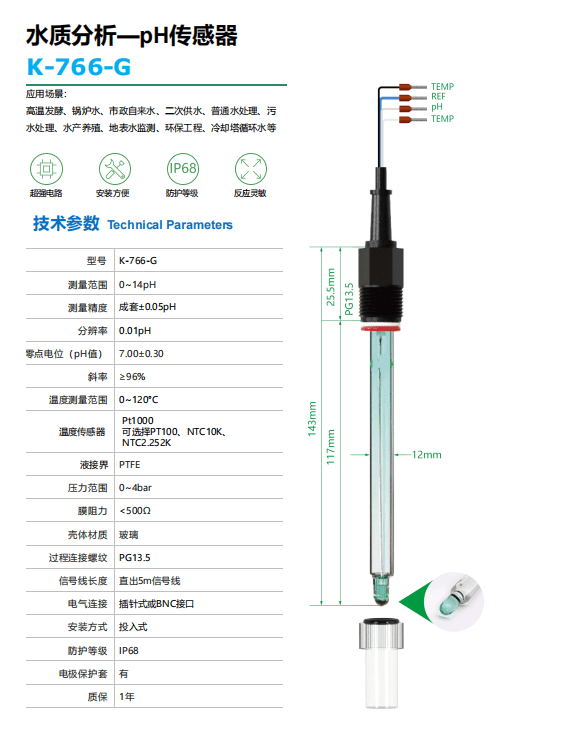
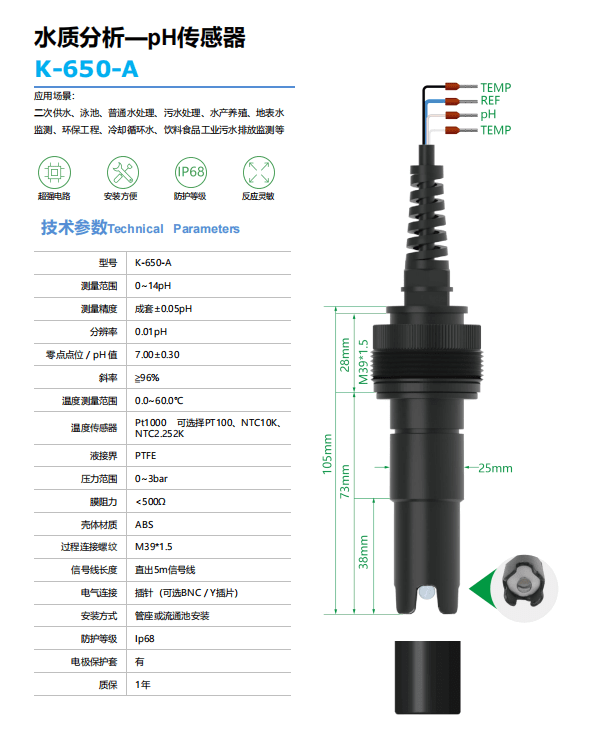
Electrochemical Method: Applicable to indicators such as pH and dissolved oxygen; fast response, low consumable costs; electrodes require regular calibration and replacement.
Optical methods: Suitable for turbidity, COD, etc., offering fast detection and no secondary pollution; however, optical components require regular cleaning.
Chromatographic methods: Suitable for accurately detecting complex indicators, offering high precision, but with high operation and maintenance costs.
Titration methods: Suitable for alkalinity, hardness, etc., with automated titration being the mainstream method, improving efficiency and accuracy.
(IV) By Equipment Form
Divided into pen-type, handheld, desktop, and floor-standing types, suitable for rapid screening, mobile monitoring, fixed laboratory use, and large-scale full-process monitoring scenarios, respectively.
II. Selection Strategy for Water Quality Analyzers
The core principle is “matching according to needs,” following a four-step approach that balances efficiency and cost:
(I) Clarify Core Needs
Determine monitoring parameters, measurement range and accuracy, data output requirements, usage environment, and compliance requirements to avoid blind selection.
(II) Compare Instrument Advantages and Disadvantages
Compare the advantages and disadvantages of portable, desktop, and online instruments in conjunction with the scenario, accurately matching usage needs to avoid over-configuration or under-configuration.
(III) Evaluate Key Technical Indicators
Importantly focus on measurement range and detection limit, resolution and accuracy, repeatability and stability, response time, anti-interference capability, and ease of calibration to ensure detection performance.
(IV) Cost and After-Sales Considerations
Taking into account the total lifecycle costs of purchase, operation, and maintenance, priority should be given to instruments with low maintenance costs and high scalability, and localized after-sales service should be emphasized.
III. Key Points for Daily Maintenance of Water Quality Analyzers
Following the principles of “cleaning, calibration, inspection, and replacement,” maintenance should be divided into general, specialized, and periodic maintenance to ensure stable instrument operation:
(I) General Maintenance
Clean the parts that come into contact with the sample after each use; store as required, immersing electrodes in protective solution; use a stable power supply and maintain the battery regularly; save data promptly and maintain a maintenance log.
(II) Specific Maintenance
Electrochemical Instruments: Clean and calibrate electrodes regularly, replenish electrolyte promptly, and replace aging electrodes.
Optical Instruments: Clean cuvettes and optical components; regularly check and replace the light source; calibrate the optical path.
Online Systems: Maintain the pretreatment system; regularly replace reagents; utilize automatic calibration and cleaning functions.
(III) Periodic Maintenance
Perform cleaning, calibration, component inspection, and replacement work according to different requirements for daily, weekly, monthly/quarterly, semi-annual/yearly, and long-term inactivity.
(IV) Troubleshooting
For common faults such as unstable readings, calibration failures, slow response, and no readings, check for problems such as air bubbles, contamination, power supply, and connections, and address them promptly.
IV. Conclusion
The classification, selection, and maintenance of water quality analyzers are interconnected. Clearly defining requirements, accurately selecting the right instrument, and standardizing maintenance are essential to maximizing instrument performance and providing reliable support for water quality monitoring.
Add me as a friend to learn more.