An ultrasonic level gauge is an intelligent instrument that uses the principle of ultrasonic reflection to achieve non-contact liquid level measurement. It accurately measures the height of liquid or solid materials by calculating the time difference between the emission and reception of sound waves. It has significant advantages such as non-contact with the medium, strong adaptability, and easy installation.
I. Core Working Principle
Ultrasonic level gauges operate based on echo ranging. The measurement process can be divided into four key steps:
Signal Transmission: The transducer (core component) of the instrument emits high-frequency ultrasonic pulses (typically 20kHz-200kHz) towards the surface of the measured medium.
Signal Propagation and Reflection: Ultrasonic waves propagate through the air and are reflected when they encounter a liquid or solid surface, forming an echo signal.
Signal Reception: The same transducer receives the reflected echo signal and converts it into an electrical signal.
Distance Calculation: The internal processor of the instrument calculates the actual liquid level based on the sound wave propagation time difference (Δt) and the known speed of sound (v) using the formula: Liquid Level Height = Instrument Installation Height – (v×Δt)/2.
Sound Speed Compensation Mechanism: Since the speed of sound in air is affected by temperature (the speed of sound increases by approximately 0.6m/s for every 1°C increase in temperature), modern ultrasonic level gauges typically incorporate a temperature sensor to achieve real-time temperature compensation, ensuring that measurement accuracy is unaffected by changes in ambient temperature.
II. Main Types and Structural Components
1. Type Classification
Integrated Ultrasonic Level Gauge: The probe and housing are integrated together, making installation easy and suitable for small to medium-sized containers.
Split-type ultrasonic level gauge: The probe is separate from the main unit and connected via cable, suitable for harsh environments such as high temperature and strong corrosion.
External-mounted ultrasonic level gauge: No container opening is required; the probe is fixed by magnetic suction cup or adhesive, particularly suitable for corrosive, flammable, and explosive media.
Two-wire ultrasonic level gauge: Simplifies wiring, but cannot be equipped with a relay and cannot provide a level alarm function.
2. Core Structure
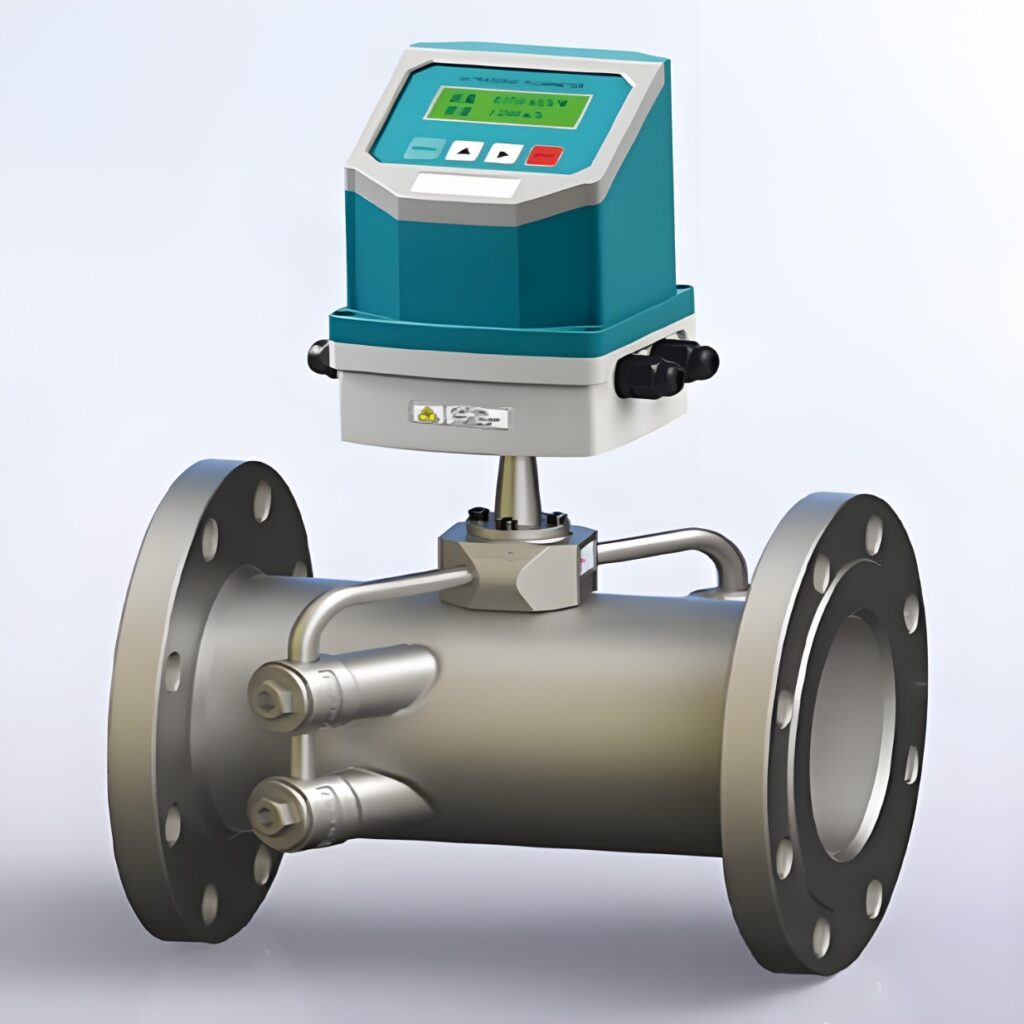
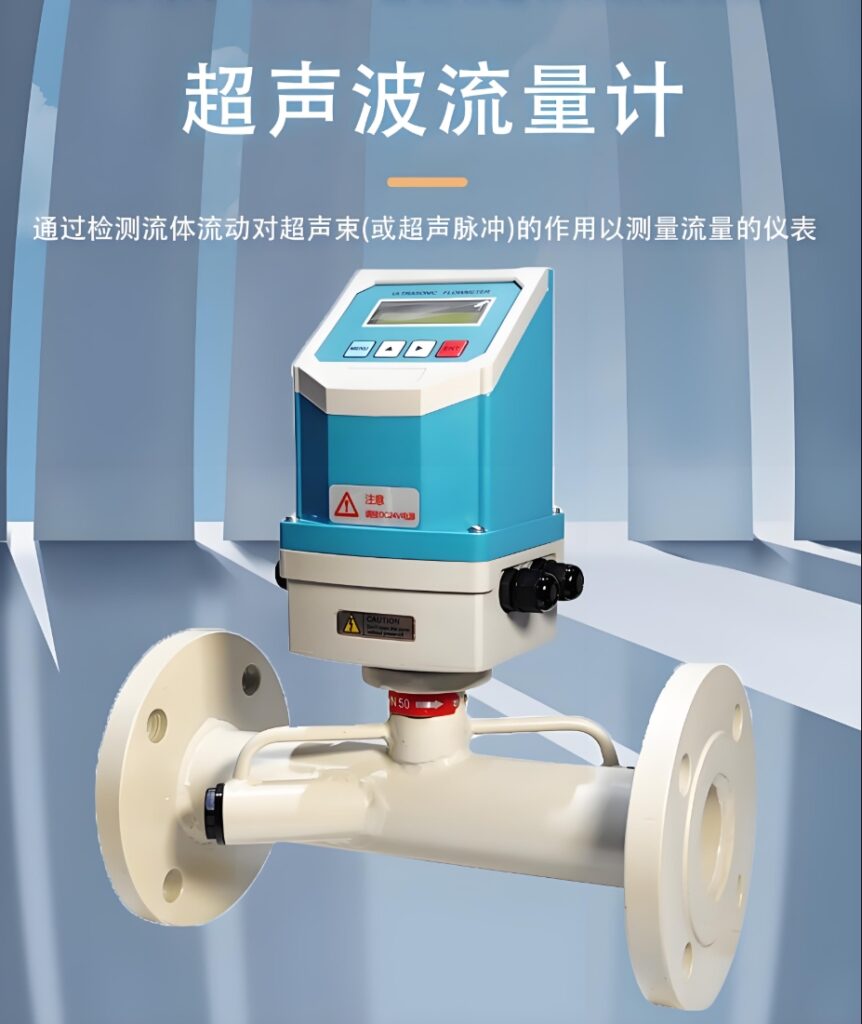
The ultrasonic level gauge mainly consists of the following five key parts:
Ultrasonic transducer (probe): Responsible for transmitting and receiving ultrasonic waves; various materials are available (ABS, PVC, stainless steel, PTFE, etc.) to adapt to different working conditions.
Signal processing unit: Amplifies, filters, and analyzes the echo signal, including a time measurement module, a sound velocity compensation module, and an interference module.
Display and operation unit: Typically equipped with an LCD screen and operation buttons for displaying measurement data and setting parameters.
Output and communication unit: Provides multiple output methods, including 4-20mA analog signal, RS485 digital communication, relay output, etc.
Power Supply Unit: Provides stable power, commonly DC24V or AC220V.
III. Key Performance Parameters
Measuring Range: Standard products have a measuring range of 0.1-30 meters, with some industrial-grade products reaching 50 meters.
Blind Zone: The area below the probe that cannot be measured, typically 0.1-1 meter (smaller measuring range results in a smaller blind zone, and vice versa).
Measurement Accuracy: Under normal temperature and pressure conditions and without external environmental interference, the accuracy can generally be controlled within the range of 0.25%-0.5%.
Protection Rating: The main unit is typically IP65, while the probe can reach IP67 or IP68, suitable for outdoor and harsh environments.
Operating Temperature: The standard operating temperature range for most products is -20℃ to +80℃, with some special products extending to -50℃ to +100℃.
Resolution: Typically 1mm (range ≤15m) or 1cm (range >15m).
IV. Application Advantages and Limitations
Advantages: Non-contact Measurement: The probe does not directly contact the measured medium, avoiding problems such as media corrosion, adhesion of viscous substances, and clogging. It is particularly suitable for measuring corrosive liquids (such as acid and alkali solutions), viscous liquids (such as crude oil and syrup), or powdery solids (such as flour and cement).
Easy Installation and Maintenance: No holes need to be drilled in the bottom or side of the container; it only needs to be installed on the top, reducing equipment modification costs. Subsequent maintenance only requires cleaning the probe.
Wide applicability: Compatible with various containers such as open tanks, closed tanks, and vessels, meeting the liquid level measurement needs of multiple industries including water, chemicals, and food.
Strong anti-interference capability: No requirements regarding the color, transparency, or conductivity of the medium; environmental influences are reduced through temperature compensation and filtering algorithms.
Limitations
Environmental Influences: Strong airflow, steam, foam, and dust can interfere with sound wave propagation, leading to inaccurate measurements or signal loss.
Blind Zone Limitations: Measurements cannot be taken within a certain distance below the probe; sufficient space must be reserved.
Unsuitable for Special Media: If there are violent fluctuations on the medium surface, a foam layer (foam absorbs ultrasonic waves), or obstacles within the container obstructing the signal, normal measurement may not be possible.
Environmental Limitations: Cannot operate in a vacuum (ultrasonic waves require a medium to propagate); high-pressure environments will also affect measurement accuracy.
V. Typical Application Scenarios
Water Treatment Industry: Monitoring the liquid level in clear water tanks, sewage tanks, and sedimentation tanks, and coordinating the start and stop of water pumps to prevent overflow or drying out.
Petrochemical Industry: Measuring the liquid level of crude oil, lubricating oil, and chemical solvents in storage tanks to ensure production safety and proper storage of raw materials.
Food and Beverage Industry: Monitoring the liquid level of sanitary media such as syrups, juices, and dairy products to prevent contamination and achieve automated control.
Environmental Protection Industry: Used for liquid level monitoring in sewage treatment, waste disposal, and other processes to ensure normal equipment operation.
Building and Civil Engineering: Monitoring water level changes during construction, such as concrete pouring, ensures project quality.
Naval Architecture and Ocean Engineering: Monitoring liquid levels in ship holds, oil tanks, freshwater tanks, etc., ensures navigational safety.
VI. Selection and Installation Precautions
Measuring Range Selection: Select an appropriate measuring range based on the actual measurement range, ensuring a 50cm margin is allowed to guarantee the MAX level is below the blind zone.
Installation Location:
The distance from the sensor’s emitting surface to the MIN level should be less than the instrument’s measuring range.
The distance from the sensor’s emitting surface to the MAX level should be greater than the instrument’s blind zone.
The sensor should be installed perpendicular to the liquid surface, avoiding contact with the container wall or obstructions.
Environmental Adaptability:
Avoid areas with severe liquid level fluctuations (such as inlets and outlets).
Maintain a distance of at least 0.3 meters from the container wall.
Avoid obstructions within the acoustic beam range (such as ladders, pipelines, agitators).
Special Operating Conditions:
For use in cold regions, a cold-weather adaptive function can be selected.
In environments with foam, a false echo learning function can be enabled.
In vacuum or high-pressure environments, alternative measurement methods should be considered.
Ultrasonic level gauges, with their core advantages of non-contact operation, high precision, and easy maintenance, have become the mainstream choice for short-to-medium range liquid level measurement. However, their application should avoid extreme environments with high dust and strong interference. Proper selection and correct installation are crucial to ensuring measurement accuracy.
Add me as a friend to learn more.