When measuring steam with a vortex flow meter, the measurement accuracy can be significantly improved through scientific temperature and pressure compensation, strict installation specifications, and regular professional maintenance. In particular, it is important to distinguish between saturated steam and superheated steam and to adopt corresponding compensation strategies.
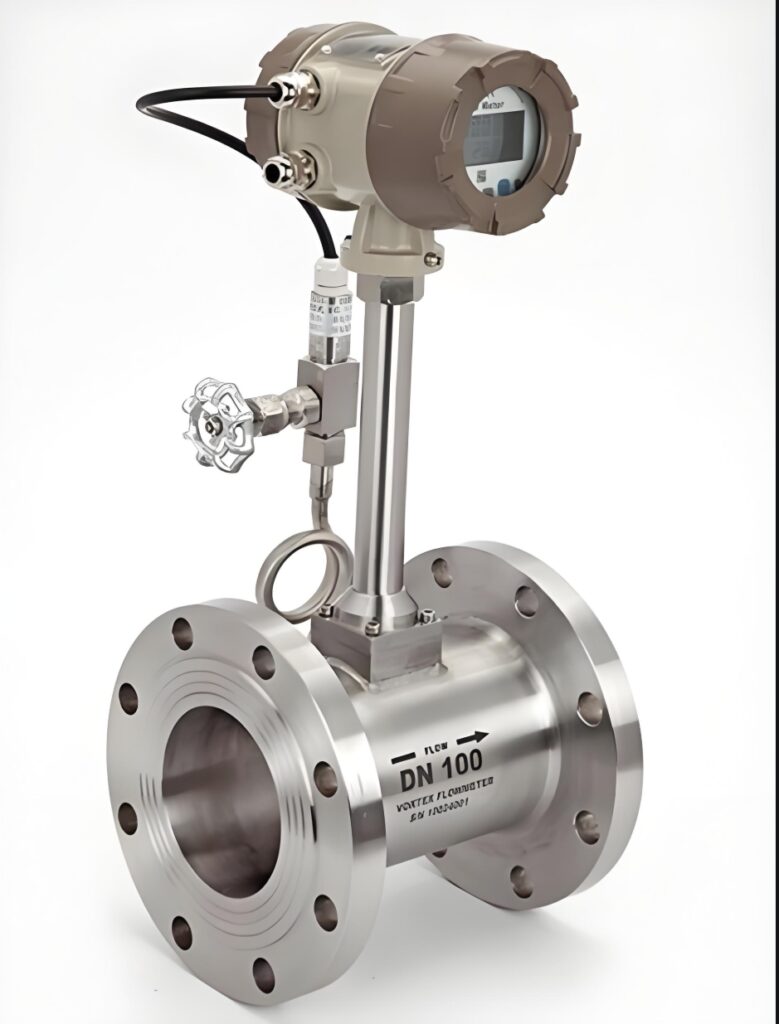
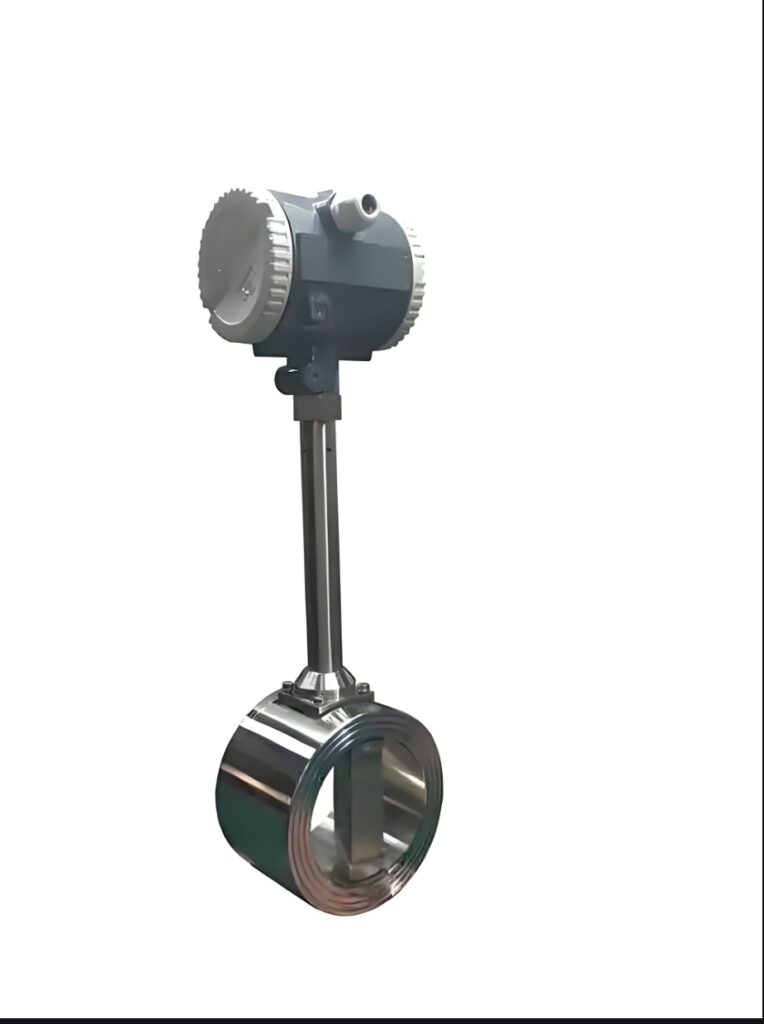
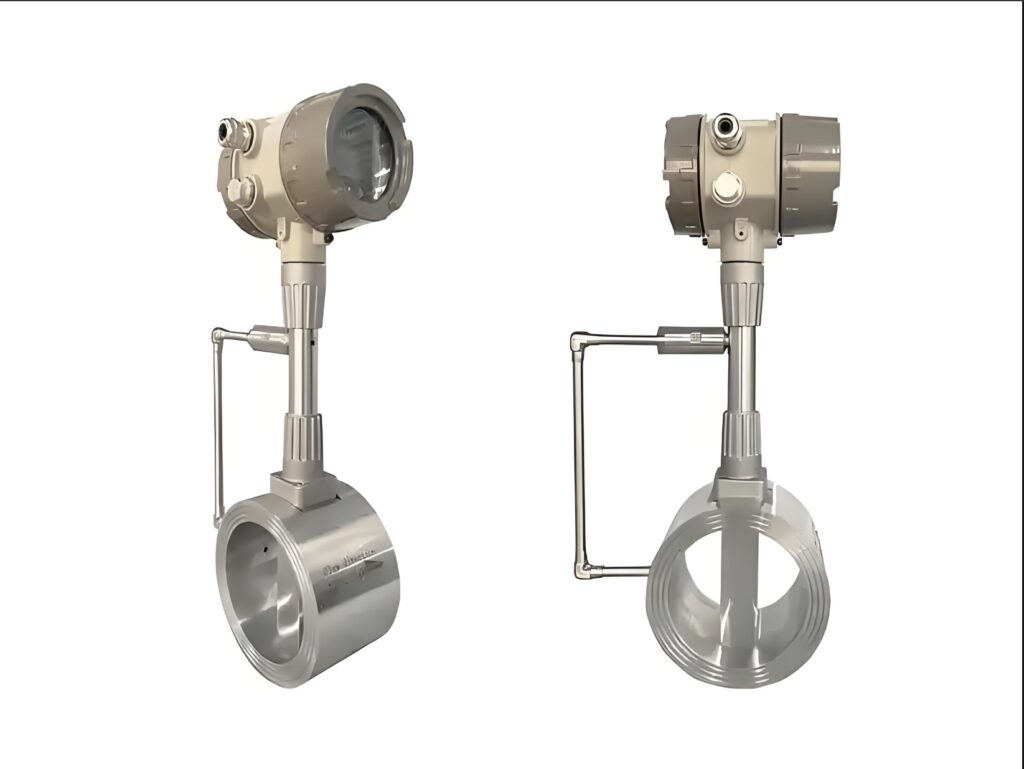
I. Steam Characteristics Analysis and Compensation Strategies
1. Differentiating Steam States
Steam is divided into saturated steam and superheated steam, and their measurement methods differ fundamentally:
Saturated steam: Temperature and pressure have a one-to-one correspondence, requiring only single-parameter compensation (temperature or pressure).
Superheated steam: Temperature and pressure have no fixed relationship, requiring dual-parameter compensation (temperature and pressure).
In practical applications, the steam state may change (e.g., superheated steam becomes wet saturated steam after long-distance transportation), which can severely affect measurement accuracy. When the steam dryness is below 95%, the measurement error will increase significantly.
Setting the correct steam state parameters in the flow totalizer is crucial. It is recommended to use an intelligent flow totalizer in conjunction with a platinum resistance thermometer and a pressure transmitter for real-time compensation, which can improve the measurement accuracy by more than 30%.
II. Key Installation Requirements
1. Straight Pipe Section Requirements
Insufficient straight pipe section is one of the main causes of measurement error:
General requirements: Upstream ≥ 20D, downstream ≥ 5D (D is the pipe diameter)
With bends: If there are two 90° bends on the same plane upstream, the upstream straight pipe section should be ≥ 25D; if on different planes, it should be ≥ 40D.
With regulating valves: The regulating valve should be installed at least 5D downstream of the flow meter. If it must be installed upstream, the upstream straight pipe section should be ≥ 50D.
2. Vibration and Interference Control
Vortex flow meters are extremely sensitive to mechanical vibration:
Avoid installation near vibration sources such as pumps and compressors.
If necessary, install pipe fastening devices and vibration dampers at 2D upstream and downstream of the flow meter.
Use shielded cables for signal lines and keep them away from strong electromagnetic interference sources such as frequency converters.
Tips: During installation, ensure that the upstream and downstream piping is concentric with the sensor (misalignment < 0.05D), flange gaskets do not protrude into the pipe, and the insulation layer should not exceed 1/3 of the support height.
III. Practical Measures to Improve Accuracy
1. Scientific Selection and Range Matching
Select an appropriate diameter based on the actual flow rate to avoid the “oversized motor for a small load” phenomenon.
The range ratio is generally 10:1 to 15:1, and it is recommended that the working flow rate be between 1/2 and 2/3 of the range.
For large-diameter flow meters, pay special attention to the potential decrease in measurement accuracy at low flow rates.
2. Steam Quality Assurance
Properly insulate pipelines to reduce heat loss and changes in steam state.
Install a steam-water separator before the flow meter to improve steam dryness.
Avoid installing the flow meter in pipelines prone to condensation.
3. Regular Calibration and Maintenance
Perform mandatory verification annually to ensure compliance with metrological regulations.
Regularly check the accuracy of platinum resistance thermometers and pressure transmitters.
Clean any impurities that may adhere to the sensor surface and keep the measuring elements clean.
In critical applications such as trade settlement, it is recommended to use a three-in-one measurement system integrating flow meter, temperature, and pressure, and to regularly verify its accuracy against standard devices. For long-distance steam transmission systems, a flow meter can be installed before the pressure reducing valve to avoid the impact of steam state changes caused by pressure reduction on measurement accuracy.
When measuring steam with a vortex flow meter, accuracy is affected by various factors, requiring comprehensive consideration of steam characteristics, instrument selection, installation specifications, compensation strategies, and regular maintenance. Special attention should be paid to the effects of steam state changes and dryness, as these are among the main causes of measurement error. Through scientific temperature and pressure compensation and strict installation specifications, measurement errors can be controlled within a reasonable range, ensuring the accuracy and fairness of trade settlement.
Please contact us promptly if needed.