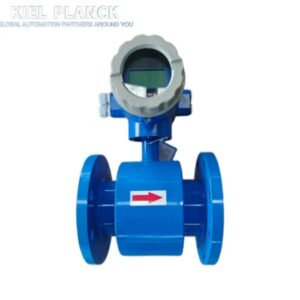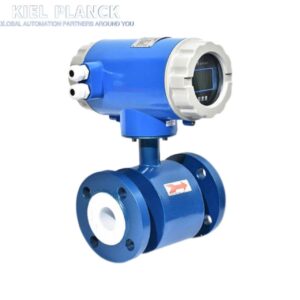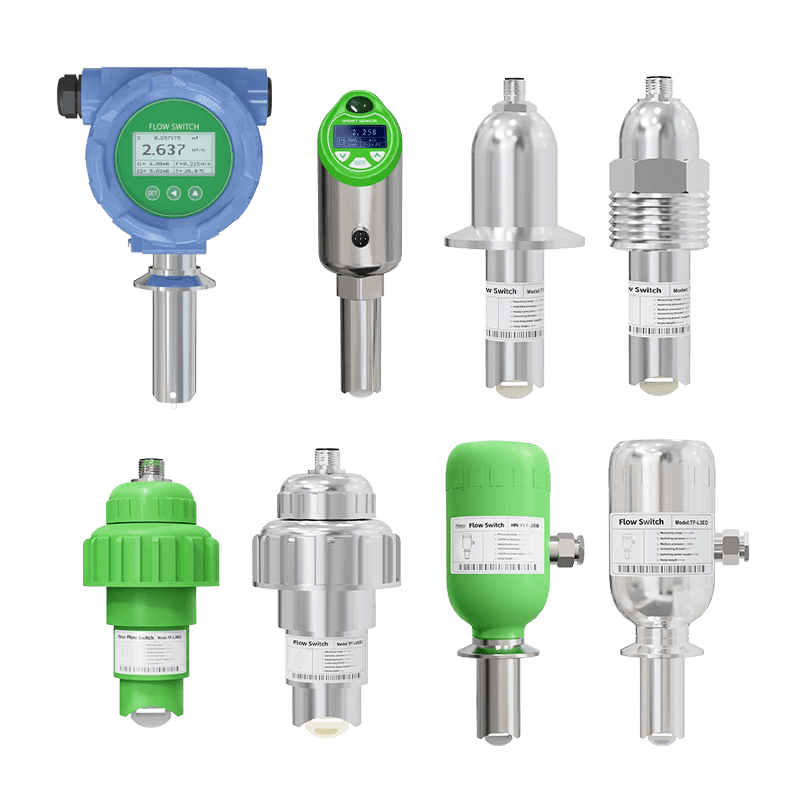
Vortex flow meters and orifice plate flow meters are two commonly used instruments in industrial flow measurement, and they differ significantly in principle, structure, performance, and applicable scenarios. A correct understanding of these differences helps in making appropriate selection decisions under different operating conditions.
I. Working Principle and Structure
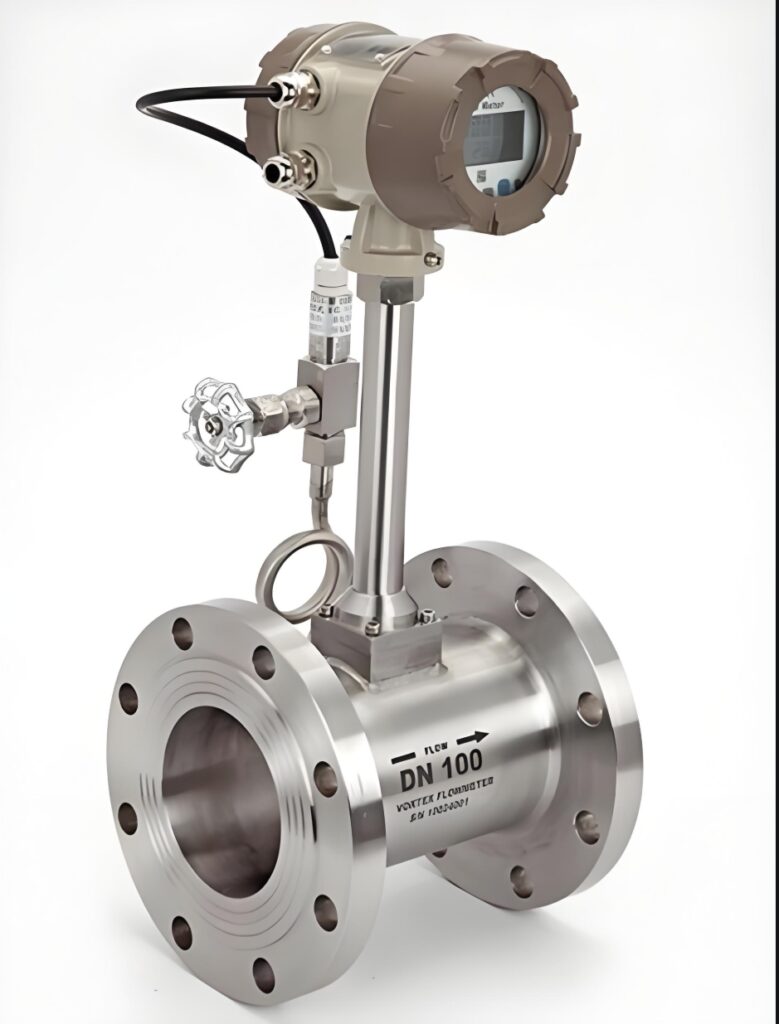
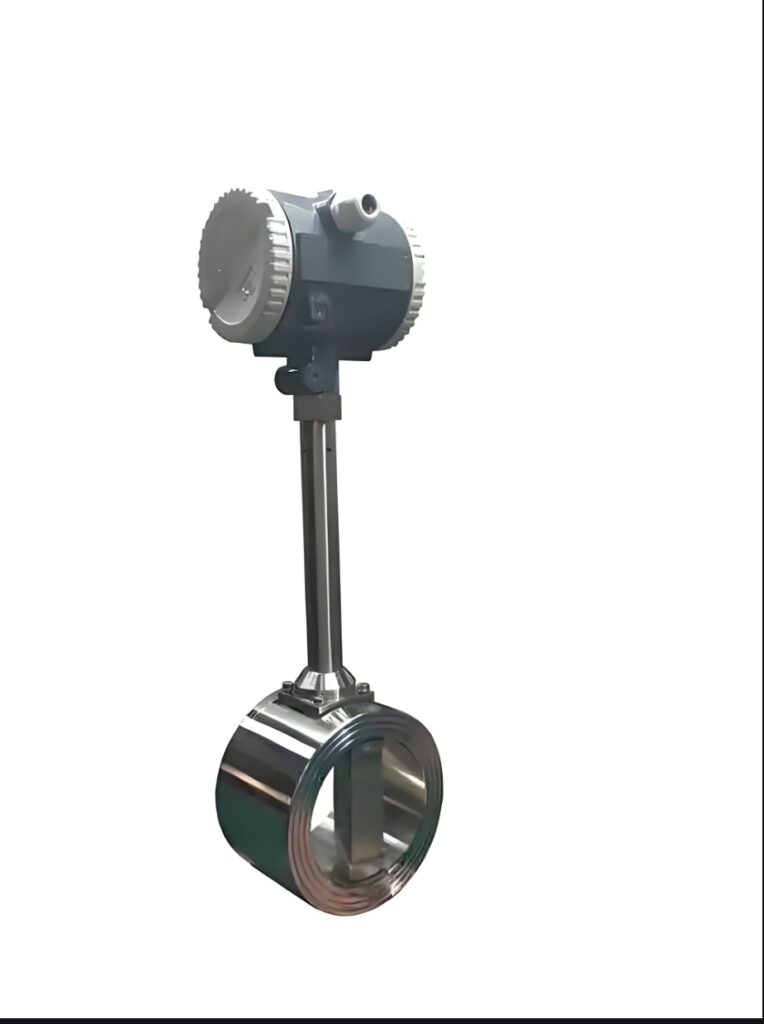
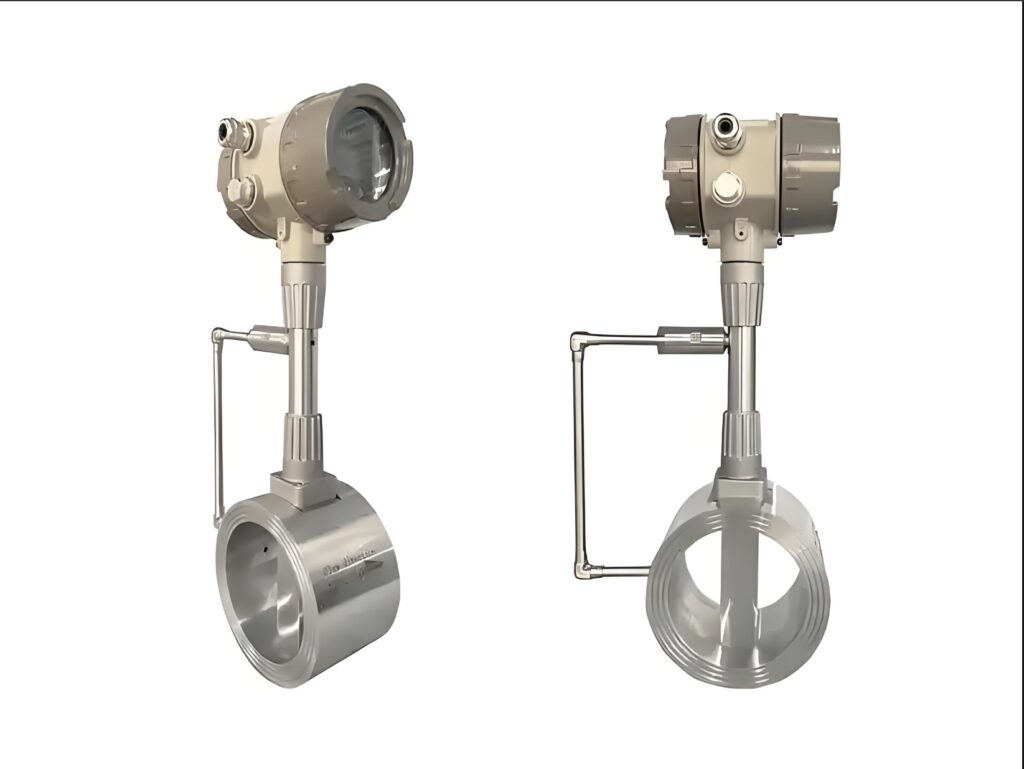
Vortex Flowmeter: Its working principle is based on the “Karman vortex street” effect. When fluid flows at a certain velocity through a non-streamlined obstacle (called a vortex generator, such as a triangular prism or cylinder), regular, opposite-direction vortices are alternately generated on both sides downstream, forming a so-called “vortex street.” The frequency of these vortices is proportional to the fluid velocity. By sensing the pressure or temperature changes generated by these vortices through detection elements (such as piezoelectric crystals or thermistors) and converting them into electrical signals, the fluid flow rate can be calculated. The structure of a vortex flowmeter is relatively simple, mainly consisting of a vortex generator, detection element, signal processing circuit, and display unit.
Orifice Plate Flowmeter: This belongs to the differential pressure flowmeter category. It uses a throttling element (orifice plate) with a standard orifice in the pipeline. When fluid flows through the orifice, the flow velocity increases due to the sudden decrease in the flow cross-sectional area, while the static pressure decreases accordingly, thus creating a pressure difference related to the flow rate upstream and downstream of the orifice plate. By measuring this pressure difference (usually using a differential pressure transmitter) and combining it with parameters such as the fluid density, the volumetric flow rate or mass flow rate of the fluid can be calculated according to Bernoulli’s equation. The structure of an orifice plate flowmeter is also very simple, mainly consisting of an orifice plate, a pressure tapping device, and a differential pressure transmitter.
**Requirement for Wide Range Ratio:** Vortex flow meters are better suited for applications with large variations in process flow rate.
**Requirement for Low Pressure Loss:** In applications requiring energy conservation or where fluid transport costs are high, the low pressure loss of vortex flow meters offers a significant advantage.
**Medium-to-Low Pressure Steam and Gas Measurement:** Vortex flow meters are a common choice for measuring steam and gas under conditions where temperature and pressure are not particularly high.
**High Maintenance Ease Requirements:** The structural characteristics of vortex flow meters result in relatively low maintenance requirements.
**Scenery Where Orifice Plate Flow Meters are Preferred:**
**High Temperature and High Pressure Conditions:** Orifice plate flow meters offer better tolerance for ultra-high temperature (>400℃) or ultra-high pressure steam or gas measurements.
**Cost-Sensitive Projects:** The initial purchase and installation costs of orifice plate flow meters are typically lower than those of vortex flow meters.
**Mature Application and Calibration Systems:** Orifice plate flow meters have a long history of application in some traditional industrial sectors, and related design, installation, and calibration standards are very mature.
Measuring dirty media: Some specially designed orifice plates (such as segmental orifice plates) are more suitable for measuring dirty media containing solid particles or air bubbles.
IV. Conclusion
In general, vortex flow meters and orifice plate flow meters each have their advantages and disadvantages. Vortex flow meters, with their wide rangeability, low pressure loss, and good accuracy, are increasingly widely used in modern industry. Orifice plate flow meters, on the other hand, with their simple structure, low cost, resistance to high temperature and pressure, and mature standardization system, still possess irreplaceable advantages under specific operating conditions, especially in the measurement of high-temperature and high-pressure steam. In practical applications, a comprehensive evaluation should be conducted based on factors such as the specific measured medium, operating conditions, accuracy requirements, cost budget, and maintenance capabilities to select the most suitable flow meter type.
Please contact us promptly if needed.